

Key Takeaways
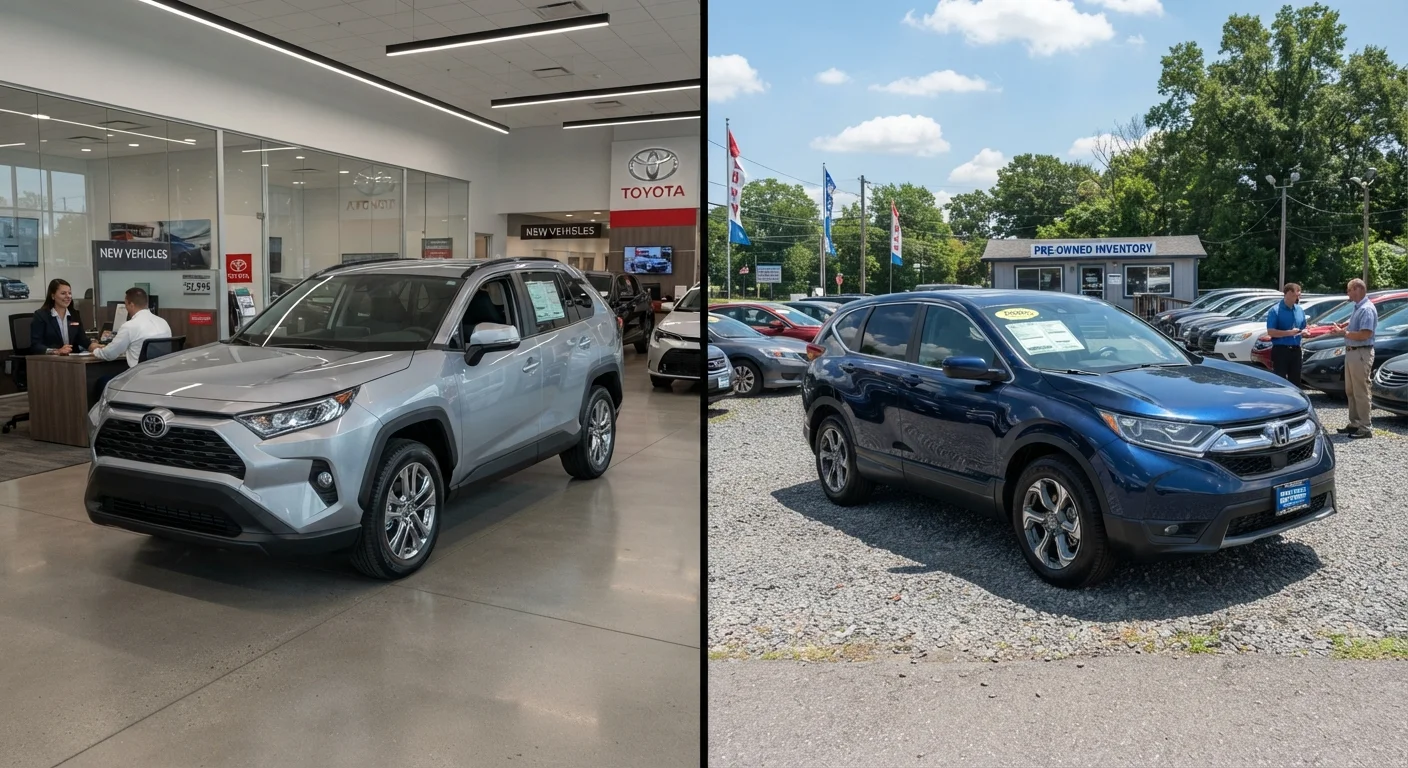
Option A
New Car
The full-warranty, latest-tech, higher-cost choice.
Best for: Buyers who prioritize warranty coverage, current safety technology, and predictable early ownership costs.
Option B
Used Car
The value-oriented, depreciation-aware alternative.
Best for: Budget-conscious buyers willing to accept some uncertainty in exchange for a significantly lower purchase price.
If you want maximum repair-cost protection and the latest safety features
New Car
Factory warranties and standard advanced driver-assistance systems offer peace of mind that most used vehicles cannot match without purchasing additional coverage.
If keeping your total purchase price and monthly payments as low as possible is the priority
Used Car
A used vehicle's lower sticker price directly reduces the loan principal you carry, and you avoid the steepest phase of depreciation from day one.
If you want near-new reliability without a brand-new price tag
Used Car
A certified pre-owned vehicle from a franchised dealer typically includes a manufacturer-backed inspection and limited powertrain warranty, offering a meaningful middle ground.
If you finance through a lender and want the lowest available interest rate
New Car
Lenders generally offer their most competitive rates on new vehicles; used-car loan rates are typically higher, which can offset some of the sticker-price savings over the loan term.
If you drive high annual mileage and need a vehicle built for long-term use
New Car
Starting with zero miles and a full factory warranty gives high-mileage drivers the longest runway before major maintenance costs typically emerge.
The Depreciation Reality Every Buyer Should Understand
Depreciation is the single most important financial factor separating new from used vehicles. A new car can lose roughly 15-25% of its value in the first year of ownership, and as much as 50% within three years, though the exact figures vary by make, model, and market conditions. That loss is largely absorbed by the first owner - which is why a two- or three-year-old vehicle can represent strong financial value for a second buyer.
For a used-car buyer, purchasing a vehicle that has already passed through its steepest depreciation curve means slower ongoing value loss. For a new-car buyer, that depreciation is a real cost - but one that comes paired with full warranty coverage, current safety technology, and the certainty of knowing the vehicle's complete history. Understanding where you sit in that trade-off is a useful starting point before any other comparison. See our complete car-buying walkthrough for how this fits into the broader purchase process.
| Criterion | New Car | Used Car |
|---|---|---|
| Purchase price | Higher sticker price | Lower sticker price |
| Depreciation exposure | Steepest in first 1-3 years | Slower ongoing depreciation |
| Loan interest rates | Generally lower rates | Typically higher rates |
| Warranty coverage | Full manufacturer warranty | Limited or none (CPO varies) |
| Insurance cost | Higher (greater replacement value) | Often lower, more flexible |
| Vehicle history | Fully known - zero miles | Requires verification |
| Safety technology | Latest standard features | Varies by model year |
| Early maintenance costs | Mostly routine service | May include deferred repairs |
Financing, Insurance, and Total Cost of Ownership
Purchase price is only part of what you'll spend. Financing terms differ meaningfully between new and used vehicles. Lenders typically reserve their lowest interest rates for new cars, while used-car loans - particularly on older or higher-mileage vehicles - carry higher rates and shorter maximum loan terms. A lower sticker price on a used car can therefore be partially offset by less favorable financing, especially over a multi-year loan.
Auto insurance costs also differ. New cars typically cost more to insure because their replacement value is higher, and lenders require comprehensive and collision coverage on financed vehicles regardless of age. On the other hand, an older used vehicle may allow you to drop certain coverage types once it's paid off, potentially reducing your ongoing insurance cost. Visit our car insurance hub for a fuller picture of coverage decisions that follow any vehicle purchase.
~20%
Typical new-car value loss in year one
Industry estimates from sources including Edmunds and iSeeCars consistently place first-year depreciation for average new vehicles in the 15-25% range.
1-2%+
Higher average APR on used-car loans vs. new
According to Federal Reserve consumer credit data, interest rates on used-car loans have historically exceeded new-car loan rates, adding to the total cost of financing a used vehicle.
2-3 yrs
Typical CPO vehicle age at purchase
Most manufacturer-certified pre-owned programs require vehicles to be within a certain age and mileage threshold, commonly under 5-6 years old with fewer than 80,000 miles.
Maintenance is another variable. New vehicles generally require only routine service in early ownership, while used cars - depending on age, mileage, and condition - may carry deferred maintenance or emerging repair needs. A pre-purchase inspection by an independent mechanic is a standard and worthwhile step for any used vehicle. Our car maintenance hub covers what to expect across a vehicle's service life.
Warranty Coverage and the Certified Pre-Owned Option
A new vehicle comes with a manufacturer's warranty - typically a bumper-to-bumper coverage period of three years or 36,000 miles, and a powertrain warranty of five years or 60,000 miles, though these vary by manufacturer. That coverage provides a defined window in which most major mechanical failures are addressed at no cost to the owner.
Most used vehicles are sold as-is or with only a short dealer warranty, meaning repair costs fall to the buyer from day one. Certified pre-owned (CPO) programs, offered through franchised dealerships on manufacturer-approved vehicles, represent a middle path: CPO vehicles must pass a multi-point inspection and typically include a manufacturer-backed powertrain warranty extension. They cost more than non-certified used vehicles, but less than new - and carry more documented assurance than a standard used-car purchase.
It's worth noting that extended warranties and vehicle service contracts are available for used vehicles through dealers and third-party providers. These vary significantly in coverage scope, exclusions, and cost, so reading the contract terms carefully before purchasing is essential. The common car-buying myths article addresses several misunderstandings about what these contracts actually cover.
Making the Decision Based on Your Situation
Neither new nor used is the universally correct answer. The right choice depends on your budget, your comfort with financial uncertainty, how long you plan to keep the vehicle, and how much you drive annually. A buyer who keeps cars for 10 or more years may find that a new car's higher initial cost is distributed across enough time to make it reasonable. A buyer who trades vehicles every three to four years is likely handing back a new car right as depreciation peaks - a less favorable financial position.
Before finalizing any decision, it's also worth separating the trade-in and purchase negotiations - a tactic explained in our trade-in timing and tactics guide. And if you're weighing whether to buy at all versus leasing, that's a related but distinct decision covered in our leasing vs. buying comparison.
Use the verdict cards above as a starting framework, then run your specific numbers - loan terms, insurance quotes, and expected ownership length - before committing. Our pre-purchase checklist can help you pressure-test any offer before you sign.