
Added Sugar by Any Other Name: Spotting Hidden Sweeteners on Ingredient Lists

| FDA Daily Value for Added Sugars | 50 grams per day (FDA Nutrition Facts label regulations (adults and children 4+, 2,000-calorie diet)) |
| Number of Names for Added Sugar | 60+ recognized terms (University of California San Francisco SugarScience research) |
| Ingredient List Ordering Rule | Listed by weight, heaviest first (FDA food labeling regulations, 21 CFR Part 101) |
| Required Nutrition Facts Line | "Added Sugars" (grams + % DV) (FDA updated Nutrition Facts label rule, effective 2020) |
| Naturally Occurring Sugars | NOT counted in Added Sugars line (FDA definition: added sugars exclude naturally present sugars in fruit and dairy) |
Why Added Sugar Has So Many Aliases
Food manufacturers use dozens of different sweeteners in processed products - and each one appears on the ingredient list under its own distinct name. This isn't necessarily deceptive; many sweeteners genuinely differ in their chemical structure, origin, or functional role in a recipe. But the practical effect is that a product can contain multiple added sugars listed separately, each ranking low on the ingredient list individually, while the combined total is substantial.
The FDA's Nutrition Facts panel now requires a dedicated "Added Sugars" line - expressed in grams and as a percentage of the Daily Value - which makes the total far easier to assess at a glance. However, understanding what's actually inside the product still requires reading the ingredient list itself. Learning how to read Nutrition Facts panels fully is the foundation for putting these sugar figures in context.
| FDA Daily Value for Added Sugars | 50 grams per day (FDA Nutrition Facts label regulations (adults and children 4+, 2,000-calorie diet)) |
| Number of Names for Added Sugar | 60+ recognized terms (University of California San Francisco SugarScience research) |
| Ingredient List Ordering Rule | Listed by weight, heaviest first (FDA food labeling regulations, 21 CFR Part 101) |
| Required Nutrition Facts Line | "Added Sugars" (grams + % DV) (FDA updated Nutrition Facts label rule, effective 2020) |
| Naturally Occurring Sugars | NOT counted in Added Sugars line (FDA definition: added sugars exclude naturally present sugars in fruit and dairy) |
A Practical Reference: Common Names for Added Sugar
The list below covers the most frequently encountered added-sugar names across packaged foods, organized by category. Recognizing these terms lets you identify sweeteners wherever they appear in an ingredient list.
Sucrose
The scientific name for common table sugar, made of one glucose and one fructose molecule bonded together. It is extracted from sugarcane or sugar beets and is one of the most widely used sweeteners in processed foods.
High-Fructose Corn Syrup (HFCS)
A liquid sweetener derived from corn starch in which some glucose has been converted to fructose. It appears in many sodas, condiments, and baked goods, and is functionally similar to sucrose in terms of caloric content.
Dextrose
Another name for glucose, a simple sugar derived from starch. It is commonly used in commercially baked goods, sports drinks, and processed snacks.
Maltose
A sugar made of two glucose units, formed during the breakdown of starch. It appears naturally in malted grains and is used as a sweetener in some cereals and beverages.
Invert Sugar
A liquid mixture of glucose and fructose created by splitting sucrose. It retains moisture in baked goods and resists crystallization, making it common in confections and commercial baked products.
Agave Nectar
A sweetener derived from the agave plant that is high in fructose. Despite a lower glycemic index than table sugar, it is still classified as an added sugar and contributes calories in the same way.
Brown Rice Syrup
A sweetener made from cooked brown rice that has been treated with enzymes to break down the starches into sugars, primarily maltose. It is often marketed as a "natural" alternative but is still an added sugar.
Turbinado Sugar
A minimally refined cane sugar with larger crystals and a light molasses flavor. It retains trace minerals from processing but is nutritionally comparable to white refined sugar.
Molasses
A thick, dark syrup that is a byproduct of refining sugarcane or sugar beets. Blackstrap molasses contains some minerals like iron and calcium, but all varieties are counted as added sugars.
Fruit Juice Concentrate
Juice from which most of the water has been removed, resulting in a highly concentrated source of sugar. When used as an ingredient beyond its role as fruit, it is classified as an added sugar.
Cane Juice (Evaporated)
A minimally processed form of sugar made by dehydrating sugarcane juice. Despite the less-refined appearance, it is chemically and calorically similar to granulated white sugar.
Barley Malt Syrup
A thick, dark syrup made from sprouted barley with a strong, distinctive flavor. It is high in maltose and is used as a sweetener in some breads, cereals, and specialty products.
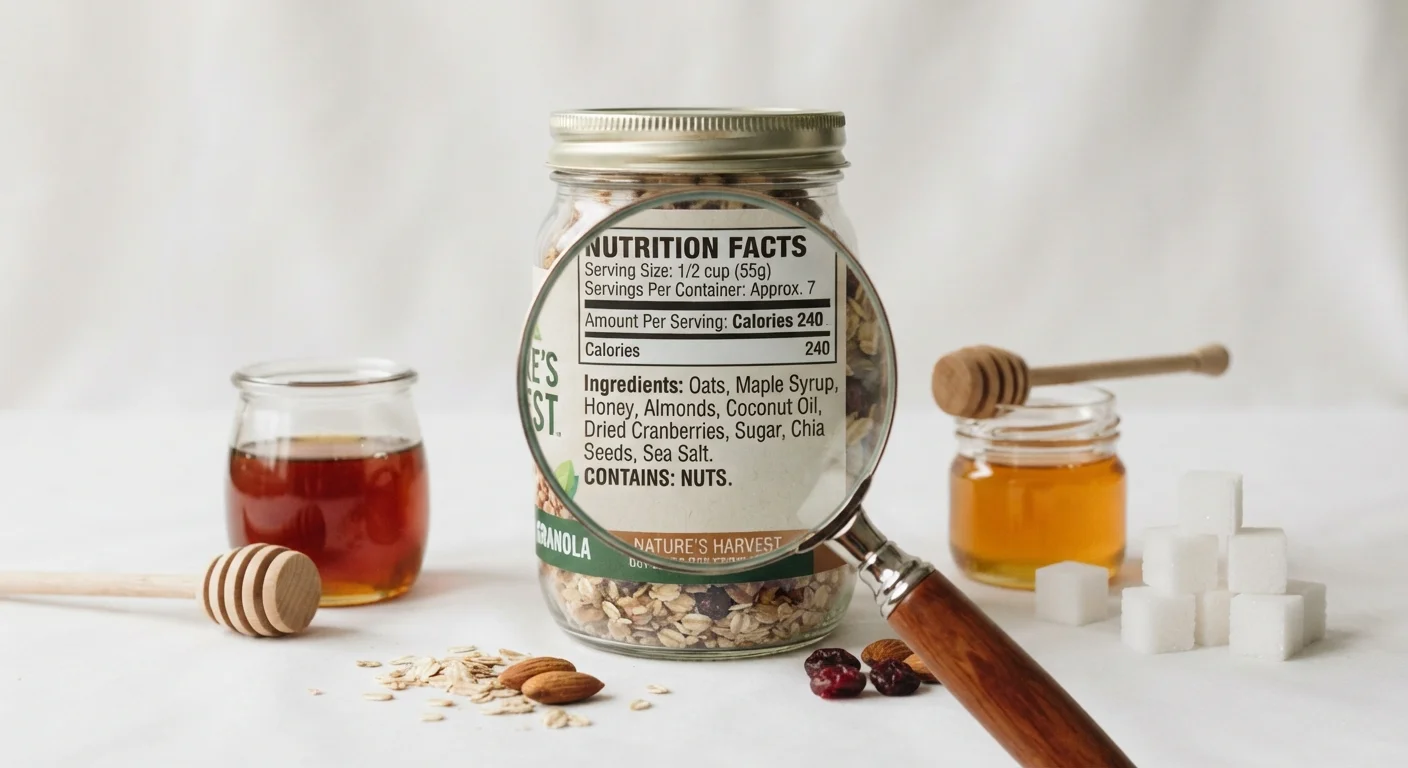
Keep in mind that ingredients are listed in descending order by weight. If several sweeteners appear in the top five ingredients, or if multiple sweetener names appear throughout the list, the product likely contains a significant amount of added sugar overall - even if no single ingredient ranks first.
Reading the Totals: What the Numbers Mean
The American Heart Association suggests general population limits for added sugar intake, and the FDA's Daily Value for added sugars is set at 50 grams per day for adults and children ages four and older, based on a 2,000-calorie reference diet. The "Added Sugars" line on the Nutrition Facts panel reflects the combined contribution of all added sweeteners in one serving - regardless of how many different names they appear under in the ingredient list.
A few practical points worth knowing:
- Serving size matters. The gram count shown reflects one serving as defined on the label, which may be smaller than what you'd typically eat.
- "No added sugar" doesn't mean sugar-free. Products can contain naturally occurring sugars from fruit, dairy, or other whole-food ingredients; these appear in "Total Sugars" but not "Added Sugars."
- Sugar alcohols are different. Sweeteners like erythritol and xylitol are listed separately under "Total Carbohydrate" and are not counted as added sugars.
For a broader look at regulated label claims and what terms like "reduced sugar" or "unsweetened" are legally required to mean, see the nutrition labeling terms glossary.
This article is for general informational and educational purposes only and does not constitute medical or dietary advice. Consult a registered dietitian or qualified healthcare professional for guidance tailored to your individual health needs.