

Key Takeaways
Bathroom Remodel Scope
Remodel scope refers to the full set of changes included in a bathroom renovation project - from surface updates like paint and fixtures to structural work like moving walls or relocating plumbing. Scope is the single biggest determinant of final project cost. A cosmetic refresh and a full gut renovation can carry price tags that differ by tens of thousands of dollars, even in the same bathroom.
In contractor language, scope creep - the gradual addition of tasks beyond the original plan - is one of the leading causes of budget overruns on bathroom projects.
Why Scope - Not Taste - Drives the Budget
Many homeowners assume fixture quality or tile brand is what pushes a bathroom remodel over budget. In reality, the decisions that move the needle most are structural and logistical - where things are, how they connect, and how much demolition is required to change them.
A bathroom remodel can range from a few thousand dollars for cosmetic updates to well over $30,000 for a full reconfiguration of a primary bath. That gap isn't explained by choosing one faucet over another. It's explained by scope: how much of the bathroom you're changing, and how deeply into the structure that work reaches.
Understanding this helps you make deliberate trade-offs rather than discovering costs midway through a project. See our guide to reading contractor estimates for what to scrutinize before signing anything.
40-65%
Labor as share of total remodel cost
Industry estimates consistently place labor - plumbing, tile setting, carpentry, and electrical - as the dominant cost in a bathroom renovation, not materials.
10-20%
Recommended contingency budget
Contractors and project managers commonly advise holding back 10-20% of your total project budget to cover discoveries made once demolition begins.
2-3×
Cost multiplier when plumbing moves
Relocating plumbing fixtures versus keeping them in place can more than double the plumbing labor portion of a remodel, depending on what's required.
Plumbing Location: The Single Biggest Variable
Plumbing is the most cost-sensitive element of any bathroom remodel. The reason is straightforward: changing where plumbing goes requires opening floors, walls, and sometimes ceilings - and then closing them back up again.
If your toilet, sink, and shower stay in their original positions, you're working with the existing rough-in (the supply and drain lines already in place). This is called a same-footprint remodel, and it keeps plumbing costs contained.
Move any of those fixtures - even a few feet - and a plumber must extend or reroute drain lines, which may involve cutting through the subfloor or concrete slab. Slab work in particular is significantly more involved and expensive than above-grade plumbing changes.
Keep Fixtures in Place to Control Costs
Before committing to a layout change, ask your plumber specifically what the rough-in relocation will involve - slab cutting, new drain runs, permit requirements. In many cases, a creative design solution within the existing footprint achieves a similar result for significantly less.
Adding a second sink to a vanity is a relatively modest plumbing change. Converting a tub-shower combo into a walk-in shower with a separate freestanding tub is a much larger one - even in the same space - because it may require new drain placement, added supply lines, and a wet area expansion.
Tile: Where Material and Labor Costs Compound
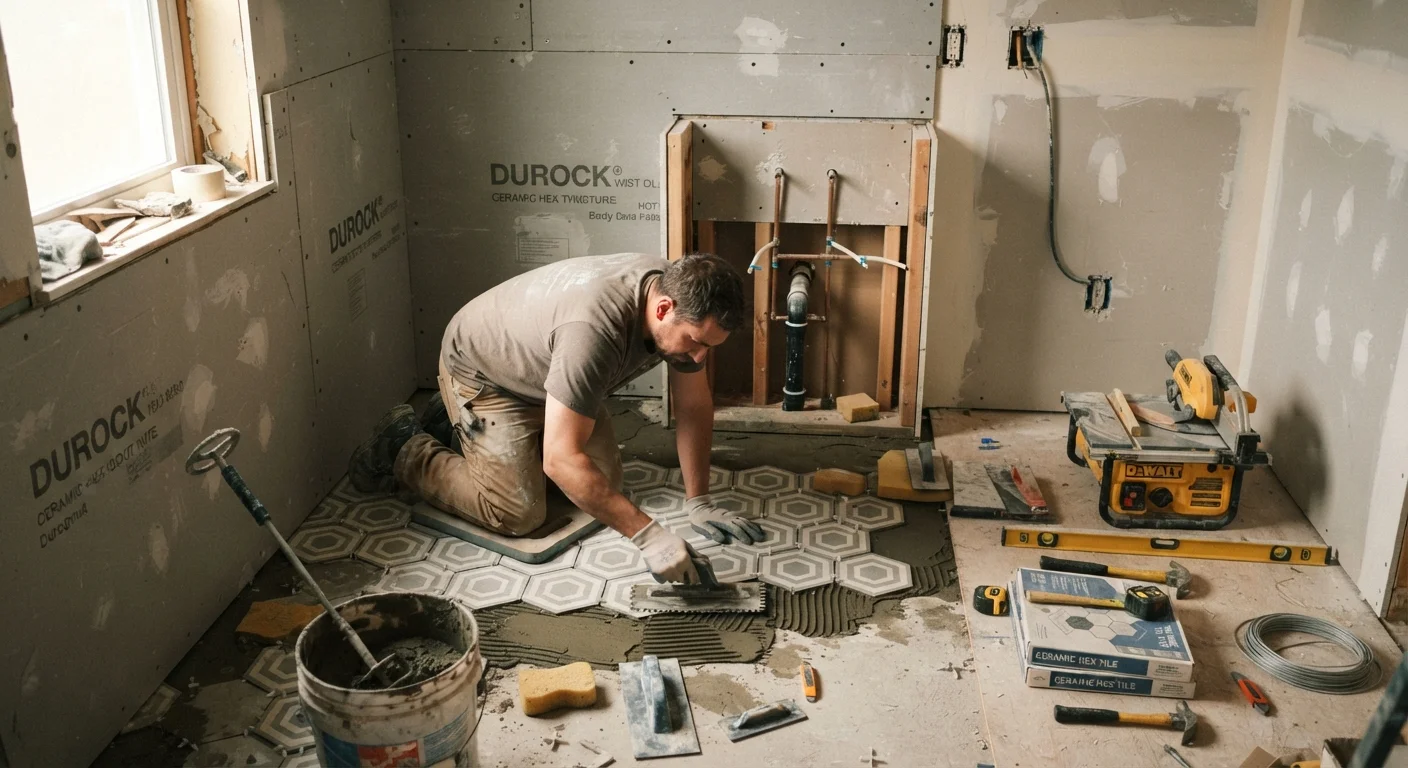
Tile is one of the few line items where both material cost and labor cost vary enormously based on the same decisions. The tile you choose determines not just what you spend at the supply house, but how long installation takes.
Factors that raise tile cost include:
- Coverage area: Floor-to-ceiling tile in a shower significantly increases square footage versus tiling only to a wainscot height.
- Tile format: Large-format tiles (24x48 inch and above) require very flat, well-prepared substrates and careful handling. Mosaic sheets are time-intensive to set and grout.
- Pattern complexity: Herringbone, diagonal, and custom pattern layouts require more cuts and more installer time than straight-lay installations.
- Natural stone: Materials like marble and slate require sealing, are heavier, and demand more skill to install than porcelain or ceramic.
Waterproofing the substrate beneath tile is also non-negotiable in wet areas - and it adds both material and labor cost that's easy to underestimate. Skipping or cutting corners here is one of the DIY mistakes that leads to expensive fixes down the road.
Fixture Choices, Ventilation, and Hidden Condition Issues
Once plumbing and tile are accounted for, fixture selection is the next variable. A standard toilet, vanity, and shower surround from a home center costs a fraction of a wall-hung toilet with a concealed tank, a custom double vanity, and a steam shower system. Both can function identically day to day - the difference is almost entirely aesthetic and mechanical complexity.
Two often-overlooked cost drivers:
- Ventilation upgrades: Building codes in most jurisdictions require adequate exhaust ventilation in bathrooms. If your existing fan is undersized or exhausts into the attic (a code violation in many areas), bringing it up to standard adds cost. New ductwork runs can be surprisingly involved depending on your home's framing.
- Subfloor and wall condition: Water damage discovered after demo begins is the most common source of budget overruns. Rotted subfloor, mold behind tile backer, or deteriorated framing around a tub surround all add remediation work that wasn't in the original estimate.
This is why experienced contractors recommend a contingency budget - commonly 10-20% of your total estimate - rather than spending to the exact project figure. Our pre-construction planning checklist covers how to prepare before work begins. If you're working in a compact bathroom, smart storage planning can help you get more function without expanding the footprint - or the budget.