

Key Takeaways
Option A
Crate Training
The structured, den-like management approach.
Best for: Puppies, newly adopted dogs, and dogs that need a safe, contained space during unsupervised periods.
Option B
Free-Roaming
The open-access, trust-based approach.
Best for: Adult dogs with established house training and reliable impulse control who have earned unsupervised household access.
If you have a new puppy or recently adopted dog
Crate Training
Young and newly rehomed dogs need structured boundaries while house training is established and trust is built. A crate prevents destructive or dangerous behavior during unsupervised time.
If you have a fully house-trained adult dog with calm behavior
Free-Roaming
Dogs that have demonstrated reliable impulse control and no destructive tendencies can safely enjoy household access, which supports their social and emotional well-being.
If your dog has separation anxiety or stress-related behaviors
Crate Training
A properly introduced crate can provide a calming, predictable safe space - though dogs with significant anxiety should be assessed by a veterinarian or certified behaviorist.
If your home has not been fully dog-proofed
Crate Training
Unsecured hazards - electrical cords, toxic plants, accessible trash - make free-roaming unsafe until the environment is thoroughly managed.
If you have a senior dog with good behavior but physical limitations
Free-Roaming
Older dogs with a long history of reliable behavior often do better with free access to comfortable resting spots, though individual health needs should guide the decision.
What Each Approach Actually Involves
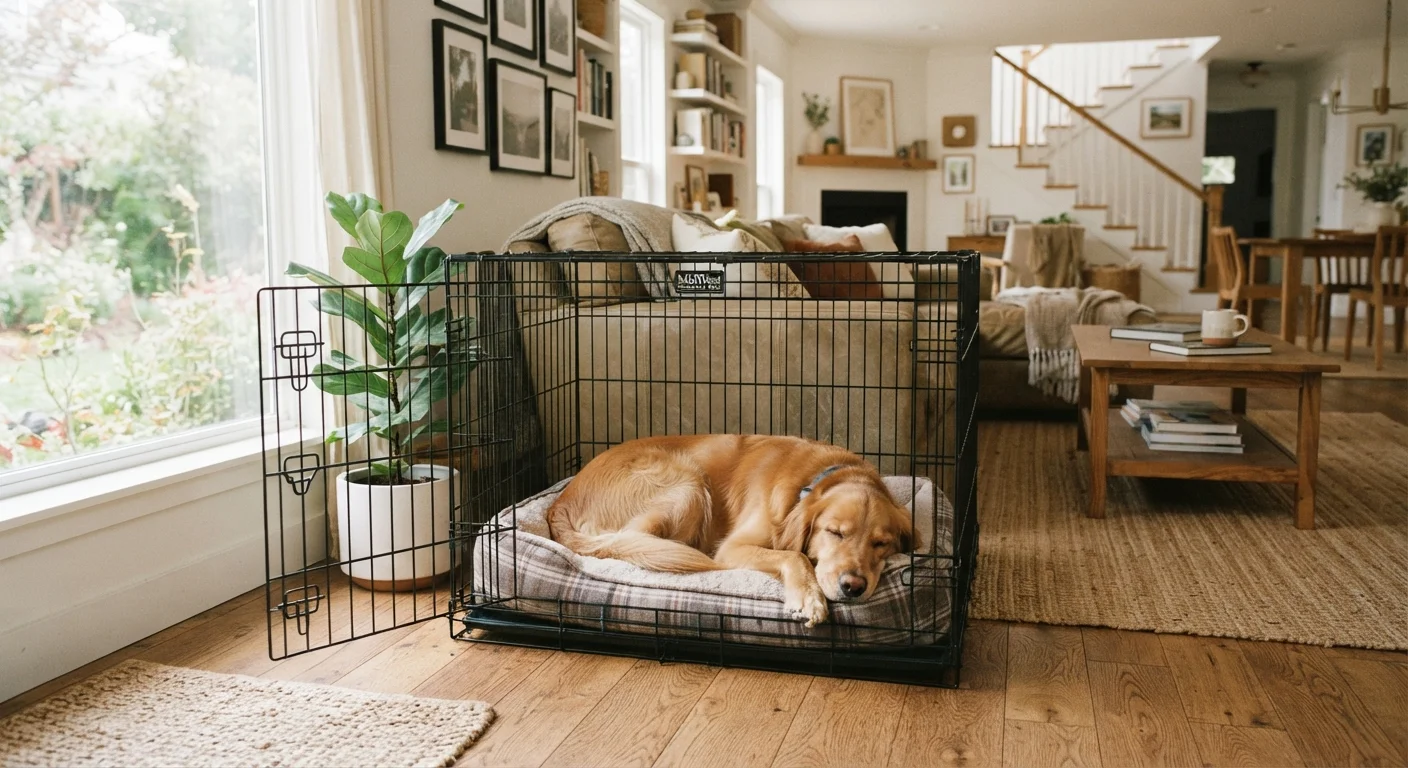
Crate training uses an enclosed space - typically a wire, plastic, or fabric crate - sized so the dog can stand, turn around, and lie down comfortably. When introduced gradually and positively, the crate becomes a familiar resting spot rather than a place of confinement. It is widely recommended by veterinary and behavior professionals for puppies and newly adopted dogs because it prevents unsupervised access to hazards and supports house training by leveraging a dog's natural reluctance to soil its sleeping area.
Free-roaming, by contrast, gives a dog unrestricted or lightly gated access to part or all of the home without confinement. This approach requires that the dog already understands household rules, has reliable bladder control, and the environment has been thoroughly prepared. See our puppy-proofing checklist for a room-by-room guide to removing hazards before expanding any dog's access.
| Criterion | Crate Training | Free-Roaming |
|---|---|---|
| Best life stage | Puppies, newly adopted dogs | Trained adult and senior dogs |
| House training support | Strong - limits unsupervised accidents | Relies on established bladder control |
| Safety during absence | High, when crate is dog-proofed | Depends on home hazard management |
| Emotional well-being | Good if used correctly; poor if overused | Generally positive for calm, trained dogs |
| Training prerequisite | Positive crate introduction required | Reliable impulse control required |
| Flexibility for owners | Predictable management tool | Requires consistent monitoring early on |
| Suitability for multi-pet homes | Helpful for managing introductions | Requires stable inter-pet relationships |
The Case for Crate Training
Dogs are descended from animals that sought out dens - small, enclosed spaces that offered security. A well-introduced crate taps into this tendency. Puppies confined appropriately during overnight or unsupervised periods make fewer housebreaking errors, which accelerates training. The crate also protects dogs from ingesting toxic substances, chewing electrical cords, or accessing areas that pose a fall or entrapment risk.
For dogs being integrated into a home with other animals, the crate provides a neutral retreat that can reduce tension during the adjustment period. Our guide on introducing a new dog to a household with other pets discusses how structured spaces support smoother introductions.
The critical caveat: crating should never be used as punishment, and total daily crate time must be appropriate to the dog's age and needs. Puppies under six months generally should not be crated for more than three to four hours at a stretch during the day, as they cannot reliably hold their bladder longer than this. Excessive or extended crating without adequate exercise, enrichment, and social contact can cause frustration and anxiety.
4 hrs
Max daytime crating for young puppies
Veterinary and behavior guidelines generally advise that puppies under six months should not be crated for more than three to four hours consecutively during the day.
~80%
House training errors preventable with management
Behavioral research consistently identifies consistent confinement and supervision as the most reliable factors in reducing housebreaking accidents during early training.
The Case for Free-Roaming
Free-roaming reflects a dog that has earned household trust through demonstrated behavior. For well-trained adult dogs, unrestricted access supports emotional well-being - dogs are social animals that benefit from proximity to family members and the ability to self-regulate their rest and movement throughout the day.
Senior dogs, in particular, often fare better without confinement. Physical changes that come with age - arthritis, reduced bladder capacity, altered sleep patterns - can make crating less comfortable and less practical. Our overview of how a dog's needs shift with age provides useful context for reassessing management strategies as dogs grow older.
Free-roaming does demand a genuinely safe environment. Owners should audit the home for hazards including unsecured food, cleaning products, small ingestible objects, and accessible escape points. Dogs with a history of destructive behavior, resource guarding, or inter-pet conflict may not be suitable candidates for unsupervised free access, regardless of age.
Transitioning Between the Two Approaches
Most dogs move through a progression: structured crating during puppyhood and early adoption phases, followed by gradual expansion of access as trust and training develop. This transition is typically incremental - a small, gated area first, then a room, then broader access - with owners monitoring for any signs of destructive behavior or anxiety before expanding further.
Early socialization and training shape how smoothly a dog navigates household life. Dogs that receive thorough exposure to different environments and situations during key developmental windows tend to adapt more readily. Our article on socialization windows in puppies explains how these early experiences influence long-term behavior.
If a dog that previously free-roamed begins showing destructive behavior or new anxiety, temporarily returning to a crate - used positively - is a legitimate management tool while the underlying cause is addressed. Significant behavioral changes always warrant consultation with a veterinarian or a certified applied animal behaviorist to rule out medical or psychological factors.
This article provides general educational information for dog owners and is not a substitute for personalized guidance from a veterinarian or certified animal behavior professional.