

Pets & Animals

Puppy-Proofing Your Home Before the First Day

Share
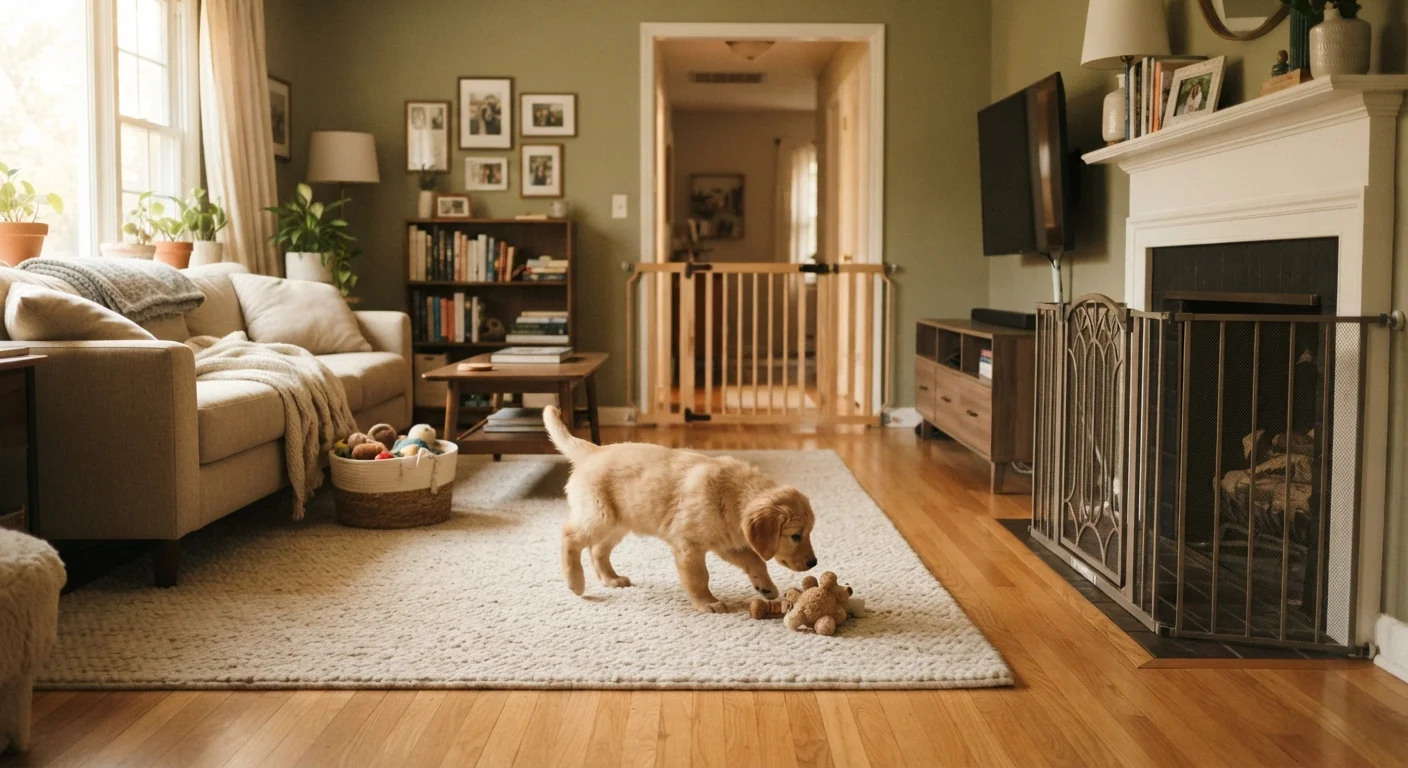
A young puppy exploring a living room that has been carefully puppy-proofed and organized.

Key Takeaways

Puppies explore with their mouths, making hazard removal your single most important pre-arrival task.
Common household items — including many plants, cleaning products, and electrical cords — pose serious risks to puppies.
Designating a confined, puppy-safe zone makes supervision manageable during the adjustment period.
Room-by-room auditing is more thorough than a general walk-through and reduces the chance of missing hazards.
Veterinary guidance should inform decisions about specific toxins and health risks relevant to your breed.
90–180 min

Summary

28 items · 1.5–3 hours

Why Puppy-Proofing Deserves a Full Walkthrough

Puppies interact with the world through their mouths, noses, and paws — and they do so at floor level, in corners, and behind furniture that adults rarely inspect. What looks like a tidy room to you may contain chewable electrical cords, toxic houseplants, or small objects that present a choking hazard to a curious eight-week-old. Preparing your home before the first day is one of the most consequential steps you can take for your puppy's safety.

A room-by-room audit — rather than a general glance around — is the most reliable approach. Move slowly through each space at puppy height (literally crouch down) to identify what they will actually encounter. If you share your home with other pets, also review our guide on introducing a new dog to a household with other pets to plan those first interactions carefully.

Use the checklist below as your room-by-room audit tool. Items marked must address genuine safety risks; should items prevent behavioral problems and damage; nice-to-have items improve your puppy's overall experience and your own quality of life.

Whole-Home Hazards

Secure or conceal all electrical cords and charging cables using cord covers, cable organizers, or furniture placement — puppies chew these instinctively and electrocution is a real risk. Must
Remove or relocate all houseplants to inaccessible locations and verify that each species is non-toxic to dogs using a resource such as the ASPCA Animal Poison Control database. Must
Store all medications (prescription and over-the-counter), vitamins, and supplements in latched cabinets or drawers — many human medications are acutely toxic to dogs even in small doses. Must
Pick up and secure small objects at floor level (coins, rubber bands, hair ties, children's toys, batteries) that present choking or obstruction hazards. Must
Install baby gates or exercise pen panels to block stairways, rooms not yet audited, and areas you want permanently off-limits. Must
Move plastic bags, grocery bags, and dry-cleaning bags out of reach — suffocation risk is serious. Must

Kitchen & Dining Areas

Secure lower cabinets with child-proof latches, particularly those containing cleaning products, dishwasher pods, or trash bags. Must
Move the trash can to a latched cabinet or invest in a heavy-lidded bin that a puppy cannot tip or open. Must
Store all human food — especially xylitol-containing products, grapes, raisins, onions, chocolate, macadamia nuts, and alcohol — completely out of reach. Must
Keep the dishwasher closed and never leave sharp utensils or skewers accessible at counter or floor level. Should
Use a stove knob cover or remove stove knobs when unsupervised to prevent accidental activation. Nice to have

Bathrooms & Laundry

Keep toilet lids closed at all times — small puppies can fall in and drown, and cleaning tablets added to the tank create toxic water. Must
Store all cleaning products, bleach, laundry detergent, and fabric softener sheets in a latched cabinet above floor level. Must
Keep the washing machine and dryer doors closed and check inside before starting a cycle — puppies can climb into open appliances. Must
Secure razor blades, nail files, and scissors in closed drawers; sharp grooming tools left on bathroom surfaces are easily knocked down. Should

Living Room & Bedrooms

Anchor bookshelves, dressers, and any tall furniture to the wall to prevent tipping if a puppy attempts to climb. Should
Remove or secure loose area rug corners and fringe that puppies will chew, potentially ingesting fibers. Should
Store all shoes, socks, and clothing off the floor — these are prime chew targets and fabric ingestion can cause intestinal blockages. Should
Check under and behind furniture for accumulated small objects, coins, or food debris before allowing puppy access. Should
Ensure window screens are securely fitted; do not rely on screens alone to prevent falls from elevated windows. Must

Garage, Yard & Outdoor Areas

Store antifreeze, motor oil, fertilizers, pesticides, herbicides, and pool chemicals in a locked cabinet or inaccessible location — many are lethal in small quantities. Must
Walk the yard perimeter and repair any gaps in fencing or gates, including ground-level openings large enough for a puppy to squeeze through. Must
Identify and remove or fence off any toxic garden plants (azaleas, sago palms, foxglove, and others commonly found in US gardens are highly toxic to dogs). Must
Remove or cover standing water features such as fountains or decorative ponds until your puppy is larger and water-safe. Should
Keep garage doors closed or use a barrier — garages typically contain the highest concentration of toxic and sharp hazards in any home. Must

Puppy Zone Setup

Designate a single contained, easy-to-clean area as the primary puppy zone and fully audit it before arrival. Must
Place an appropriately sized crate with comfortable bedding in the zone; introduce it as a positive space before confinement begins. Should
Have multiple appropriate chew toys available so the puppy has sanctioned alternatives to household objects. Should
Set up a consistent feeding station with non-tip food and water bowls appropriate to the puppy's size. Must
Designate a nearby outdoor potty area and clear it of debris, sharp objects, or toxic plants before the puppy's first outing. Should

Setting Up Your Puppy's Safe Zone

Before your puppy arrives, designate one manageable area — a kitchen, laundry room, or sectioned-off living room corner — as their primary zone. This space should be fully audited, easy to clean, and close enough to household activity that the puppy feels included rather than isolated. Crates, exercise pens, and baby gates are the core tools for defining this boundary.

Avoid Giving Too Much Freedom Too Soon

Granting a new puppy unsupervised access to multiple rooms is one of the most common mistakes new owners make. Even after completing this checklist, limit your puppy to a single audited zone for the first one to two weeks. Unsupervised time in unaudited spaces dramatically increases the risk of ingestion accidents, destructive chewing, and housetraining setbacks.

Understanding how much freedom to grant — and when — is a nuanced decision. Our article on crate training and free-roaming trade-offs walks through the developmental logic behind both approaches. For now, less space with more supervision is safer than more space with less oversight.

Stock the zone with appropriate chew toys, a water bowl secured against tipping, bedding with a familiar scent (ask your breeder or shelter for a piece of bedding from the litter if possible), and an appropriately sized crate if you plan to use one. Having these items in place before your puppy steps through the door reduces the chaos of the first hour considerably.

Required

Baby gates or exercise pen panels

Create physical boundaries between audited and non-audited areas without permanently blocking doorways.

Required

Cabinet latches (child-proof style)

Prevent puppy access to lower cabinets containing toxic chemicals, medications, or food.

Required

Cord covers or cable management sleeves

Protect electrical cords from chewing, reducing electrocution risk throughout the home.

Required

Appropriately sized crate

Provides a secure, den-like space for overnight rest and unsupervised periods during the training phase.

Required

Non-tip food and water bowls

Prevent spills that create slip hazards or allow a puppy to ingest excessive water rapidly.

Required

ASPCA Animal Poison Control reference

Verify which specific plants, foods, and household substances are toxic to dogs before puppy arrives.

Optional

Enzymatic cleaner

Effectively breaks down urine and fecal matter at the molecular level, reducing odor that attracts repeat accidents.

What to Do After the First Walk-Through

After completing this checklist, schedule a veterinary appointment if you haven't already — ideally within the first 48 to 72 hours of bringing your puppy home. Your vet can confirm vaccinations, screen for parasites, and advise on breed-specific risks that may require additional home modifications. Early socialization is equally critical: the primary socialization window for puppies closes around 12–16 weeks, so thoughtful exposure during this period shapes long-term behavior. Learn more in our piece on socialization windows in puppies and why they matter.

Puppy-proofing is not a one-time event. Revisit this checklist as your puppy grows, since a dog that couldn't reach the kitchen counter at eight weeks may be able to at five months. Adapt your environment incrementally as your puppy earns supervised access to more of the home.

This article provides general pet care information and is not a substitute for professional veterinary advice. Consult a licensed veterinarian for guidance specific to your puppy's breed, age, and health status.

Pets & Animals Editorial Team is the collective byline for our editorial team and contributor network. Articles published under this byline or an editorial pen name are researched, written, and reviewed according to our editorial standards for clarity, consistency, and independence before publication.

View all articles by Pets & Animals Editorial Team →
Disclaimer: The content provided on our blog site traverses numerous categories, offering readers valuable and practical information. Readers can use the editorial team’s research and data to gain more insights into their topics of interest. However, they are requested not to treat the articles as conclusive. The website team cannot be held responsible for differences in data or inaccuracies found across other platforms. Please also note that the site might also miss out on various schemes and offers available that the readers may find more beneficial than the ones we cover.