

Key Takeaways
Why Small Bathrooms Demand a Different Strategy
The average US bathroom runs between 35 and 50 square feet - barely enough to move comfortably, let alone store everything a household needs for daily routines. Cramped vanities, shallow medicine cabinets, and zero linen closet access are common realities, especially in older homes and apartments.
The instinct is often to add more containers. But in a small bathroom, adding storage without first evaluating what belongs there tends to make things worse. Clutter compounds quickly when there's no margin for error. The strategies below work precisely because they treat space as a finite resource and prioritize placement, not just quantity.
If you're also weighing a larger renovation, our guide to bathroom remodel costs explains which changes actually move the budget needle versus which are cosmetic.
Declutter before you organize
Storage problems in small bathrooms are often inventory problems in disguise. Most households accumulate duplicate products, expired medications, and half-empty bottles that consume prime cabinet and drawer space. Before adding any shelving or bins, take everything out and evaluate it honestly.
Check expiration dates on sunscreen, medications, and skincare. Discard or relocate products used less than once a month. A lighter load means the storage you already have works harder - and any additions you make will go further.
A lighter product load makes existing storage work far harder than any new shelving will.
Go vertical with wall-mounted shelving
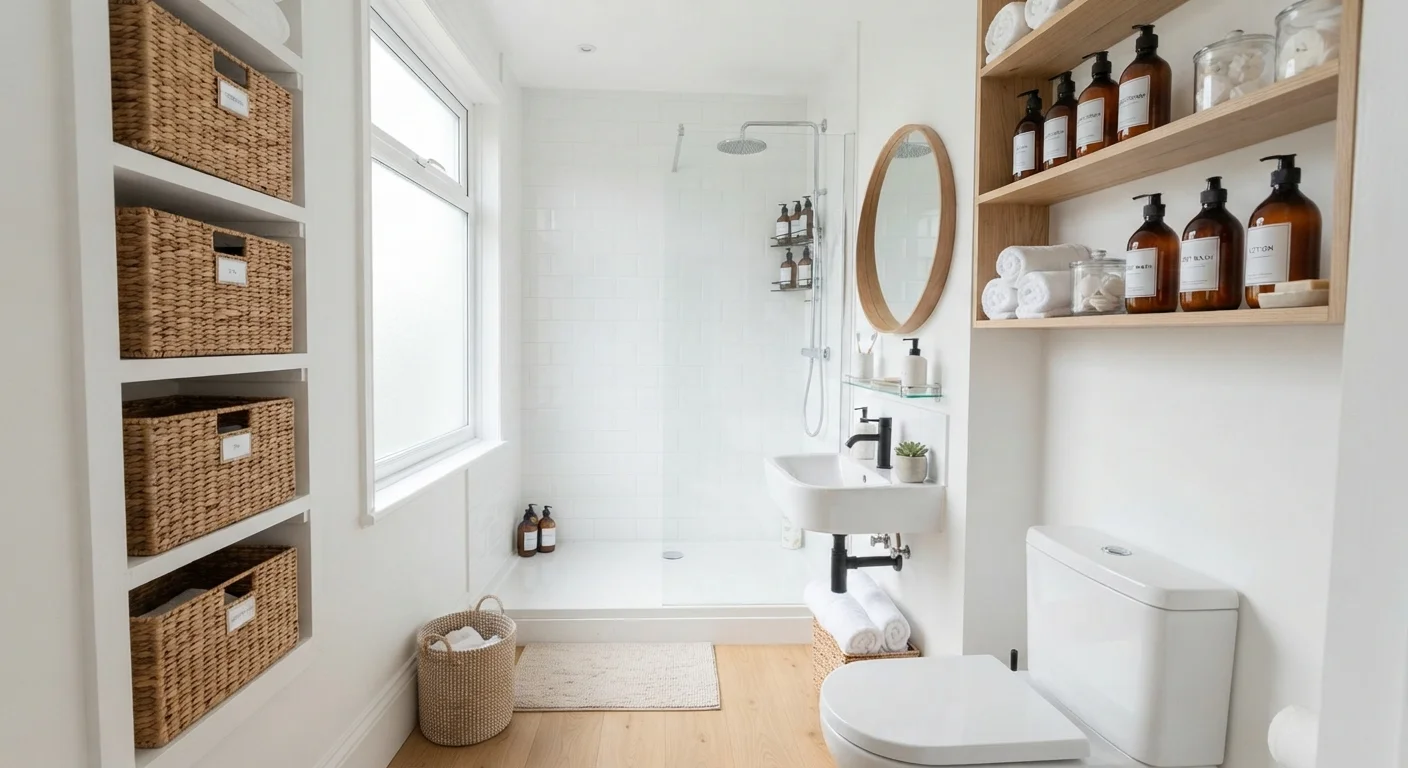
Floor space is scarce; wall space usually isn't fully used. Floating shelves installed above the toilet, alongside the mirror, or on any bare wall segment give you functional surface area without shrinking the room visually. Open shelving works well for items you reach for daily - folded hand towels, a soap dispenser, a small plant.
For a cleaner look that's also easier to clean, keep items in consistent containers rather than loose. Matching sizes reduce visual noise, which matters in small rooms where the eye has nowhere to rest. If you prefer concealed storage, a wall-mounted cabinet with a door achieves the same footprint savings with less visual exposure.
Wall-mounted shelves above the toilet add storage capacity without touching an inch of floor space.
Build in a recessed niche
A recessed shower niche - a shelf cut into the wall between studs - is one of the most efficient storage additions possible in a small bathroom. It holds shampoo, conditioner, and soap without protruding into the shower footprint at all. Niches can also be added outside the shower on interior walls, framed as a small display or storage alcove.
This is a job for a qualified contractor or experienced tiler, particularly if the wall is shared with plumbing or exterior-facing. Permits and waterproofing requirements vary by jurisdiction, so verify local codes before starting. The payoff, though, is permanent storage that takes up zero additional room.
Recessed niches borrow space from inside the wall itself - net storage gain, zero footprint added.
Use the back of the door
The inside of a bathroom door is reliable dead space in most homes. An over-door organizer with clear pockets works well for hair tools, styling products, first-aid items, or backup toiletries. Hooks mounted at different heights handle towels, robes, or bags. For a more streamlined look, a slim mounted rack with a few bars achieves the same without the plastic-pocket aesthetic.
The key is matching the organizer to the door's actual clearance - measure the gap between the door and the nearest obstacle (vanity corner, toilet tank) before purchasing anything.
The inside of a bathroom door is reliable dead space that most households never think to use.
Maximize under-sink storage with organizers
Under-sink cabinets often become a dumping ground because plumbing curves and pipes interrupt the interior. Adjustable risers, stackable bins, and pull-out drawers designed for irregular cabinet interiors bring usable order to this area. Grouping items by use - cleaning supplies together, hair tools together - makes it easier to find things without emptying the whole cabinet.
If the vanity itself is the problem (too small, wrong configuration), that's worth factoring into any eventual remodel plan. Our home improvement hub covers renovation decisions across the house, including bathroom layout tradeoffs.
Adjustable risers and pull-out bins reclaim under-sink space that plumbing pipes usually steal.
Add hooks and bars strategically
Towel bars and hooks do more than hold towels - they keep items off counters and out of cabinets, which frees that space for everything else. A row of hooks near the door, a towel bar on the side of a vanity, or a hook mounted inside a cabinet door can collectively absorb a surprising volume of daily-use items.
Installation is straightforward into drywall with the right anchors, but for tile walls, anchoring into grout lines rather than tile face reduces the risk of cracking. When in doubt on drilling into tile, consult a handyperson or contractor. The open vs. closed storage debate explored in kitchen contexts applies here too - hooks are open storage that works best for items you use and replace consistently.
A row of well-placed hooks can absorb daily-use items and clear counter space almost immediately.
Putting It All Together
No single trick transforms a cramped bathroom - but layering several of these approaches produces real, lasting results. Start by editing what you own, then assign every remaining item a zone before you buy a single organizer. Once a system is in place, maintenance becomes far easier because everything has a clear home.
Consistency Makes Maintenance Easy
Once you've established zones - a shelf for towels, a bin for hair tools, a rack for cleaning supplies - stick to them. When everything has a fixed address, restoring order after a busy week takes minutes rather than a full reorganization session. Resist the urge to shift things around frequently; a stable system is a usable one.
For households rotating seasonal items like guest towels, holiday soaps, or backup supplies, a broader organization approach can help. Our seasonal storage rotation guide outlines a method that applies well beyond the closet.
The goal isn't a magazine-ready bathroom - it's one that works reliably for real daily life in whatever square footage you have.