

Key Takeaways
Why the Test Drive Deserves More Preparation
For many buyers, the test drive is the most under-used part of the car-buying process. After weeks of reading specs and watching reviews, most people spend less than 20 minutes behind the wheel - and spend most of that time listening to the salesperson rather than evaluating the vehicle. That's a missed opportunity.
A well-structured test drive isn't just about whether the car feels good on a straightaway. It's about identifying how the vehicle will actually fit into your daily life, and whether anything about it should give you pause before committing to a five- or six-year loan. The questions below are ones most buyers skip - either because they don't think to ask, or because they feel awkward raising them. They shouldn't be skipped.
For broader context on where the test drive fits within the full process, see the complete car-buying journey from research through final paperwork.
Can I drive a route I choose, not the one you suggest?
Dealership-suggested routes are typically short, smooth, and designed to make any car feel acceptable. Ask to drive a route that reflects your actual commute - one that includes a highway on-ramp, a rough patch of road, a tight parking lot, and stop-and-go traffic if possible. This exposes real-world characteristics like highway noise, suspension firmness, and braking feel that a dealer's preferred loop won't reveal.
Drive your route, not theirs - your commute reveals what a dealership loop never will.
What's included in the warranty, and what isn't?
Many buyers assume warranty terms are standard, but coverage varies significantly between manufacturers and between new and certified pre-owned vehicles. Ask specifically: What's the powertrain coverage period? Is there a separate bumper-to-bumper term? Are wear items like brake pads and tires covered? What voids the warranty? Get answers in writing or ask for the warranty document - not just a verbal summary.
Warranty gaps aren't always obvious - ask for the document, not just the pitch.
Has this vehicle had any accident history or prior damage?
For used vehicles, always ask this directly - and then verify independently through a vehicle history report using the VIN (Vehicle Identification Number). Even minor collisions can affect resale value and, in some cases, structural integrity. On new vehicles, ask whether the car has been used as a loaner or demo unit, which can affect both condition and warranty start dates.
Ask about prior damage directly, then verify with a VIN-based history report.
Are there any open recalls on this vehicle?
Open recalls - safety issues that haven't yet been repaired - are publicly searchable through the National Highway Traffic Safety Administration (NHTSA) database using the vehicle's VIN. Ask the salesperson directly whether any recalls are outstanding, and cross-check yourself. A dealer is required by law to disclose and repair safety recalls on used vehicles before sale, but it's worth confirming the status rather than assuming.
Open recalls are public record - check the NHTSA database using the VIN before buying.
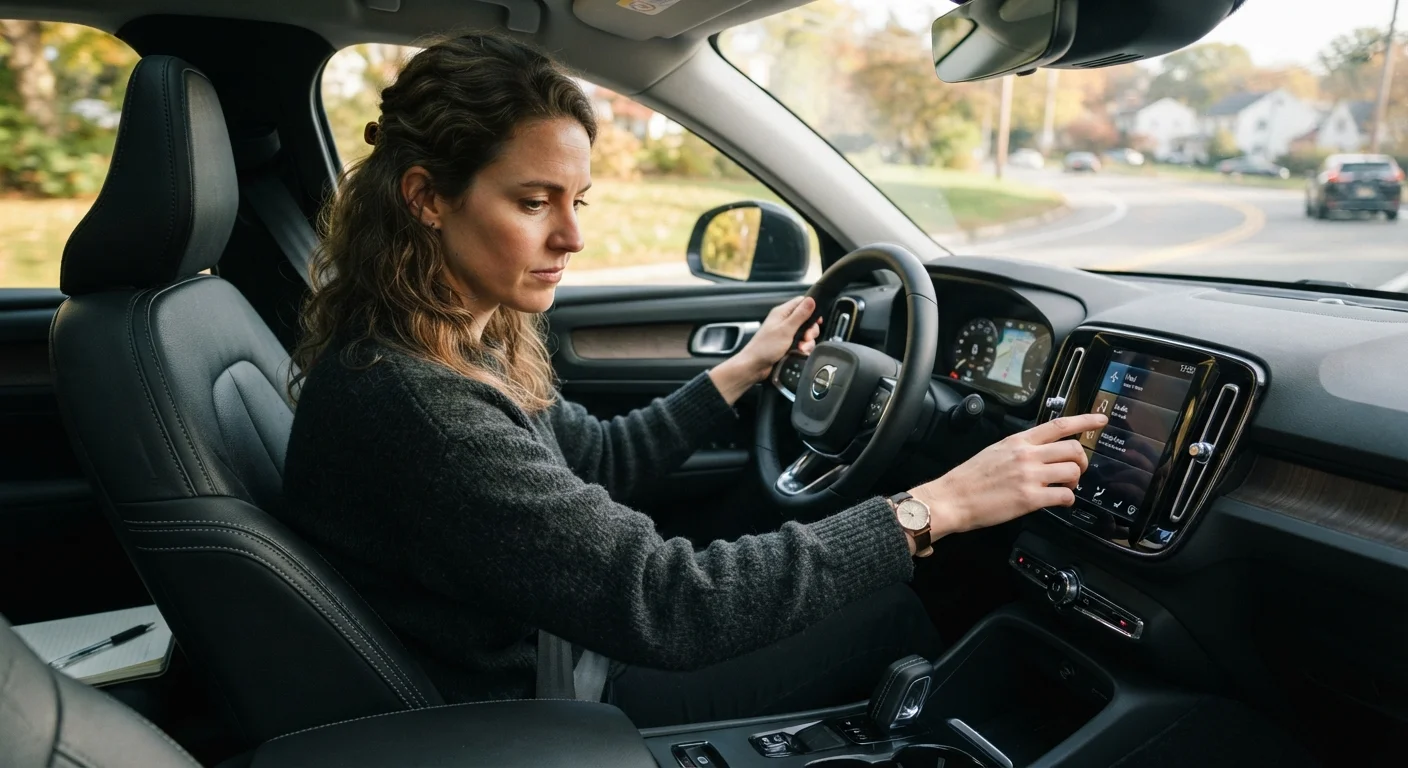
How intuitive is the infotainment system under real use?
During the drive, actually use the infotainment system - not just glance at it. Try connecting your phone via Bluetooth or Apple CarPlay/Android Auto. Adjust the climate controls without looking down. Set a navigation destination. If a system requires your full attention to operate basic functions, that's a legitimate safety and usability concern, not just a preference issue. Some systems have a learning curve; others are genuinely difficult to use while driving.
If you can't adjust the climate without looking, the system is a distraction risk.
Does the cargo space and seating actually work for my life?
Bring what you normally carry - child seats, a stroller, sports gear, a pet crate - and test whether it actually fits. Manufacturer cargo figures are measured under standardized conditions that may not reflect how you pack. Fold the rear seats yourself and assess the load floor. Sit in the back seat if you'll ever carry passengers there. Published dimensions rarely capture the real-world usability of a space.
Published cargo figures don't capture how your actual gear fits - test it yourself.
What are the visibility and blind spot characteristics?
Thick roof pillars, high trunk lines, and narrow rear windows have become more common as vehicle designs have evolved. Before leaving the lot, check visibility over your shoulder when changing lanes, assess the backup camera quality, and note whether standard blind-spot monitoring is included or an add-on. Parking in a tight spot during the test drive - rather than an open row - gives you a truer sense of maneuverability.
Test visibility in a tight parking scenario, not just open-road conditions.
Leaving the Lot Better Informed
Every question you ask during a test drive is a data point. Combine what you observe firsthand - brake response, seat comfort, blind spots, infotainment intuitiveness - with what you learn from direct questions to the salesperson. Where answers are vague or avoided, that's worth noting too.
Bring Your Questions Written Down
Sales conversations move quickly, and it's easy to leave a dealership realizing you forgot to ask something important. Writing your questions in advance - and working through them systematically during the drive - ensures you don't get swept along by the pace of the sale. If you're visiting multiple dealerships, a consistent question set also makes comparisons more useful. See what to verify before visiting a dealership for a practical pre-visit checklist.
If the vehicle is used, request a copy of the vehicle history report and ask whether an independent pre-purchase inspection is permitted. Many dealerships allow it, and the ones that don't are worth questioning. This step pairs well with a pre-purchase deal checklist that covers total cost, return policies, and whether the numbers actually make sense.
Once you've assessed the vehicle itself, don't overlook what comes after ownership - including understanding auto insurance coverage and routine maintenance expectations for the model you're considering.
This article is for general informational purposes only and does not constitute financial, legal, or professional automotive advice. Always verify specific vehicle details with the selling dealer and consult a qualified mechanic for pre-purchase inspections.