

Key Takeaways
Option A
Brake Pads
The consumable friction material that does the stopping.
Best for: Routine replacement; the first component to check when braking performance changes.
Option B
Brake Rotors
The durable metal disc that pads clamp against to slow the vehicle.
Best for: Longer-interval service; replaced when worn below minimum thickness or warped from heat cycling.
If your car squeals when braking but stops smoothly
Brake Pads
Squealing at the end of a stop is the classic sign of worn pad material. A pad inspection should be your first step before assuming rotors are involved.
If your steering wheel or pedal vibrates during braking
Brake Rotors
Pedal pulsation and steering shimmy under braking typically indicate rotor warping or uneven thickness variation - a rotor measurement by a mechanic will confirm.
If you hear a grinding metal-on-metal sound
Brake Pads
Grinding means pad material is fully depleted and metal is contacting metal. Have both pads and rotors inspected immediately - delay usually means rotor damage as well.
If a mechanic recommends replacement at a routine service interval
Brake Pads
Pads are the routine wear item. Confirm rotor thickness is measured before agreeing to rotor replacement - not every pad change requires new rotors.
How Each Component Works
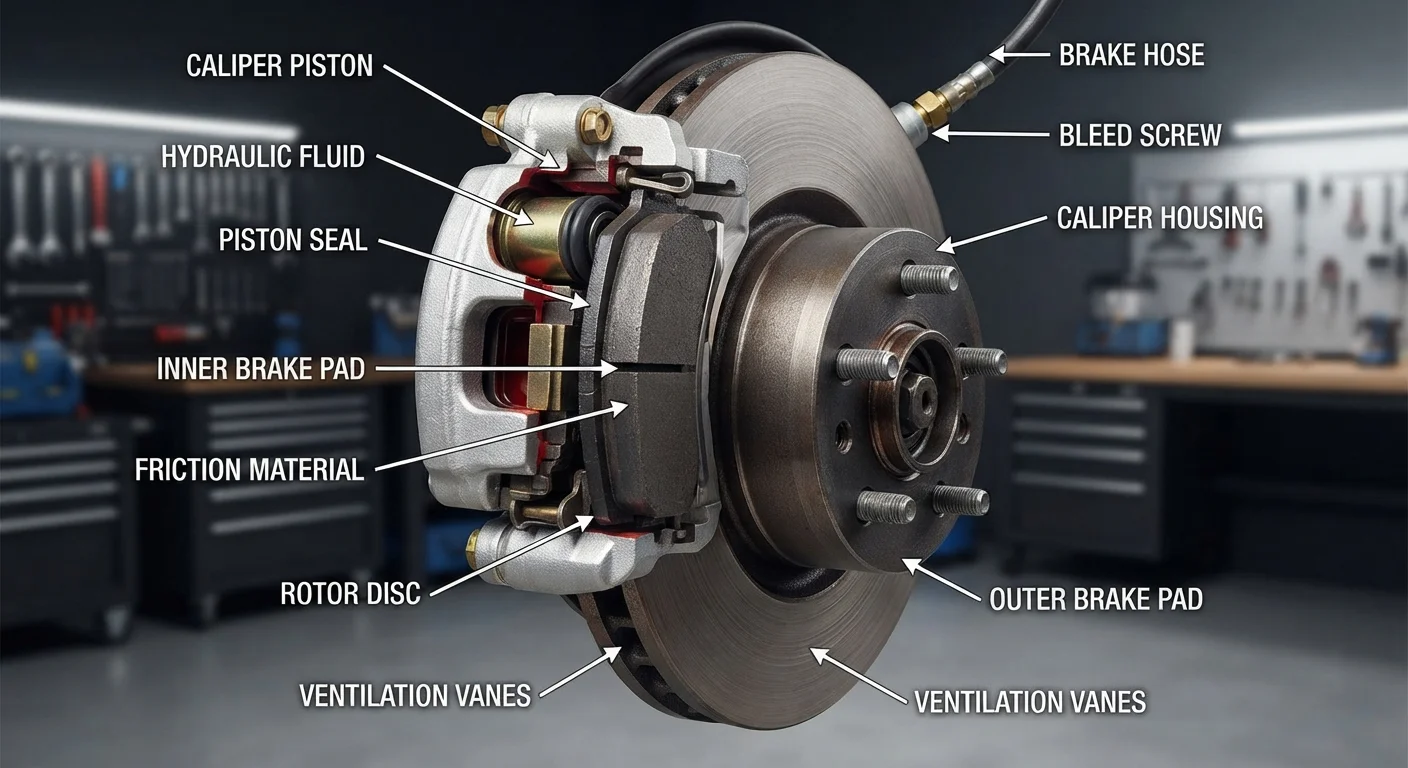
Every time you press the brake pedal, hydraulic pressure forces a caliper to squeeze two brake pads against a spinning rotor. Friction between the pad material and the rotor surface converts the vehicle's kinetic energy into heat, slowing the wheel. It sounds simple, but the two parts play very different roles in that process.
Brake pads are made from friction material - typically semi-metallic, ceramic, or organic compounds - bonded to a steel backing plate. They are designed to be the sacrificial component: they wear down so the rotor doesn't have to. Brake rotors (also called brake discs) are precision-machined iron or steel discs. They provide the hard surface that pads grip and must dissipate enormous amounts of heat without warping or cracking.
Because pads do the friction work, they wear far faster. Rotors endure heat stress cycle after cycle and wear gradually through pad contact, but they are built to outlast several sets of pads under normal driving conditions.
| Criterion | Brake Pads | Brake Rotors |
|---|---|---|
| Primary function | Friction material; creates stopping force | Hard surface pads clamp against |
| Typical lifespan | 25,000-70,000 miles | 50,000-80,000+ miles |
| Common failure mode | Friction material wears through | Warping, scoring, or thinning below spec |
| Audible warning sign | Squealing, then grinding | Pedal pulsation, vibration |
| Replacement frequency | More frequent (consumable item) | Less frequent; sometimes resurfaced |
| Can be reconditioned? | No - always replaced | Sometimes - machined if above minimum thickness |
| Relative cost (parts) | Generally lower | Generally higher |
Warning Signs: What Each Failure Looks Like
Recognising which component is failing helps you have a more informed conversation with a mechanic - and avoid unnecessary repairs.
Worn Brake Pads
- High-pitched squealing near the end of a stop - many pads include a small metal wear indicator designed to make this noise as a warning.
- Reduced braking responsiveness - the pedal may feel like it needs more travel to slow the car.
- Grinding or growling - this means pad material is gone; the steel backing plate is now contacting the rotor directly.
Worn or Damaged Rotors
- Pedal pulsation or vibration - a pulsing sensation through the brake pedal or steering wheel during braking often indicates rotor warping or thickness variation.
- Visible deep grooves or scoring on the rotor face - grooves typically result from worn pads left too long, allowing metal-on-metal contact.
- Vehicle pulling to one side during braking - can point to uneven rotor wear or a sticking caliper affecting one side.
"Warped Rotor" - A Commonly Misused Term
You will frequently hear mechanics and drivers describe brake vibration as a "warped rotor." However, automotive research suggests that true physical distortion of the disc is less common than uneven transfer of pad material onto the rotor surface. This deposit buildup creates thickness variation that causes the same pulsation sensation. Understanding this matters because the fix - measuring the rotor and machining or replacing it - is the same either way, but it reinforces why ignoring worn pads for too long can create a rotor problem where none existed before.
It is worth noting that rotor "warping" is a commonly used term, but research suggests most cases involve uneven pad material deposited on the rotor surface (a condition called brake judder) rather than true physical warping of the disc. The practical remedy is the same: measurement and, where needed, resurfacing or replacement.
Replacement Intervals and What Affects Them
There is no universal mileage rule that applies to every driver, because wear depends heavily on driving habits, vehicle weight, and brake component quality. General industry guidance offers a useful starting range.
25,000-70,000 mi
Typical brake pad replacement range
Industry service guidelines generally place pad replacement in this range, with city drivers trending toward the lower end.
50,000-80,000+ mi
Typical rotor service life
Rotors generally outlast multiple pad sets, though aggressive driving, towing, or neglected pads can shorten this significantly.
~30%
Estimated stopping distance increase with worn pads
NHTSA brake research indicates that severely degraded brake friction material can meaningfully extend stopping distances compared to components within service specification.
City driving - with frequent stop-and-go traffic - generates far more brake applications per mile than highway driving, accelerating pad wear significantly. Towing or hauling adds load, increasing stopping demands on both components. Aggressive or late braking compounds wear on pads and generates more heat stress on rotors.
When a mechanic recommends replacing rotors alongside pads, the reason should be measurable: rotors have a minimum thickness specification stamped on them or listed in the vehicle's service manual. If a rotor is at or below that minimum, replacement is required for safe operation. If it still has usable material, resurfacing on a brake lathe may be appropriate - though not every shop offers this, and thin rotors may warp more easily after machining.
A useful habit: ask your mechanic to show you the rotor thickness measurement whenever pads are replaced. This creates a documented baseline for future service visits.
This article is for general informational purposes only. For any brake-related safety concerns or repair decisions, consult a qualified, licensed mechanic who can physically inspect your vehicle.