
Cabin Air Filter vs. Engine Air Filter: Two Different Jobs, Two Different Schedules

Key Takeaways
Our Verdict
Both the cabin air filter and the engine air filter are essential - but they solve different problems and wear out on different timelines. Understanding which is which removes confusion at service appointments and helps drivers prioritize maintenance spending more confidently.
| Best for | Recommended |
|---|---|
| Drivers bothered by dust, odors, or weak airflow inside the cabin | Cabin Air Filter replacement |
| Drivers noticing reduced fuel economy or sluggish engine response | Engine Air Filter inspection |
| Those driving in dusty, rural, or high-pollution environments | More frequent inspection of both filters |
What Each Filter Actually Does
Most vehicles built in the past two decades contain two separate air filtration systems, each doing a distinct job.
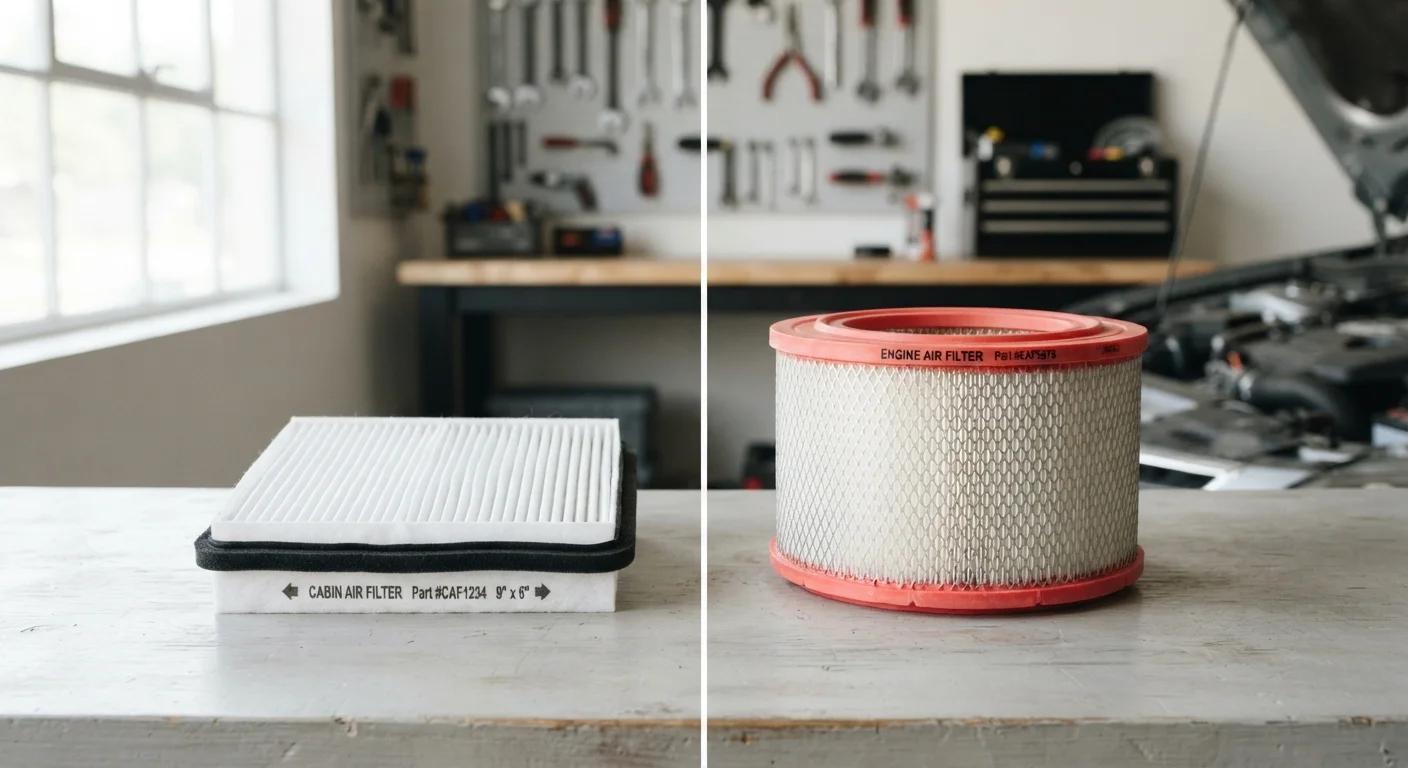
The engine air filter sits in the air intake pathway and screens out dirt, dust, insects, and debris before air enters the engine. Clean intake air is critical for efficient combustion - a clogged engine filter restricts airflow, which can reduce fuel economy and, over time, stress engine components.
The cabin air filter (sometimes called a pollen filter or HVAC filter) is positioned in the ventilation system, typically behind the glove box or under the dashboard. It filters the air that flows through your heating, ventilation, and air conditioning (HVAC) system before it reaches passengers. It captures pollen, dust, mold spores, and fine particulates - things that affect air quality and passenger comfort, not engine function.
Neither filter does the other's job. Replacing one does not maintain the other.
| Cabin Air Filter | Engine Air Filter | |
|---|---|---|
| Primary purpose | Filters air entering the passenger cabin | Filters air entering the engine intake |
| What it protects | Passengers and HVAC system | Engine components and combustion quality |
| Common location | Behind glove box or under dashboard | Engine bay air intake housing |
| Typical replacement interval | ~15,000-25,000 miles or annually | ~15,000-30,000 miles |
| Key warning signs | Musty odors, weak airflow, excess interior dust | Lower fuel economy, sluggish acceleration |
| DIY accessibility | Varies; often moderate difficulty | Often straightforward; tool-free on many models |
Replacement Intervals: What the Numbers Actually Mean
Automakers typically publish recommended replacement intervals for both filters in the owner's manual, but these figures are estimates based on average driving conditions.
- Engine air filter: Commonly cited intervals range from roughly 15,000 to 30,000 miles, depending on the vehicle and manufacturer guidance. Driving on unpaved roads or in construction-heavy areas will shorten that window considerably.
- Cabin air filter: Manufacturers often suggest replacement every 15,000 to 25,000 miles or approximately once a year, whichever comes first. Again, heavy pollen seasons, urban pollution, or rural dust can accelerate degradation.
These are general industry ranges - your owner's manual is the authoritative source for your specific vehicle. If the manual figures conflict with anything you read elsewhere, follow the manual.
Check Both Filters at the Same Service Visit
Since both filters are inexpensive and quick to inspect, asking a technician to check both during an oil change or scheduled service makes practical sense. Catching a near-due filter early avoids an extra trip. Always verify the recommendation matches your owner's manual interval before approving a replacement.
Warning Signs That a Filter Needs Attention
Rather than relying solely on mileage, pay attention to what your vehicle is telling you.
Signs the engine air filter may be due:
- Noticeable drop in fuel economy without another clear cause
- Sluggish acceleration or reduced throttle response
- A visibly dirty or grey filter when inspected (some are accessible without tools)
- Check engine light in some vehicles, when airflow sensors are affected
Signs the cabin air filter may be due:
- Musty or stale odor when running the HVAC system
- Reduced airflow from vents even at high fan settings
- Increased dust accumulation on interior surfaces
- Worsening allergy symptoms during commutes
Neither set of symptoms guarantees the filter is the cause, but both warrant an inspection before assuming a larger problem exists.
Inspecting and Replacing: What to Know
Both filters are considered routine maintenance items, and on many vehicles they are accessible enough for a confident DIY inspection. That said, difficulty varies significantly by make and model - some engine air filter housings require no tools to open, while some cabin filters involve partially disassembling a dashboard section.
If you are unsure about your specific vehicle, consulting a qualified mechanic is always a reasonable choice. A trained technician can inspect both filters during a routine service visit and show you the condition before recommending replacement - which is a reasonable thing to request.
When having either filter replaced professionally, ask to see the old filter. A heavily soiled filter is self-evident; a nearly clean one on a vehicle with low mileage may suggest the recommendation is premature.
This article is for general informational and educational purposes only. Always consult your vehicle's owner's manual and a qualified automotive technician for guidance specific to your vehicle and driving conditions.