

Key Takeaways
Why Breed Group Matters - But Isn't Everything
Dog breeds were developed for specific functions - herding, hunting, guarding, companionship - and those origins shape energy levels and exercise tolerances in meaningful ways. A Siberian Husky bred for endurance sled work has fundamentally different stamina than a Basset Hound selected for slow, methodical scent tracking.
Broadly, breed groups offer a useful framework:
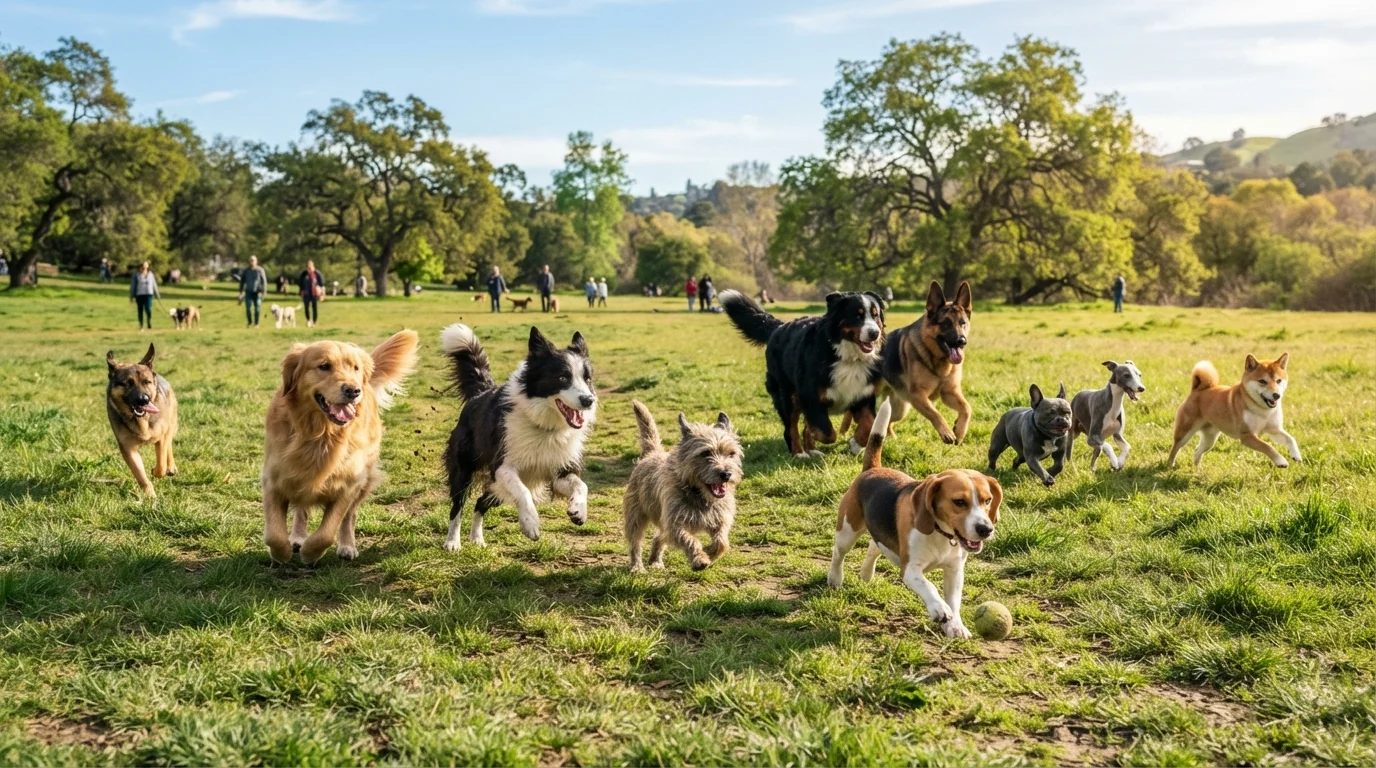
- High-energy working and sporting breeds (Border Collies, Vizslas, Belgian Malinois): typically require 1.5-2+ hours of vigorous activity daily and thrive with purposeful exercise like fetch, agility, or structured running.
- Terriers and hounds: highly variable - some terriers are intense sprinters, while scenthounds often prefer sustained moderate activity.
- Toy and companion breeds (Cavalier King Charles Spaniels, Shih Tzus): generally need 20-40 minutes of moderate activity daily, though individual dogs vary.
- Brachycephalic (flat-faced) breeds (French Bulldogs, Pugs, Bulldogs): require careful management due to respiratory anatomy that limits their ability to regulate heat and sustain exertion.
That said, individual variation within any breed is significant. A rescue dog's history, temperament, and current health all influence what's appropriate. Use breed as a starting hypothesis, not a fixed prescription.
Adjusting for Life Stage
Age is one of the most critical variables in exercise planning, and it affects dogs at both ends of the spectrum.
Puppies: Their growth plates - the soft cartilage near bone ends - remain open until roughly 12-18 months depending on breed size. High-impact or repetitive exercise before growth plates close can contribute to skeletal problems. A common guideline from veterinary practice is approximately 5 minutes of structured exercise per month of age, twice daily, though this is a general starting point rather than a precise rule. Puppies should avoid forced distance running, jumping from heights, or prolonged rough play on hard surfaces.
Adult dogs in good health generally tolerate consistent, breed-appropriate exercise well. Gradual conditioning matters - a dog that's been sedentary shouldn't be taken on a 10-mile hike without building up to it.
Senior dogs often benefit from shorter, more frequent outings rather than single long sessions. Joint changes, reduced cardiovascular reserve, and muscle loss are common as dogs age. Senior dog care requires thoughtful adjustments as physical capacity changes - consult your vet about appropriate modifications.
Match exercise type and duration to your dog's breed group as a baseline, then adjust based on the individual dog.
Breed history directly influences energy levels and physical capability. Starting with breed group expectations prevents both under-stimulation and overexertion, while individual observation fine-tunes the plan.
Limit high-impact exercise in puppies until their growth plates have closed.
Repeated stress on open growth plates can contribute to developmental orthopedic conditions. Protecting joint health during growth can have lifelong consequences for mobility.
Monitor for post-exercise stiffness or reluctance to move as a sign of over-exertion.
Dogs rarely self-limit during exciting activities, which means owners must watch for delayed signs of fatigue or soreness that appear the following day.
Incorporate mental stimulation as a regular part of the exercise routine - not just physical movement.
Many behavioral problems stem from cognitive under-stimulation rather than lack of physical activity alone. Mental work tires dogs effectively and is accessible in almost any weather or mobility situation.
Schedule regular veterinary check-ins to reassess exercise appropriateness as your dog ages or if health conditions develop.
Conditions such as hip dysplasia, heart disease, and hypothyroidism affect exercise tolerance, and some may not be apparent without examination. A vet can recommend appropriate modifications.
Recognizing Over-Exercise and Under-Exercise
Both extremes carry real costs. Under-exercised dogs - particularly high-drive breeds - commonly develop destructive behaviors, anxiety, and weight gain. Knowing how to read your dog's body language can help you identify frustration or restlessness before it becomes a behavioral problem.
Over-exercise signs include excessive panting that doesn't resolve after rest, lameness or stiffness following activity, reluctance to continue or move the next day, and in serious cases, vomiting or collapse. Heat-related illness is a particular risk in warm weather, especially for brachycephalic breeds.
Recovery days matter too. Just as in human fitness, muscle repair and adaptation require rest - a concept relevant across species as physical capacity evolves with age.
Mental Exercise: The Overlooked Component
Physical exertion alone doesn't fully satisfy many dogs, particularly working breeds. Mental engagement - scent work, puzzle feeders, training sessions, and structured games - can be as tiring as physical activity and is often more sustainable for dogs with joint limitations or in extreme weather.
For dogs working on leash manners, incorporating training into walks adds cognitive load without requiring extra distance. A 20-minute walk with frequent "find it" games or obedience work may satisfy a dog more effectively than a 40-minute off-leash run, depending on the individual.
Mental stimulation is also a practical tool during recovery from injury or surgery, when physical activity must be restricted. Always follow your veterinarian's guidance on activity levels during any health-related restriction period.
This article provides general educational information about dog exercise and is not a substitute for individualized veterinary advice. Consult your veterinarian before beginning a new exercise regimen, especially if your dog has health conditions, is very young, or is a senior.