

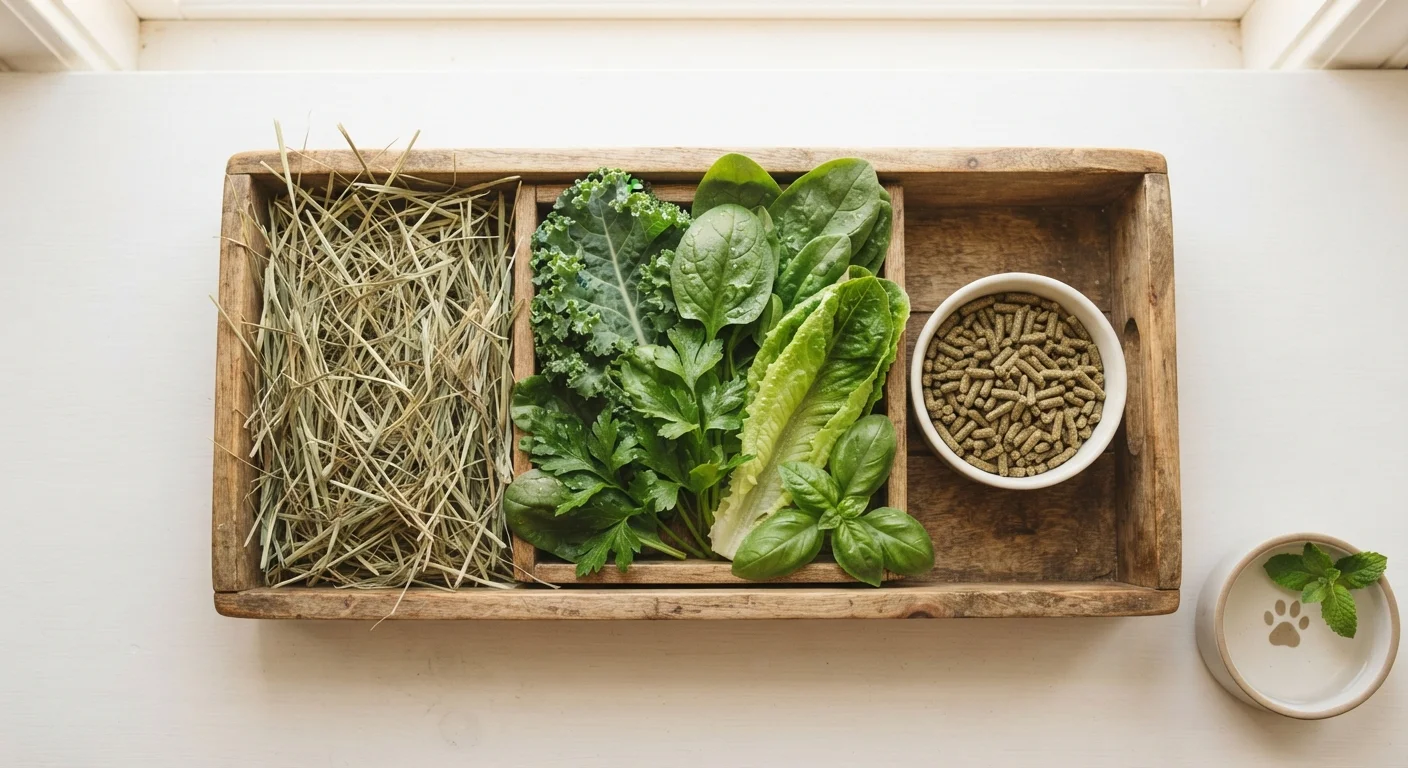
Why Diet Proportion Matters More Than Ingredient Choice
Rabbits are hindgut fermenters - their digestive systems rely on a continuous flow of high-fiber plant material to function correctly. Unlike dogs or cats, a rabbit's gut cannot tolerate prolonged interruptions in motility, and the wrong balance of foods can trigger potentially fatal conditions such as GI stasis. Understanding how much of each food category to offer is therefore just as important as knowing which items are safe.
Many owners inadvertently reverse the correct proportions - filling the bowl with pellets and offering hay as a treat - when the reality is almost the opposite. A well-structured diet is roughly 80-85% grass hay, 10-15% fresh leafy greens, and only a small, measured quantity of pellets. Fruit and other high-sugar items should be rare extras, not daily staples.
If you're new to rabbit ownership, our overview of the real demands of keeping a rabbit puts dietary commitment in fuller context.
Hay: The Non-Negotiable Foundation
Grass hay should be available to rabbits at all times, in quantities roughly equal to the rabbit's body size per day. For most adult rabbits, timothy hay is the veterinary standard: it has the right calcium-to-phosphorus ratio, adequate fiber, and low caloric density. Orchard grass and meadow hay are well-tolerated alternatives that some rabbits prefer.
Alfalfa hay is legume-based, significantly higher in calcium and calories, and appropriate only for young rabbits under six months of age or underweight adults under veterinary guidance. Feeding alfalfa long-term to healthy adult rabbits is associated with urinary sludge and weight gain.
GI stasis
A slowdown or complete halt of movement through the rabbit's gastrointestinal tract. It is a medical emergency that can become life-threatening within hours if untreated.
Hindgut fermentation
A digestive process in which microbial fermentation of plant fiber occurs in the cecum (a pouch in the large intestine). Rabbits depend on this process to extract nutrients from fibrous plant material.
Cecotropes
Soft, nutrient-dense droppings produced in the cecum that rabbits consume directly from their hindquarters. They are a normal and essential part of rabbit digestion, not a sign of illness.
Timothy hay
A type of cool-season grass hay that is the standard dietary recommendation for adult rabbits due to its appropriate fiber content, calcium-to-phosphorus ratio, and low caloric density.
Hay quality matters: it should smell fresh and grassy, not musty or dusty. Moldy or excessively dusty hay can cause respiratory irritation and should be discarded.
Pellets and Fresh Vegetables: Supporting Roles, Not Stars
Pellets provide a concentrated source of nutrients but should complement - not replace - hay. For a healthy adult rabbit, a general guideline widely cited by rabbit welfare organizations is approximately ¼ cup of plain, timothy-based pellets per 5 lbs of body weight per day. Pellets should be plain and uniform; avoid mixes containing dried fruit, seeds, or colorful puffed pieces, which encourage selective eating of low-nutrition elements.
Fresh leafy greens add hydration, variety, and micronutrients. Offer roughly 1-2 packed cups of greens per 5 lbs of body weight daily, using a rotating selection of at least three different varieties. Reliable options include romaine lettuce, green-leaf lettuce, cilantro, parsley, basil, and arugula. Introduce new greens gradually to avoid digestive upset.
Foods to limit or avoid entirely include: iceberg lettuce (very low nutrition, high water content), cabbage and other brassicas in large amounts (gas-producing), and any high-starch or high-sugar items such as bread, crackers, or commercial yogurt drops. Onion, garlic, avocado, and rhubarb are toxic and must be kept away entirely.
It's worth noting that some common beliefs about rabbit-safe foods don't hold up to scrutiny - see small pet myths vets hear too often for a broader look at misconceptions.
Water, Treats, and Monitoring Digestive Health
Fresh, clean water must always be accessible. Both bowls and sipper bottles are acceptable; bowls tend to allow more natural drinking postures and higher intake. Change water daily and clean containers regularly to prevent bacterial buildup.
Treats - including fruit, small pieces of carrot, or commercial rabbit treats - should account for no more than 5% of the diet by volume and ideally be offered only a few times per week. A blueberry or a thin slice of apple (seeds removed) is a reasonable occasional reward, not a daily supplement.
Monitor your rabbit's droppings as a direct window into gut health. Healthy cecotropes (soft, grape-cluster droppings that rabbits eat directly from their hindquarters) should not be confused with diarrhea. True loose or watery stool, or a sudden absence of droppings, warrants prompt veterinary attention. Consistent dietary balance is one of the most reliable ways to keep digestion stable.
This article provides general educational information about rabbit nutrition and is not a substitute for personalized veterinary advice. Consult a rabbit-savvy veterinarian for guidance tailored to your individual animal's health, age, and condition.