

Key Takeaways
Option A
Travel Debit Card
The straightforward, spend-what-you-have option.
Best for: Budget-conscious travelers who want direct access to their own funds without accumulating debt.
Option B
Travel Credit Card
The protection-rich, rewards-earning alternative.
Best for: Travelers who pay balances in full and want stronger fraud protection, purchase coverage, and added perks.
If you want to avoid overspending or carrying debt while traveling
Travel Debit Card
Debit cards limit spending to available funds, making it easier to stick to a travel budget without the risk of interest charges.
If fraud protection and dispute resolution are your top priorities
Travel Credit Card
US credit card holders benefit from stronger liability limits under the Fair Credit Billing Act, and disputed charges don't immediately drain your bank balance.
If you frequently rent cars or book hotels abroad
Travel Credit Card
Many hotels and rental agencies require a credit card for holds; using a debit card can tie up significant cash in your account for days.
If you need regular ATM cash access in countries with limited card acceptance
Travel Debit Card
Debit cards linked to global ATM networks often provide easier cash access, though fees still apply depending on your institution.
If you want additional travel protections bundled with your payment method
Travel Credit Card
Select credit cards include benefits like trip delay reimbursement, lost luggage coverage, and emergency assistance - though terms and limits vary significantly by card.
How Each Card Type Works Overseas
When you pay with a debit card abroad, funds are drawn directly and immediately from your linked bank account. This means you're spending money you already have - but it also means a fraudulent charge or a disputed transaction can temporarily leave you without access to those funds while the issue is resolved.
A travel credit card extends a line of credit, so purchases are billed to your account rather than deducted from your bank immediately. This separation between your spending and your actual bank balance is more than a technicality - it's a meaningful safety layer when something goes wrong far from home.
Both card types convert foreign currency at an exchange rate determined by the payment network (typically Visa or Mastercard), which is generally close to the mid-market rate. What varies is what fees get added on top. For a broader overview of currency and card mechanics, see Travel Money Explained.
| Criterion | Travel Debit Card | Travel Credit Card |
|---|---|---|
| Funds source | Your bank account (immediate) | Line of credit (billed later) |
| Fraud liability (US federal law) | Up to $500 if not reported quickly | Capped at $50 (FCBA) |
| Impact of dispute on funds | Money removed while investigated | Bank balance unaffected during dispute |
| Hotel/rental car holds | Freezes real account funds | Hold on credit line, not bank account |
| Foreign transaction fees | Varies; some accounts waive | Varies; many travel cards waive |
| ATM cash access | Broad network access | Available but often higher fees |
| Built-in travel protections | Rarely included | Often included; terms vary widely |
| Debt risk | None (spend existing funds) | Interest if balance not paid in full |
Fraud Liability and Dispute Protections
This is where the gap between card types is most consequential. Under the Fair Credit Billing Act (FCBA), credit card holders in the US are liable for no more than $50 in unauthorized charges - and many issuers offer zero-liability policies on top of that. Disputes don't touch your bank account balance while under investigation.
Debit cards fall under the Electronic Fund Transfer Act (EFTA), which ties your liability to how quickly you report the fraud. If you report within two business days, liability is capped at $50. Wait longer, and that cap rises to $500 - or potentially more. Critically, the disputed funds are already gone from your account during the investigation period, which can complicate daily spending abroad.
$50
Max credit card fraud liability under FCBA
The Fair Credit Billing Act limits US consumer liability on unauthorized credit card charges to $50, provided the issuer is notified promptly.
$500
Potential debit card fraud liability
Under the Electronic Fund Transfer Act, debit card users who wait more than two business days to report unauthorized transactions can face up to $500 in liability.
1-3%
Typical foreign transaction fee range
Most standard bank and credit cards charge between 1% and 3% on international purchases; cards marketed for travel often waive this fee entirely.
For a closer look at how the dispute process works on credit cards, learn how chargebacks work and what qualifies for one.
Fees, ATMs, and Everyday Practicalities
Neither card type is automatically fee-free internationally. Common charges to watch for include:
- Foreign transaction fees: Typically 1-3% per purchase. Many cards marketed specifically for travel waive these entirely - verify before you leave.
- ATM fees: Your institution may charge a flat fee per withdrawal; the ATM operator abroad may add another. These can stack up quickly.
- Dynamic currency conversion (DCC): When a merchant or ATM offers to charge you in US dollars rather than the local currency, the exchange rate applied is almost always worse. Declining DCC and paying in local currency is generally the better choice.
One practical advantage of debit cards: they tend to face fewer acceptance barriers at ATMs in countries where card payment infrastructure is limited. However, for hotel check-ins and car rentals, many providers worldwide require a credit card for authorization holds - sometimes placing a hold of several hundred dollars that can sit on a debit account for days. Approaches that minimize overseas fees and confusion explores how to handle these scenarios practically.
Travel Protections: What Credit Cards May Include
A significant differentiator for travel credit cards is the bundle of travel-related protections some issuers include. These can cover trip delays, trip cancellation, lost or delayed baggage, and rental car damage - though coverage scope, claim limits, and exclusions vary substantially between card products. Reading the actual benefit guide before relying on any coverage is essential.
Debit cards rarely include equivalent protections. If you're weighing whether your credit card coverage is sufficient for a trip or whether standalone insurance is warranted, compare credit card travel protection to standalone travel insurance for a more detailed breakdown.
None of these protections are guaranteed outcomes - they depend on meeting specific claim conditions and documentation requirements. Treat them as a useful layer, not a comprehensive safety net.
Carrying Both Cards Is a Common Strategy
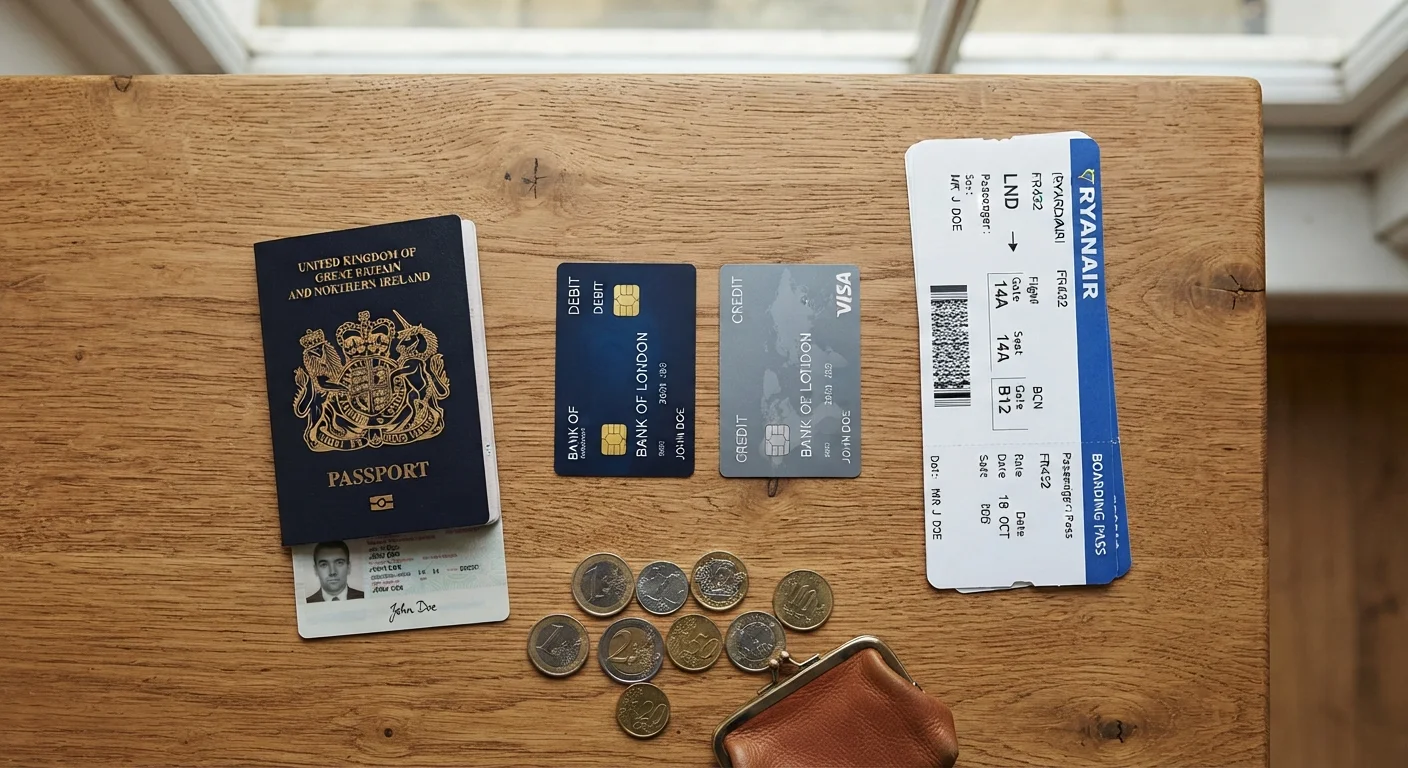
Many experienced international travelers carry one debit card for ATM cash access and one credit card for purchases, hotels, and car rentals. This hedges against a single card being blocked, lost, or rejected by a specific merchant. Store them separately - not in the same wallet - so losing one doesn't mean losing both. See managing travel money: cards, cash, and apps compared for a broader look at how these tools fit together.
This article is for general informational purposes only and does not constitute financial, legal, or tax advice. Terms, fees, and protections vary by card issuer and individual account. Consult your card issuer's terms and a qualified financial professional for guidance specific to your situation.