
Traveling With Medications: What US Travelers Need to Know About Customs and Documentation

| Who sets destination medication rules | Each country's government - not the TSA or US government (US Department of State travel guidance) |
| Typical permitted personal supply | 30-90 days depending on country and drug class (Varies by destination; verify with embassy) |
| Key document to carry | Physician letter on official letterhead with generic drug name (Recommended by US DEA and State Dept.) |
| Where to check controlled substance rules | Destination country's embassy and US DEA Office of Diversion Control (US DEA international travelers guidance) |
| When to start documentation prep | At least 4-6 weeks before departure (General travel medicine best practice) |
Why Medication Rules at the Border Matter
Crossing an international border with prescription or over-the-counter medications is not as straightforward as packing them in your carry-on. Every country sets its own rules about what substances may enter, in what quantities, and with what documentation. A medication that is legal and routine in the United States - a common stimulant for ADHD, a strong opioid painkiller, or even certain antihistamines - may be a controlled substance, restricted, or outright banned at your destination.
Customs officers have authority to detain, confiscate, and in serious cases prosecute travelers who fail to comply with local pharmaceutical import rules. This is not a rare edge case: travelers have faced significant legal trouble in countries across the Middle East, Southeast Asia, and elsewhere over medication violations that seemed minor by US standards.
This is general educational information, not legal or medical advice. Before traveling internationally, verify rules with the destination country's embassy and consult your prescribing clinician. See also Travel Health Prep for broader medical planning guidance.
| Who sets destination medication rules | Each country's government - not the TSA or US government (US Department of State travel guidance) |
| Typical permitted personal supply | 30-90 days depending on country and drug class (Varies by destination; verify with embassy) |
| Key document to carry | Physician letter on official letterhead with generic drug name (Recommended by US DEA and State Dept.) |
| Where to check controlled substance rules | Destination country's embassy and US DEA Office of Diversion Control (US DEA international travelers guidance) |
| When to start documentation prep | At least 4-6 weeks before departure (General travel medicine best practice) |
Documentation You Should Carry
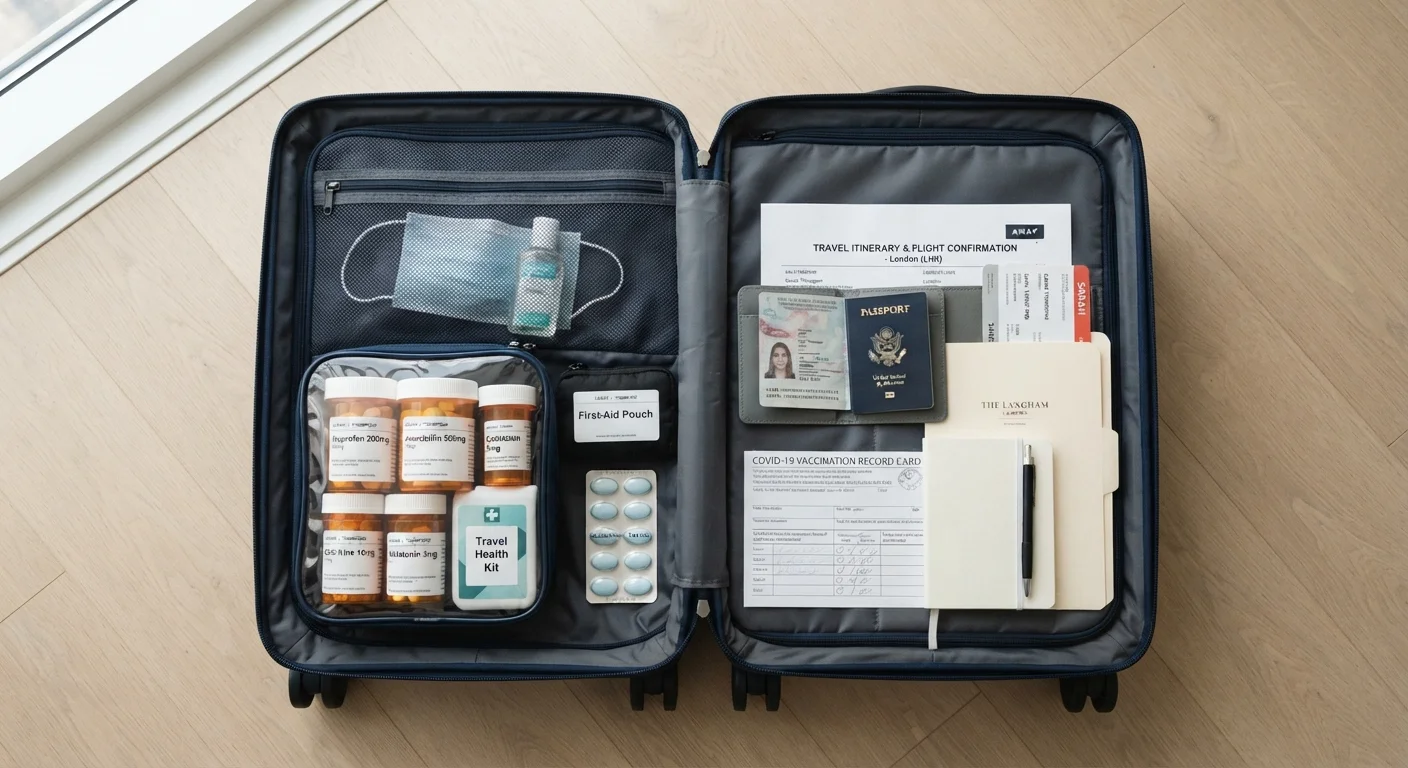
Good documentation does not guarantee entry, but it significantly reduces friction and demonstrates good faith to customs authorities. Prepare the following before you leave:
- Original labeled pharmacy bottles - Keep medications in their original dispensing containers. Labels should show your name, the prescribing physician's name, the drug name (generic and brand), dosage, and dispensing pharmacy.
- A letter from your prescribing physician - This should be on official letterhead and include your diagnosis (in general terms), the medication name, dosage, and the medical necessity for carrying it. Ask your doctor to use the generic (International Nonproprietary Name) in addition to the brand name, as brand names differ internationally.
- A copy of the actual prescription - Some countries and airline security checkpoints may ask to see this alongside the pharmacy label.
- Translated documentation, where applicable - For travel to countries where English is not an official language, a certified translation of your physician's letter can be valuable.
For controlled substances specifically - opioids, benzodiazepines, stimulants, and others listed under international treaties - additional permits may be required by some destination countries before you arrive. The US DEA website and destination-country embassies are the authoritative sources for those requirements.
Transit Country Rules Can Surprise Travelers
A layover of just a few hours in a country with strict pharmaceutical laws can expose travelers to the same customs rules as a full destination visit. Some countries in the Middle East and Southeast Asia have detained travelers during layovers for medications that are unrestricted in the US. Always check the rules for every country in your itinerary, not just your final destination.
Your pre-trip checklist should include a dedicated step to verify medication rules at least four to six weeks before departure, giving enough time to obtain permits or physician letters.
Quantity Limits, Controlled Substances, and TSA Rules
Most countries allow a traveler to carry a personal supply sufficient for the duration of the trip, commonly defined as a 30- to 90-day supply depending on the country and the drug class. Carrying quantities that suggest resale or distribution can trigger serious scrutiny regardless of documentation.
Within the United States, the TSA's primary role is security screening, not pharmaceutical enforcement. TSA does not require medications to be in original containers, though doing so is strongly advised for international travel. Liquid medications - including insulin - are generally permitted in quantities exceeding the standard 3.4 oz liquid rule, but must be declared at the checkpoint.
For international flights, the rules that matter at customs are those of the destination and any transit countries, not the TSA. A layover in a third country means your medications must comply with that country's rules even if you never leave the airport.
Verifying all entry requirements - including medication rules - is a critical pre-departure step covered in our departure verification guide. For broader travel safety context, see Travel Safety From the Ground Up.
Controlled Substance
A drug or chemical regulated by government law due to its potential for abuse or dependence. Examples include opioids, benzodiazepines, and stimulants. Classifications and restrictions vary significantly by country.
International Nonproprietary Name (INN)
The globally standardized generic name for a pharmaceutical substance, established by the World Health Organization. Using the INN on documentation helps foreign customs and medical personnel identify a drug regardless of its local brand name.
Import Permit
An official government authorization required by some countries before a traveler may bring certain controlled or restricted medications across the border. These must typically be arranged before departure through the destination country's health authority or embassy.
Transit Country
A country a traveler passes through - even briefly - on the way to a final destination. Customs and pharmaceutical import rules in transit countries apply to passengers even during layovers.
Personal Use Supply
The quantity of medication a traveler is permitted to carry for their own medical needs, typically aligned with the trip duration. Exceeding this threshold may raise suspicion of trafficking regardless of intent.