

Key Takeaways
Option A
Full Coverage
The comprehensive, higher-premium protection package.
Best for: Drivers with newer vehicles, outstanding loans, or limited savings to absorb a large unexpected repair or replacement cost.
Option B
Minimum Coverage
The legally required baseline that satisfies state mandates.
Best for: Drivers with older, lower-value vehicles and sufficient personal savings to cover potential vehicle repair or replacement out of pocket.
If you're financing or leasing your vehicle
Full Coverage
Lenders and lessors contractually require collision and comprehensive coverage. Carrying only minimum coverage on a financed vehicle typically violates your loan or lease agreement.
If your vehicle is older and worth significantly less than your annual premium
Minimum Coverage
When the cost of added coverage approaches or exceeds the vehicle's market value, the financial case for full coverage weakens considerably.
If you have limited emergency savings
Full Coverage
Without a financial cushion, an at-fault accident or theft could leave you without a vehicle and unable to cover repair or replacement costs.
If you drive a newer or high-value vehicle you own outright
Full Coverage
A significant vehicle asset warrants protection against collision, theft, and weather damage - risks that minimum coverage does not address.
If your vehicle has a low market value and you have solid savings
Minimum Coverage
Self-insuring your vehicle's repair or replacement becomes practical when its value is low and you have liquid savings to absorb the cost.
What 'Full Coverage' and 'Minimum Coverage' Actually Mean
Neither term is a formal insurance industry definition - but both describe meaningfully different levels of financial protection. Understanding what each actually includes is the foundation for any coverage decision.
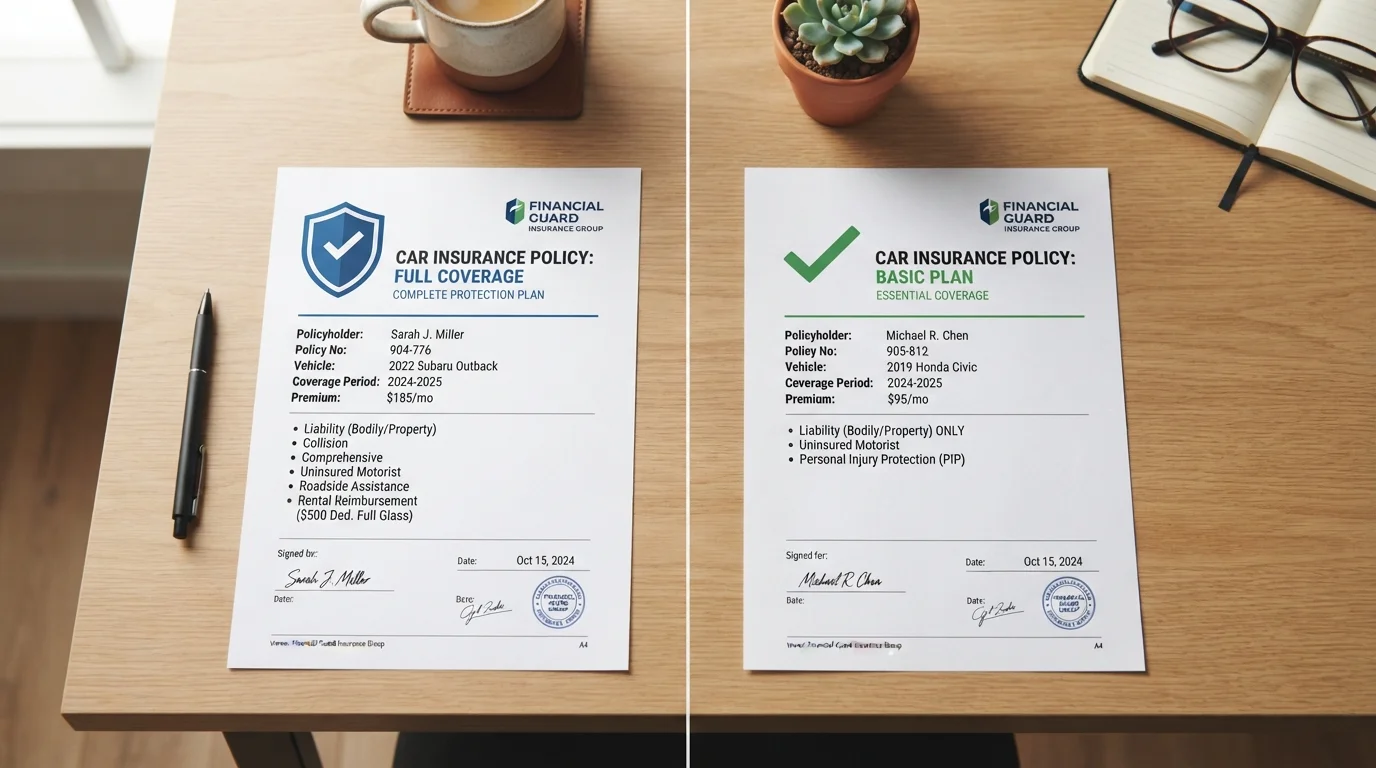
Minimum coverage refers to the lowest amount of insurance a state legally requires to register and operate a vehicle. In most states, this means liability insurance only - specifically, bodily injury liability and property damage liability. These coverages pay for injuries and property damage you cause to others in an at-fault accident. They do not pay for damage to your own vehicle. For a full breakdown of how liability coverage works alongside the other core coverage types, see what each coverage actually pays for.
Full coverage is not a single product but a common shorthand for a policy that pairs liability with collision coverage (which pays for damage to your vehicle from an accident, regardless of fault) and comprehensive coverage (which pays for non-collision losses such as theft, fire, hail, and flooding). Some policies also include uninsured/underinsured motorist coverage, medical payments, or personal injury protection depending on the state. See our guide on uninsured and underinsured motorist coverage for details on that often-overlooked layer of protection.
| Criterion | Full Coverage | Minimum Coverage |
|---|---|---|
| Legally required | No (but may be lender-required) | Yes, in all states |
| Covers others' injuries/property | Yes (liability included) | Yes (liability only) |
| Covers your own vehicle damage | Yes (collision + comprehensive) | No |
| Covers theft or weather damage | Yes (comprehensive) | No |
| Monthly premium cost | Higher | Lower |
| Out-of-pocket risk after a loss | Lower (subject to deductible) | Higher (full vehicle cost) |
| Required for financed/leased vehicles | Yes | No (typically insufficient) |
| Deductible applies | Yes (collision & comprehensive) | No deductible structure |
The Financial Trade-Offs: Premium Cost vs. Out-of-Pocket Exposure
The core tension is straightforward: full coverage costs more in premiums but limits what you'd pay out of pocket after a covered loss. Minimum coverage costs less monthly but transfers more financial risk back to you.
~$2,300
Average annual full-coverage premium (US)
According to Bankrate's 2024 analysis of national average auto insurance rates across major insurers.
~$640
Average annual minimum-coverage premium (US)
Bankrate's 2024 data reflects state-minimum liability-only policies averaged across the country.
13%
Estimated share of US drivers uninsured
The Insurance Research Council has estimated approximately 1 in 8 drivers on US roads carries no insurance.
Whether that trade-off makes sense depends on two variables: the value of your vehicle and your ability to absorb an unexpected expense. A vehicle worth $4,000 may not justify hundreds of dollars per year in added coverage - particularly if collision and comprehensive together cost nearly as much annually as the car itself. Conversely, a vehicle worth $30,000 represents a significant asset; losing it to an accident or theft without coverage would be a serious financial setback for most households.
Deductibles add another layer to this calculation. With full coverage, you choose a deductible - the amount you pay out of pocket before insurance covers the rest. A higher deductible lowers your premium, which can make broader coverage more accessible. For guidance on that trade-off, see how deductibles work in auto insurance.
It's also worth being aware of coverage gaps that leave drivers exposed after an accident - situations where even a seemingly adequate policy may not pay what a driver expects.
When Minimum Coverage Is - and Isn't - a Reasonable Choice
Minimum coverage is a legally compliant choice, not automatically an irresponsible one. But it carries specific risks that drivers should weigh honestly.
When minimum coverage may be sufficient: If your vehicle's current market value is low, you own it outright, and you have liquid savings that could realistically cover repair or replacement, minimum coverage may be a defensible financial decision. The goal in that scenario is essentially self-insuring your vehicle while still meeting your legal obligation to cover others.
When minimum coverage creates real exposure: If you cause a serious accident, state-mandated liability limits may be lower than the actual damages - leaving you personally responsible for the difference. Many state minimums are modest; a multi-vehicle accident or serious injury claim can exceed those limits quickly. Additionally, if another driver hits you and they carry only minimum coverage themselves, your own vehicle damage is unaddressed unless you have collision coverage or uninsured motorist property damage coverage in place. State-by-state legal minimums are outlined in our auto insurance minimum requirements by state reference.
Drivers with financed or leased vehicles generally have no choice: lenders and leasing companies contractually require collision and comprehensive coverage. Dropping to minimum coverage on a vehicle you don't own outright typically violates those terms.
This article provides general information about auto insurance concepts and is not personalized insurance, financial, or legal advice. Coverage terms, limits, exclusions, and requirements vary by provider and by state. Consult a licensed insurance agent or adviser and review your actual policy documents before making coverage decisions.