

Key Takeaways
Oil Change
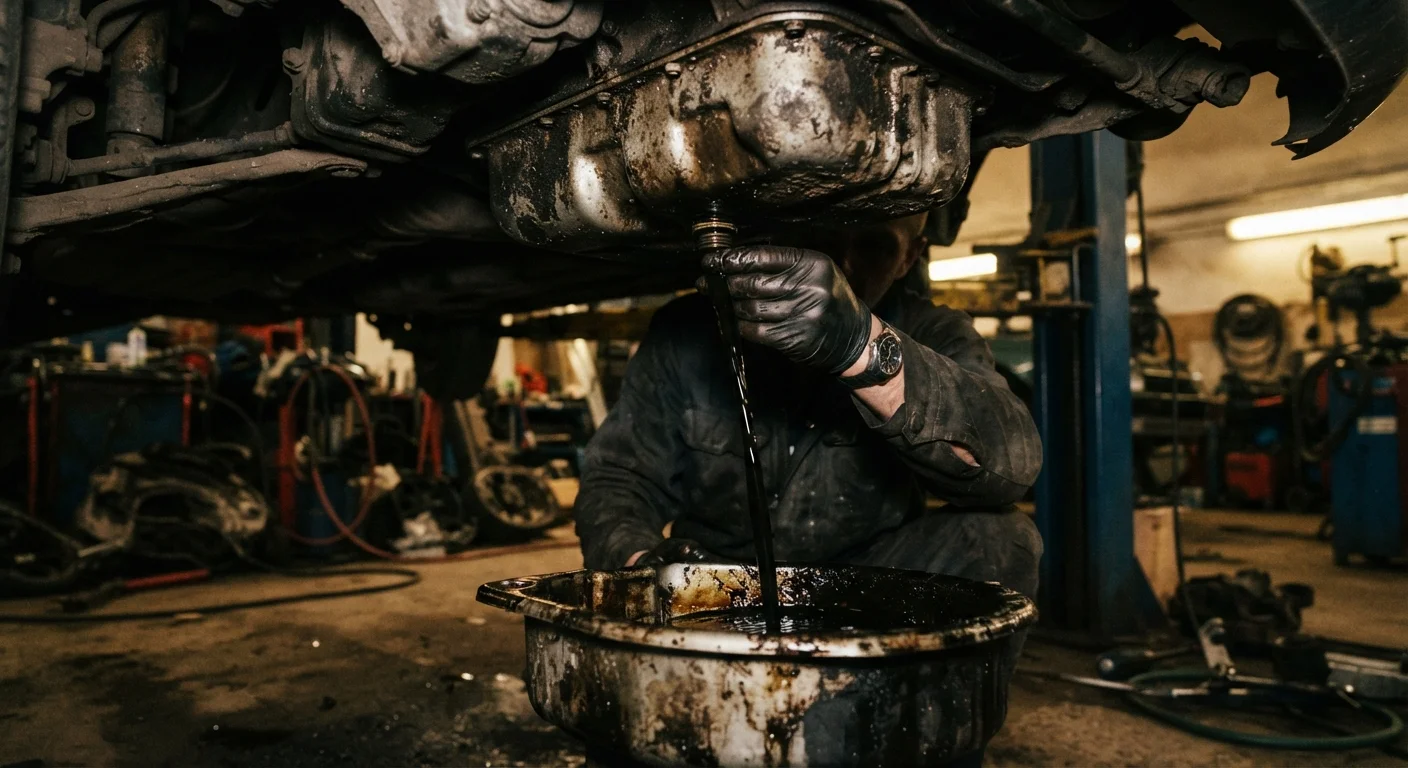
An oil change is the process of draining a vehicle's used motor oil and replacing it with fresh oil, along with a new oil filter. Motor oil lubricates the moving parts inside your engine, reducing friction and carrying away heat and contaminants. Over time, oil breaks down and becomes less effective - making periodic replacement essential to engine health.
As oil degrades, its viscosity index drops and oxidation byproducts form sludge that can block oil passages, starving critical components like camshafts and crankshaft bearings of lubrication.
What Motor Oil Actually Does Inside Your Engine
Your engine contains hundreds of metal parts moving against each other at high speed. Without lubrication, these surfaces would generate enough friction and heat to weld themselves together within minutes. Motor oil forms a thin film between those surfaces, preventing direct metal-to-metal contact.
Beyond lubrication, oil performs several other jobs simultaneously. It carries heat away from critical components, neutralizes acidic combustion byproducts, and suspends microscopic contaminants - metal particles, carbon deposits, and dirt - so the oil filter can trap them. Fresh oil handles all of these tasks effectively. Old oil does not.
For a broader look at how engine oil fits alongside other vehicle fluids, see Car Fluids 101.
How Oil Degrades Over Time and Miles
Oil doesn't simply get dirty - it chemically breaks down. Heat cycling, exposure to combustion gases, and the mechanical stress of engine operation cause the oil's molecular structure to change. Its viscosity (resistance to flow) drops, meaning it no longer forms as protective a film between moving parts. Additives that neutralize acids and prevent foaming are gradually depleted.
Contaminants also accumulate. As the oil filter reaches capacity, particles bypass it and remain suspended in the oil. Eventually, oxidation causes these contaminants to polymerize - clumping together into a thick, tar-like substance called sludge.
~$30-$100
Typical oil change cost
Industry service data consistently shows routine oil changes cost a fraction of the engine repairs that result from prolonged neglect.
$4,000+
Engine replacement cost range
According to repair cost data from automotive service providers, replacing a seized or sludge-damaged engine can run well into the thousands, often approaching or exceeding a vehicle's value.
7,500-10,000 mi
Common synthetic oil change interval
Many vehicle manufacturers specify this range for full synthetic oil under normal driving conditions; always verify against your owner's manual.
Sludge is particularly damaging because it can block the narrow oil passages that feed components like camshaft lobes and main bearings. Once those passages are restricted, lubrication fails locally even if oil pressure looks normal on a gauge.
The type of oil you use affects how quickly this process occurs. Synthetic vs. conventional motor oil behave differently under stress - synthetic formulations generally resist breakdown longer, which is why many manufacturers approve wider service intervals when full synthetic is used.
The Real Consequences of Skipping an Oil Change
The damage from neglected oil changes is cumulative. Missing one change by a small margin - say, a few hundred miles - is unlikely to cause immediate mechanical failure in a vehicle that is otherwise in good condition. The risk rises significantly with each additional interval skipped.
- Increased friction and wear: Degraded oil allows more metal-to-metal contact, accelerating wear on pistons, cylinder walls, camshafts, and bearings. This wear is permanent and reduces engine longevity.
- Sludge accumulation: Thick deposits restrict oil flow. The engine compensates by running hotter, which accelerates further breakdown. A severely sludged engine may require costly disassembly to clean - or outright replacement.
- Overheating: Oil contributes to engine cooling. When it degrades, the engine relies more heavily on the coolant system, which may not compensate fully under demanding conditions.
- Increased fuel consumption: Higher internal friction means the engine works harder for the same output, which can reduce fuel efficiency noticeably over time.
Check Your Oil Between Changes
Pulling the dipstick every few weeks takes less than a minute and can catch low oil levels or dramatically accelerated degradation before they cause damage. Check both the level and the oil's color and consistency. If the level drops significantly between changes, that itself warrants a mechanic visit - it may indicate a leak or oil burning internally.
In extreme cases - multiple missed oil changes, particularly in older or high-mileage vehicles - seized pistons or spun bearings can result in complete engine failure. Repair costs in those scenarios can exceed the vehicle's market value.
How Often You Should Actually Change Your Oil
The old rule of thumb - change oil every 3,000 miles - persists as a common belief, but it no longer reflects the engineering reality of most modern engines and lubricants. Many vehicles using full synthetic oil are engineered for intervals of 7,500 to 10,000 miles or more. Some manufacturers specify even longer intervals under normal driving conditions.
The most reliable guide is your vehicle's owner's manual. It accounts for your specific engine design, oil specification, and driving conditions. Many newer vehicles also include an oil life monitoring system that calculates degradation based on actual operating data rather than a fixed mileage timer.
«Severe» driving conditions - frequent short trips, towing, extreme temperatures, stop-and-go traffic - accelerate oil degradation and may warrant shorter intervals than the standard recommendation. Your owner's manual typically addresses this separately.
For a broader perspective on which maintenance rules are worth following and which are outdated, The Maintenance Myths That Cost Drivers Money is worth reading.
Warning Signs You May Have Already Waited Too Long
If you're unsure when your last oil change occurred, a few observable indicators can help you assess the situation before you reach a mechanic:
- Oil color and consistency: Pull the dipstick, wipe it clean, dip again, and examine what's on it. Fresh oil is amber and semi-transparent. Oil that is jet black, gritty, or has a grainy texture has degraded significantly.
- Ticking or knocking sounds: A rhythmic ticking, especially at startup, can indicate that upper engine components like lifters or camshaft lobes are not receiving adequate lubrication. Knocking from the lower engine is a more serious sign of bearing wear.
- Oil pressure warning light: This light does not indicate that oil is dirty - it signals that oil pressure has dropped below safe operating levels. If it illuminates while driving, stop safely and have the vehicle inspected promptly. Do not continue driving.
- Burning smell: A burning oil odor, particularly when the engine is warm, may indicate oil burning off on hot surfaces - sometimes a sign of leaks worsened by degraded, thinner oil.
Many of these signs can appear without a dashboard warning. Signs your car needs attention beyond the instrument cluster are worth understanding as a driver.
This article is for general informational and educational purposes only. For diagnosis of specific vehicle problems or guidance on repair decisions, consult a qualified mechanic.