

Key Takeaways
Start here
Why Vehicle Fluids Matter
Learn the basics
Engine Oil: The Lifeblood of Your Motor
Go deeper
Coolant, Brake Fluid, and Power Steering Fluid
Complete the picture
Transmission Fluid, Windshield Washer, and Battery Fluid
Take action
How to Check and When to Act
Why Vehicle Fluids Matter
Your car is a system of moving metal parts, extreme temperatures, and high pressures. Fluids are what keep that system from destroying itself. They lubricate, cool, transmit force, and clean-often simultaneously. When a fluid runs low, becomes contaminated, or breaks down chemically, components begin to wear faster than they should.
The challenge is that fluid degradation is mostly invisible. You won't always feel it or see a dashboard warning until real damage is underway. That makes routine fluid checks one of the highest-value maintenance habits any driver can build. For a broader look at proactive upkeep, see our seasonal car maintenance checklist.
Viscosity
A measure of how thick or thin a fluid is and how easily it flows. In engine oil, the right viscosity ensures parts are lubricated at both cold start-up and normal operating temperatures.
Hydraulic fluid
A fluid used to transmit mechanical force through a system. Brake fluid and power steering fluid are both hydraulic fluids-pressure applied at one end moves a component at the other.
Flush
The process of draining all old fluid from a system and refilling it with fresh fluid. Different from a simple top-up, which only adds fluid without removing degraded material.
Hygroscopic
A substance that naturally absorbs moisture from the surrounding air. Brake fluid is hygroscopic, which is why it needs periodic replacement even if the reservoir level looks normal.
Corrosion inhibitor
A chemical additive in fluids like coolant that slows or prevents rust and oxidation on metal parts inside the engine or cooling system.
Sealed transmission
A transmission designed without a user-accessible dipstick or fill point. Fluid checks and changes on these units require specialized equipment at a service shop.
Engine Oil: The Lifeblood of Your Motor
Engine oil does several jobs at once: it lubricates metal surfaces to reduce friction, helps carry heat away from the engine, suspends contaminants so they can be captured by the filter, and protects against corrosion. Over time, heat and combustion byproducts break down the oil's base molecules and additive package, reducing its ability to perform any of these tasks.
Viscosity - the thickness of the oil - is expressed as a number like 5W-30. The first number describes cold-weather flow; the second describes performance at operating temperature. Using the wrong viscosity can reduce protection, particularly during cold starts.
Oil change intervals have evolved significantly. Many modern vehicles with synthetic oil can go 7,500 to 10,000 miles or more between changes - a fact worth noting if you're still following an outdated 3,000-mile rule. Our article on car maintenance myths explores why that old guideline no longer applies to most drivers.
Your Owner's Manual Is the Authority
Manufacturer recommendations for fluid type and change intervals are specific to your engine and driving conditions. Generic advice-like universal oil change mileage rules-may not apply to your vehicle. Keep your owner's manual in the glove box and consult it first when any fluid question comes up.
Coolant, Brake Fluid, and Power Steering Fluid
Coolant (also called antifreeze) circulates through the engine and radiator to regulate operating temperature-preventing both overheating in summer and freezing in winter. It also contains corrosion inhibitors that protect metal components. Over time, those inhibitors deplete, making the fluid acidic. Most manufacturers recommend a coolant flush every 30,000-50,000 miles, though interval varies by formulation.
Brake fluid is a hydraulic fluid that transmits the force of your foot on the pedal to the brake calipers at each wheel. It's hygroscopic, meaning it absorbs moisture from the air over time. Water contamination lowers the fluid's boiling point, which can cause brake fade under hard use-a genuine safety concern. Most manufacturers recommend replacing brake fluid every two years regardless of mileage.
Power steering fluid enables the hydraulic assist that makes turning the wheel feel effortless. Vehicles with electric power steering don't use this fluid at all. In hydraulic systems, contaminated fluid can damage the pump and rack. If steering feels stiff or you hear whining when turning, a fluid check is a logical first step.
Never Open a Hot Radiator Cap
Coolant systems are pressurized. Opening the radiator cap when the engine is hot can cause scalding fluid to spray out forcefully. Always wait until the engine has cooled completely before inspecting or topping up the coolant. If your temperature gauge is in the red, pull over safely and call for assistance rather than attempting to check the coolant yourself.
Transmission Fluid, Windshield Washer, and Battery Fluid
Transmission fluid lubricates the gears and clutch packs inside your transmission, and in automatic transmissions it also acts as a hydraulic fluid. Neglecting it is one of the more common - and costly - maintenance oversights. For a detailed look at what transmission service actually involves, see our guide on transmission maintenance.
Windshield washer fluid is straightforward but often overlooked. It's not interchangeable with water-purpose-made washer fluid contains detergents and, in most formulations, a freeze inhibitor. Running the reservoir dry can damage the washer pump motor over time.
Battery fluid applies only to traditional lead-acid batteries with removable caps (common in older or heavy-duty vehicles). These batteries contain a sulfuric acid and distilled water solution. Low levels expose the battery plates and accelerate deterioration. Sealed, maintenance-free batteries found in most modern cars don't require this check.
How to Check and When to Act
Most fluid reservoirs are clearly labeled under the hood with icons or text. Checking them takes about five minutes:
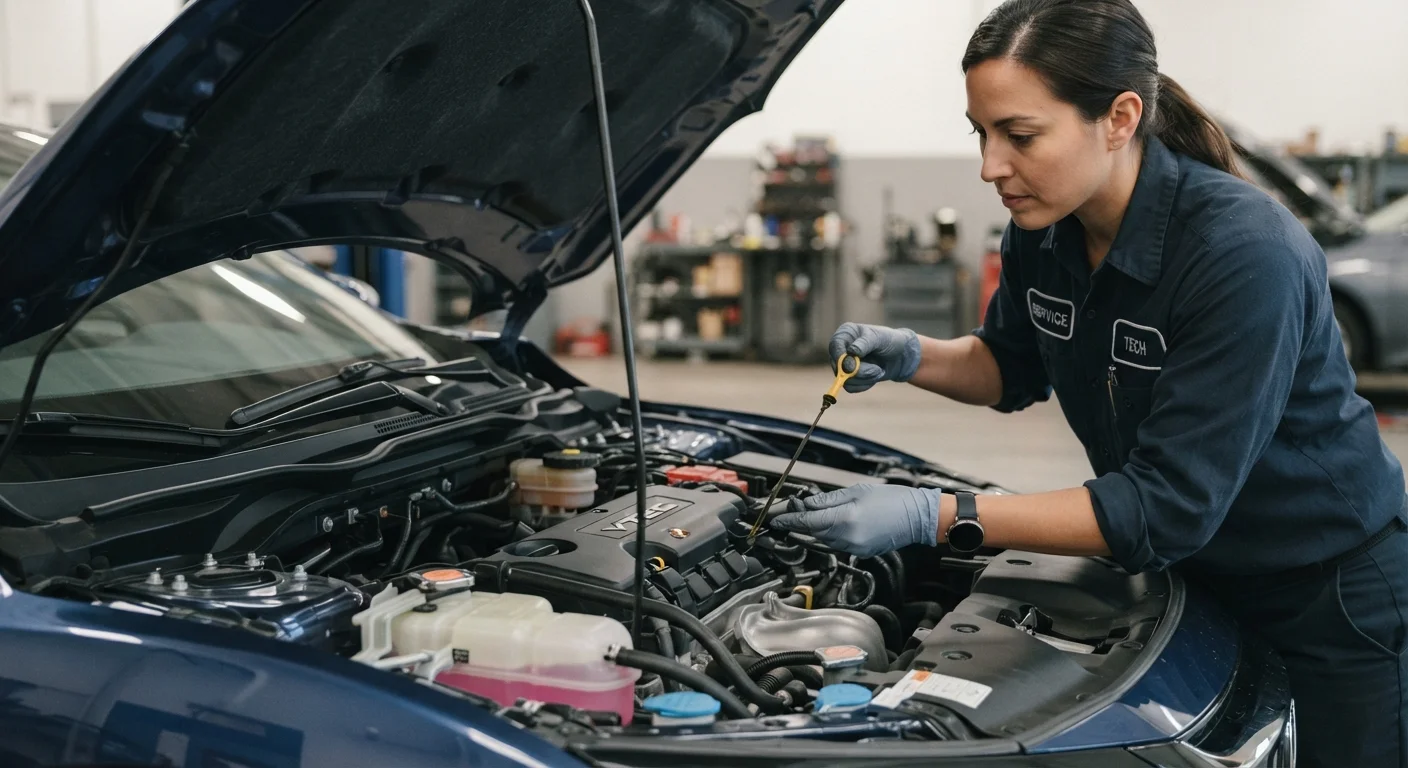
- Engine oil: Pull the dipstick with the engine off and cooled, wipe it clean, reinsert fully, then pull again. The oil level should fall between the two marks. Note the color - healthy oil ranges from amber to dark brown.
- Coolant: Check the translucent overflow reservoir (never open the radiator cap on a hot engine). The level should be between MIN and MAX markings.
- Brake fluid: The reservoir is typically near the firewall on the driver's side. Level and color are both meaningful-dark fluid in a low reservoir warrants a mechanic's inspection.
- Transmission fluid: Many modern vehicles have sealed transmissions with no dipstick; service requires a shop visit. On vehicles with a dipstick, check it with the engine warm and running, per your owner's manual.
If you're noticing warning signs that don't involve your dashboard - such as unusual smells, handling changes, or odd sounds - those cues often point to fluid issues before any light activates. Our article on signs your car needs attention covers what to watch for. And if a warning light does appear, your car's warning lights decoded explains what each one means.
When in doubt, consult a qualified mechanic. Fluid-related repairs caught early are almost always less expensive than the component failures they prevent.