

Key Takeaways
What the Transmission Actually Does
The transmission is the component that takes power generated by your engine and delivers it to the wheels in a usable form. As vehicle speed changes, the transmission shifts through a range of gears - either automatically or manually - so the engine operates within an efficient speed range rather than being pushed to extremes at every acceleration.
Modern automatic transmissions are mechanically complex assemblies containing clutch packs, solenoids, a torque converter, and a valve body that routes hydraulic fluid under pressure. Manual transmissions are somewhat simpler mechanically but rely on a clutch assembly and gear synchronizers that wear over time. Continuously variable transmissions (CVTs) - common in fuel-efficient vehicles - use a belt-and-pulley system with no traditional gear steps at all.
Regardless of type, all transmissions depend on clean, properly conditioned fluid to lubricate moving parts, transfer hydraulic pressure, and dissipate heat. Without adequate fluid in good condition, internal components wear rapidly and overheat. See our guide to vehicle fluids for a broader look at how each fluid supports your drivetrain.
What Transmission Maintenance Involves
Transmission service is not a single task - it typically encompasses several related jobs depending on your vehicle type and condition.
Fluid Change or Flush
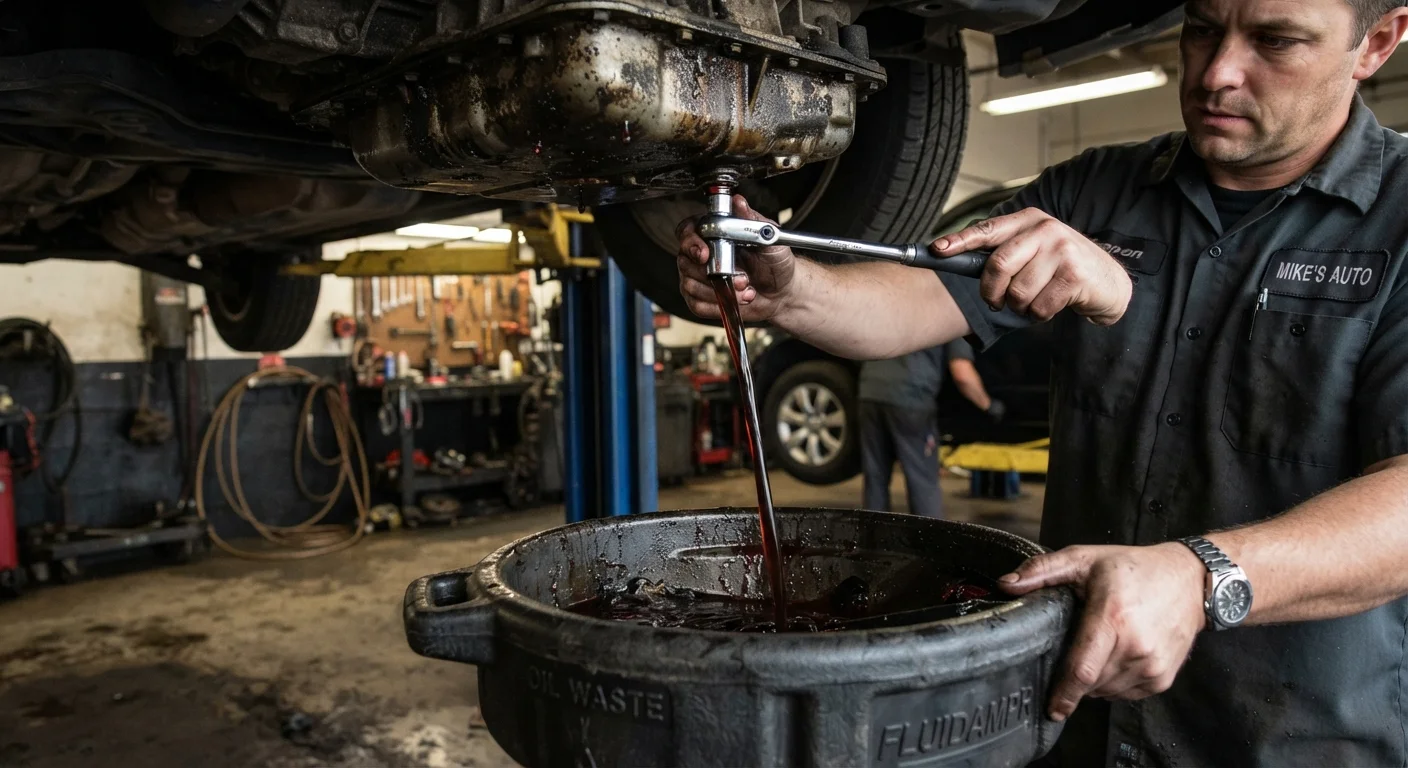
The most common service is replacing the transmission fluid. A drain-and-fill removes the fluid from the pan and replaces it with fresh fluid, leaving some old fluid in the torque converter and passages. A flush uses equipment to cycle new fluid through the entire system, displacing nearly all the old fluid. Which is appropriate depends on the vehicle's age, fluid condition, and the manufacturer's recommendation - a qualified mechanic can assess this.
Filter Replacement
Many automatic transmissions have an internal filter inside the transmission pan. When the pan is dropped for a fluid service, the filter is typically inspected and replaced. Not all transmissions have a serviceable filter; some use a screen that is cleaned rather than replaced.
Pan Gasket Inspection
While the pan is off, the gasket that seals it is inspected and usually replaced. A leaking pan gasket is a common source of slow fluid loss that often goes unnoticed until levels drop significantly.
External Cooler Line Check
Transmission fluid is routed through cooler lines to a heat exchanger - often integrated with the radiator. These lines and fittings can corrode or develop leaks, particularly on older vehicles in salt-prone climates.
When checking your transmission fluid condition yourself, wipe the dipstick on a white cloth and look at the color - healthy fluid is translucent red or pink, while dark brown or black fluid with a burned odor signals it's well past due.
Color and smell are the two most accessible indicators of fluid degradation; this quick check requires no tools and takes under two minutes.
If you regularly tow a trailer or haul heavy loads, plan to service your transmission at roughly half the standard interval - heat is the primary killer of transmission fluid, and towing generates significantly more of it.
Towing places sustained load on the transmission, raising fluid temperatures well above normal operating range and accelerating oxidation and viscosity breakdown.
CVTs and dual-clutch transmissions have their own specific fluid types and service procedures. Using the wrong fluid can cause irreversible damage, so always verify the fluid specification in your owner's manual or with a qualified technician before any service.
Why Drivers Tend to Skip It
Transmission maintenance suffers from a visibility problem. Unlike an oil change - a service with a universally understood interval and a dashboard reminder light - transmission service has no standard schedule that applies across all vehicles. Intervals published by manufacturers range from as few as 30,000 miles to "lifetime fill" claims on some models, a range wide enough to cause genuine confusion.
The "lifetime fill" designation deserves particular scrutiny. Some manufacturers label factory-fill fluid as suitable for the vehicle's lifetime, but independent technicians and many engineers interpret this conservatively - it may reflect the expected ownership period of a first buyer rather than the full service life of the vehicle. Driving under severe conditions (towing, mountainous terrain, frequent stop-and-go traffic) accelerates fluid degradation regardless of manufacturer claims.
"Lifetime Fill" Doesn't Always Mean Forever
Some vehicles leave the factory with fluid labeled as a lifetime fill, but this designation can be misleading for drivers who plan to keep their vehicles beyond the average first-owner period. Many experienced technicians recommend inspecting or replacing this fluid between 60,000 and 100,000 miles, particularly on vehicles used for towing or driven in demanding conditions. Always verify what "lifetime" means in your specific owner's manual context.
There is also a psychological factor: transmissions tend to fail gradually rather than catastrophically. Drivers may adapt to subtle changes - a slight hesitation on upshift, a faint shudder - without recognizing them as early warnings. By the time symptoms become impossible to ignore, significant internal wear has often already occurred. This is explored further in our look at common maintenance myths that end up costing drivers money.
Warning Signs Your Transmission Needs Attention
Catching transmission problems early can be the difference between a fluid service and a complete rebuild. Pay attention to the following signals:
- Delayed or rough shifting: A noticeable pause before the transmission engages a gear, or a hard, jerky shift between gears, often points to fluid pressure issues or worn internal components.
- Slipping gears: The engine revs rise without a corresponding increase in vehicle speed - a sign the transmission is not maintaining proper gear engagement.
- Unusual noises: Whining, humming, or clunking sounds during gear changes can indicate bearing wear or low fluid.
- Burning smell: Overheated transmission fluid has a distinctive sharp, acrid odor. This often means fluid levels are low or the fluid has degraded past its useful life.
- Fluid leaks: Reddish fluid pooling under the vehicle near the center or front is a strong indicator of a transmission leak. Fresh fluid is typically bright red and translucent; degraded fluid appears dark brown or opaque.
- Check Engine or Transmission Warning Light: Modern vehicles monitor transmission behavior electronically. A warning light should always be diagnosed promptly, not ignored.
Because your transmission works continuously whenever the vehicle is moving, it accumulates wear with every mile. Including a transmission inspection in your routine seasonal checks is a practical way to catch problems before they escalate - see our seasonal car maintenance checklist for a structured approach to vehicle upkeep throughout the year.
How to Stay on Top of It
The most reliable starting point is your vehicle's owner's manual. Look for the transmission fluid change interval and, crucially, the severe-duty schedule - most drivers who tow, drive in hilly terrain, or spend significant time in stop-and-go traffic qualify for the shorter interval.
If you've purchased a used vehicle without a service history, having the transmission fluid inspected is a reasonable early step. A technician can pull a fluid sample and assess color, clarity, and smell to estimate its remaining service life.
When scheduling service, ask your technician to specify which procedure they recommend - drain-and-fill or flush - and why. A straightforward drain-and-fill is generally appropriate for vehicles on a regular service schedule; a flush may be recommended when fluid is severely degraded, though opinions vary among professionals on when a flush is appropriate versus potentially disruptive on high-mileage transmissions.
Finally, consider how transmission health fits into your broader maintenance picture. Many of the habits that extend engine life - avoiding aggressive acceleration, not overloading the vehicle, using the correct fluid specifications - apply equally to your transmission. Our explainer on skipped oil changes illustrates how deferred fluid maintenance compounds into larger mechanical failures, a pattern that applies directly to transmission neglect as well.
This article is for general informational and educational purposes only. Always consult a qualified, licensed mechanic for diagnosis, service recommendations, and repairs specific to your vehicle.