

| Colors used for dashboard warnings | Red (critical), amber/yellow (caution), green/blue (information) |
| TPMS required in US since | 2008 (all new passenger vehicles) (NHTSA Federal Motor Vehicle Safety Standard 138) |
| Check engine light cause range | Hundreds of possible fault codes, from loose gas cap to catalytic converter failure |
| Low oil pressure action | Stop driving immediately - continued operation risks severe engine damage |
| ABS light effect on standard braking | Normal brakes still function; ABS assist is disabled until fault is resolved |
| Battery warning typical causes | Failing alternator, weak battery, or loose/corroded connections |
How Dashboard Warning Lights Are Organized
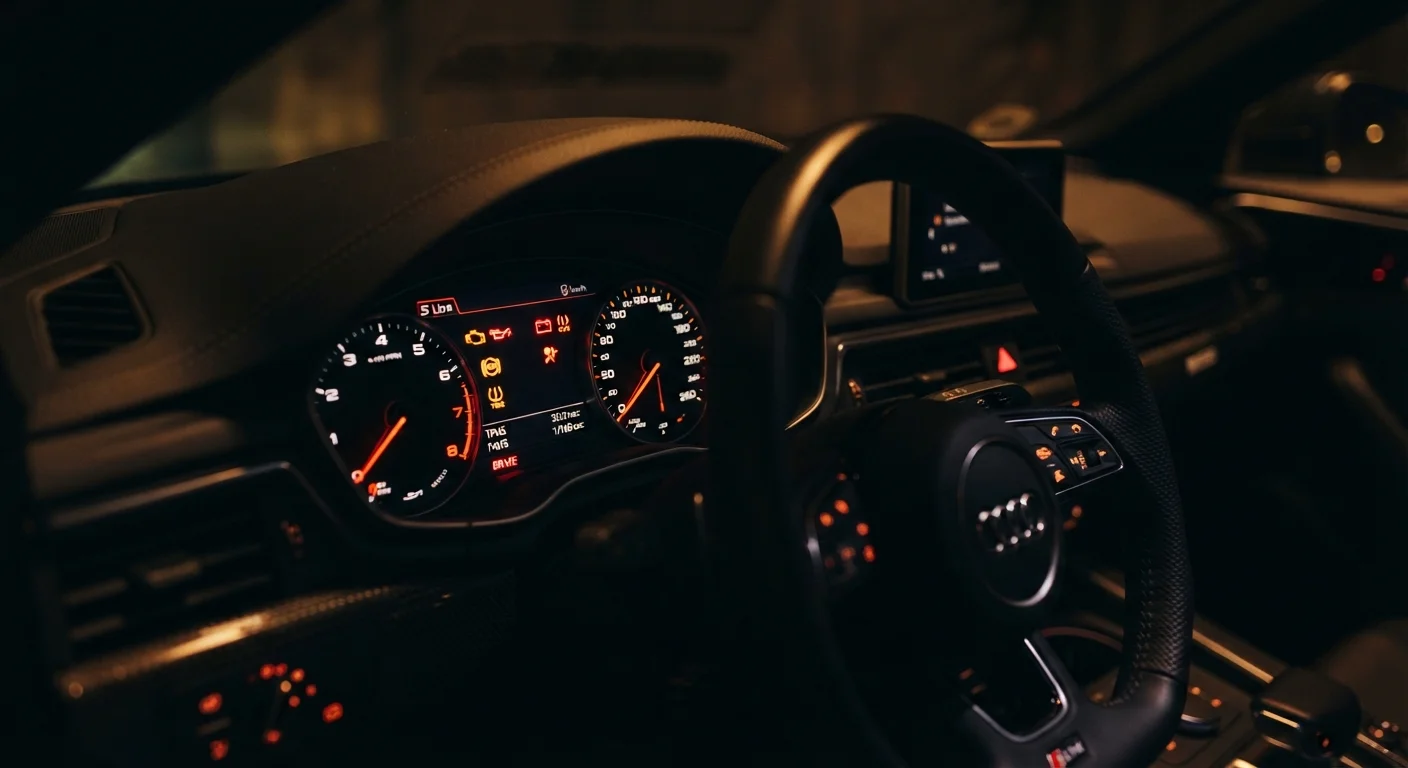
Dashboard warning lights follow a broadly consistent color logic across modern vehicles sold in the United States. Understanding the color system is the fastest way to gauge how urgently you need to act.
- Red lights signal conditions that are immediately dangerous to your vehicle or safety - stop driving as soon as it is safe to do so.
- Amber or yellow lights indicate a system fault or condition that needs attention soon, but typically does not require stopping immediately.
- Green and blue lights are informational - they confirm that a feature (such as high beams or a turn signal) is active.
This color framework is not universal across every manufacturer, so treat it as a general guide rather than an absolute rule.
OBD-II
On-Board Diagnostics II - a standardized system built into most vehicles sold in the US after 1996 that monitors engine and emissions systems. When a fault is detected, it stores a diagnostic trouble code (DTC) that a mechanic or scan tool can read.
TPMS
Tire Pressure Monitoring System - a sensor-based system that alerts the driver when one or more tires fall significantly below the recommended pressure. Required on all new US passenger vehicles since 2008.
ABS
Anti-lock Braking System - a safety feature that prevents wheel lockup during hard braking, helping the driver maintain steering control. The ABS warning light signals a fault in this system.
Malfunction Indicator Lamp (MIL)
The technical name for the check engine light. It illuminates when the vehicle's OBD-II system detects a fault related to the engine, transmission, or emissions controls.
Limp Mode
A protective state some vehicles enter when a serious fault is detected. The engine management system limits power and speed to reduce the risk of further damage while allowing the vehicle to reach a repair facility.
Coolant Temperature Warning
A warning that the engine coolant has exceeded safe operating temperature, indicating a risk of engine overheating. Requires immediate attention to avoid serious engine damage.
When a new light appears, note whether it stays on continuously or flashes. A flashing or blinking warning - particularly a flashing check engine light - generally indicates a more severe or active fault than a steady glow.
The Most Common Warning Lights and What They Mean
| Colors used for dashboard warnings | Red (critical), amber/yellow (caution), green/blue (information) |
| TPMS required in US since | 2008 (all new passenger vehicles) (NHTSA Federal Motor Vehicle Safety Standard 138) |
| Check engine light cause range | Hundreds of possible fault codes, from loose gas cap to catalytic converter failure |
| Low oil pressure action | Stop driving immediately - continued operation risks severe engine damage |
| ABS light effect on standard braking | Normal brakes still function; ABS assist is disabled until fault is resolved |
| Battery warning typical causes | Failing alternator, weak battery, or loose/corroded connections |
Check Engine (Malfunction Indicator Lamp)
The most misunderstood light on any dashboard. A steady amber check engine light means the OBD-II system has detected a fault and stored a diagnostic trouble code. This could range from a loose fuel cap to a failing oxygen sensor. A flashing check engine light typically signals an active engine misfire that can damage the catalytic converter - reduce speed and have the vehicle inspected promptly. See our guide to reading a mechanic's estimate before your shop visit so you can ask informed questions.
Oil Pressure Warning
This red light - often shaped like an old oil can - means oil pressure has dropped to a dangerous level. Do not continue driving. Pull over safely, shut off the engine, and check the oil level. Low pressure can result from a serious leak, a failed oil pump, or critically low oil. For broader context on why oil matters, see our Car Fluids 101 guide.
Temperature Warning
A red thermometer symbol means the engine is overheating. Turn off the air conditioning, pull over, and allow the engine to cool before opening the hood. Do not remove the radiator cap while the engine is hot.
TPMS (Tire Pressure Monitoring System)
An amber light shaped like a cross-section of a tire means one or more tires are significantly underinflated. Check all four tires with a gauge and inflate to the pressure listed on the driver's door jamb sticker - not the number on the tire sidewall. Our article Tire Pressure and Why Most Drivers Get It Wrong covers this common mistake in detail.
Battery Warning
A red battery icon typically means the charging system - most often the alternator - is not supplying adequate voltage. The vehicle may run for a limited time on battery reserve alone. Reduce electrical loads and head to a shop; the vehicle may not restart if turned off.
ABS Warning
An amber ABS light means the anti-lock braking system has detected a fault. Standard brakes continue to function normally, but the ABS assist that prevents wheel lockup during hard stops is disabled until the fault is cleared.
Brake System Warning
A red circle with an exclamation mark (or the word BRAKE) can indicate the parking brake is engaged, or - more seriously - that brake fluid is low or there is a hydraulic fault. If the parking brake is fully released and the light remains on, have the brake system inspected before driving further.
Your Owner's Manual Is the Definitive Reference
Warning light icons and their meanings can vary between vehicle makes, models, and years. The descriptions in this article cover the most common, standardized lights - but your owner's manual is always the authoritative source for your specific vehicle. Keep it in the glove box or download a digital copy from your manufacturer's website.
Responding Wisely: A Simple Decision Framework
Not every warning light demands the same response. Use this framework when a new light appears:
- Identify the color. Red means act now; amber means schedule service promptly.
- Note the behavior. Flashing is more urgent than steady.
- Consult your owner's manual to confirm the specific meaning for your vehicle.
- Check the obvious. For TPMS, check tire pressure. For check engine, verify the fuel cap is tightly closed. For temperature, check coolant level when the engine is cold.
- Decide on urgency. Red lights and flashing amber lights generally warrant stopping or same-day service. Steady amber lights typically allow a few days to schedule an appointment.
Dashboard lights are your vehicle's first line of communication - but they are not its only one. Unusual sounds, vibrations, and smells can signal developing problems before a light ever appears. Our companion article Signs Your Car Needs Attention That Have Nothing to Do With Warning Lights covers those cues in depth.
When a warning light leads to a repair estimate you did not expect, understanding the paperwork helps. The Reading a Mechanic's Estimate guide breaks down labor rates, parts costs, and common line items so you can ask the right questions with confidence.