

Key Takeaways
Why Tire Pressure Is Easier to Get Wrong Than Right
Tire pressure sits near the top of routine maintenance tasks - simple in theory, frequently mishandled in practice. The errors aren't dramatic; they accumulate quietly through small misunderstandings about where to find the right number, when to check, and what the readings actually mean.
Getting it wrong has real consequences. Underinflated tires generate excess heat, wear unevenly along the outer edges, and reduce fuel efficiency. Overinflated tires stiffen the contact patch, reducing grip and making the center tread wear faster. Neither condition announces itself loudly until the damage is done. The TPMS warning light on your dashboard is a late-stage alert - it activates only after pressure has already dropped significantly.
The mistakes below are the ones drivers make most often, along with why they happen and how to correct them.
Reading the pressure rating off the tire sidewall instead of the vehicle placard.
Why it happens: The number molded into a tire's sidewall (often something like "Max. Press. 51 PSI") looks authoritative, so drivers assume it's the target. It's actually the maximum the tire can safely hold - not the recommended operating pressure.
Checking tire pressure immediately after driving, which produces a falsely high reading.
Why it happens: Most drivers check pressure when they're about to leave or just after arriving somewhere - exactly when tires are warm. Air expands with heat, so a warm tire reads 4-6 PSI higher than its true cold pressure.
Ignoring the effect of seasonal temperature changes on tire pressure.
Why it happens: Drivers often set pressure once and assume it holds. In reality, tire pressure drops approximately 1 PSI for every 10°F drop in ambient temperature - a common swing between summer and winter in much of the US.
Assuming the TPMS warning light is a prompt to check - rather than a sign pressure is already too low.
Why it happens: The Tire Pressure Monitoring System is often misread as a gentle reminder. In most vehicles, the light activates when one or more tires have dropped 25% or more below the recommended pressure - a meaningful deficit already.
Overinflating tires to improve fuel economy.
Why it happens: It's true that slightly higher pressure can marginally reduce rolling resistance, so some drivers inflate beyond the recommended PSI thinking they're optimizing efficiency. The trade-off isn't worth it.
Building a Reliable Tire Pressure Habit
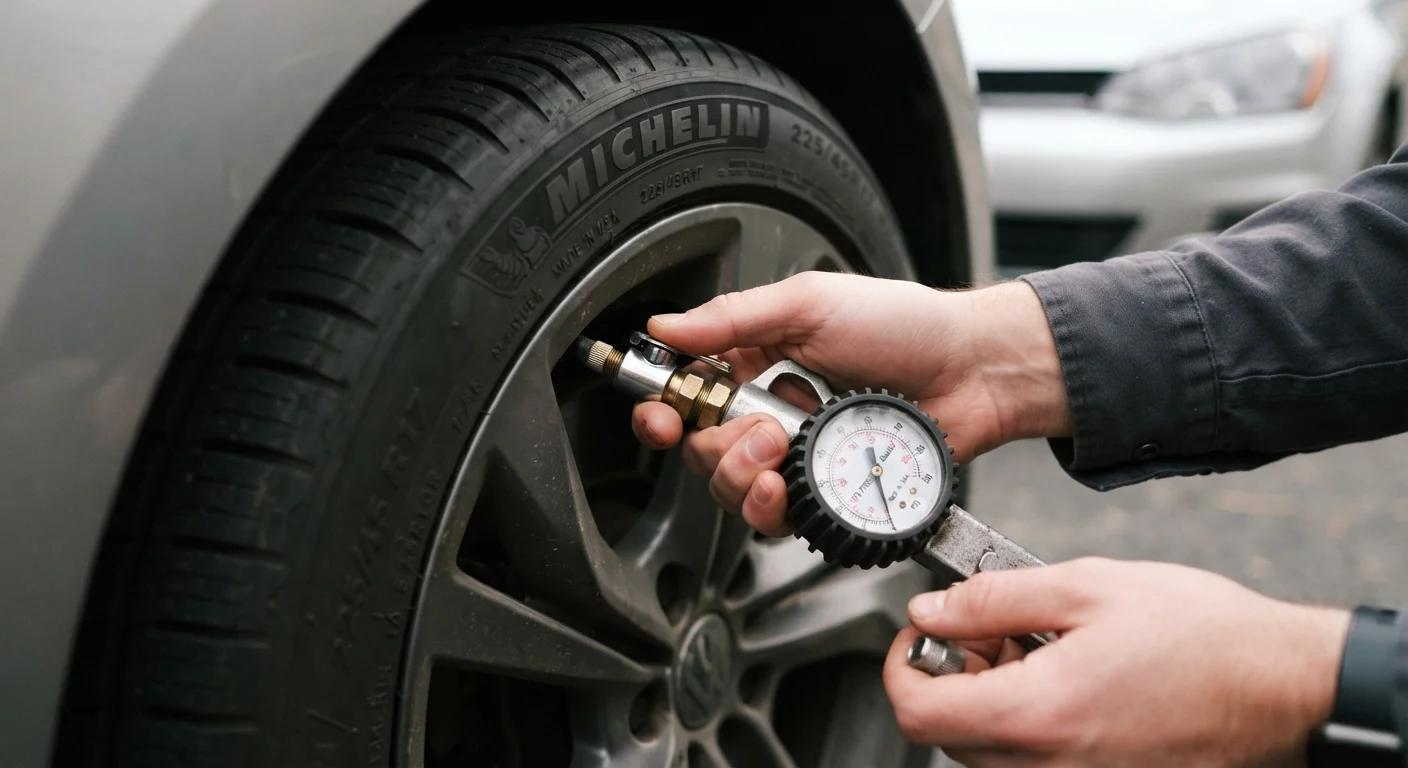
Tire pressure doesn't require expensive tools or mechanical knowledge - it requires consistency. A quality digital gauge costs a few dollars and delivers far more accurate readings than the analog dial gauges often found attached to gas station air pumps.
Don't Use Gas Station Gauges as Your Only Reference
Air pump gauges at gas stations are frequently inaccurate due to wear, exposure, and infrequent calibration. They can be useful for adding air in a pinch, but should not be trusted for precise readings. Carry your own digital gauge and use the station's pump only for inflation - verify the final pressure with your own tool before driving away.
Check pressure once a month and before any long drive. Each seasonal shift - especially the transition into colder months - warrants an extra check, since pressure drops measurably as temperatures fall. If you maintain a broader maintenance routine, pressure checks fit naturally alongside it. See the seasonal car maintenance checklist for a structured approach to staying ahead of issues like this throughout the year.
It's also worth separating tire pressure facts from the wider body of maintenance misinformation circulating among drivers. The maintenance myths that cost drivers money covers related misconceptions worth reading alongside this guide.