

Key Takeaways
Mobility vs. Flexibility
Flexibility refers to the ability of a muscle or group of muscles to lengthen passively through a range of motion. Mobility, by contrast, is the ability of a joint to move actively through its full range - with control. You can be flexible without being mobile, and improving one doesn't automatically improve the other.
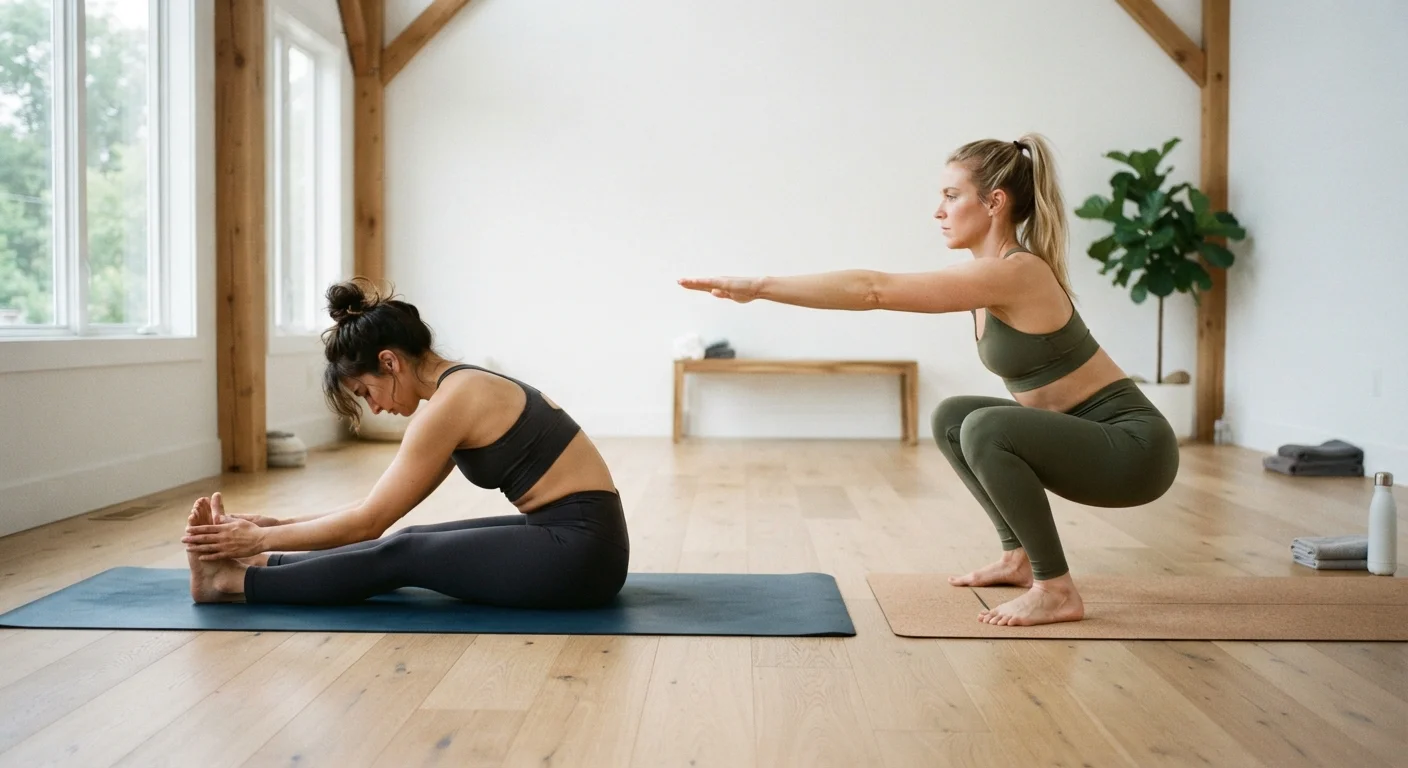
In clinical and sports science contexts, flexibility is often assessed passively (e.g., a hamstring stretch with assistance), while mobility is evaluated through active, load-bearing movement patterns such as a deep squat or shoulder press.
Two Words, Two Different Concepts
Walk into almost any gym or fitness class and you'll hear flexibility and mobility treated as synonyms. They're not. Confusing the two can lead to training gaps - and a frustrating plateau where you stretch regularly but still feel stiff or restricted during movement.
The distinction is straightforward once you see it clearly. Flexibility is a property of muscle tissue: how much it can lengthen passively, without your muscles actively doing the work. Think of someone helping you push your leg into a hamstring stretch - the range you achieve with that assistance is your passive flexibility.
Mobility is a property of joints and the whole movement system: how much range you can actively access, control, and use. A mobile hip joint isn't just one that can be pushed into a wide angle - it's one you can move intentionally through that angle while supporting load and maintaining posture.
This is why someone can be impressively flexible - able to do the splits passively - but still struggle with a deep overhead squat. The muscle length may be there; the active control isn't. Similarly, a person might have solid functional mobility in their shoulders for daily tasks even without exceptional passive flexibility.
Why the Distinction Matters in Practice
Understanding this difference changes how you approach movement training. If your goal is to move better - to squat deeper, reach overhead without discomfort, or simply feel less stiff getting out of a chair - passive stretching alone may not get you there.
~30%
Decline in joint flexibility by age 70
Research in exercise science consistently finds that passive flexibility decreases substantially across adulthood, with the rate accelerating after age 50 without regular stretching or movement training.
2-4 weeks
Time for early flexibility gains from consistent stretching
Studies in sports medicine suggest noticeable improvements in passive range of motion can occur within 2-4 weeks of regular stretching - though functional mobility gains may take longer due to the neuromuscular adaptation required.
Mobility training asks the muscles to do work at the edges of their range. This might look like performing a slow, controlled hip circle while standing, or holding a deep squat position while actively pressing the knees out. The muscle isn't just being lengthened; it's being strengthened in a lengthened position. That's a meaningfully different stimulus.
This is also why two people who do identical stretching routines can see different results in their functional movement. The one who pairs stretching with active range-of-motion work - strengthening through the newly acquired range - is building mobility. The other is building flexibility, which is useful, but incomplete on its own.
For more on how different stretching approaches serve different goals, see our guide to static vs. dynamic stretching.
How Each Quality Changes Over Time
Both flexibility and mobility tend to decrease with age and inactivity - but they respond to training in somewhat different ways. Flexibility can often be improved relatively quickly through consistent stretching; the nervous system adapts to allow greater passive range within weeks.
Mobility improvements typically take longer because they require not just tissue change but also neuromuscular learning. Your body needs to become comfortable - and capable - of controlling movement in ranges it hasn't regularly used. This is one reason that movement specialists often describe mobility as a skill rather than just a physical attribute.
Train the Range You Want to Use
After gaining new passive range through stretching, spend time actively moving through that range - without assistance or momentum. This signals to your nervous system that the new range is safe and controlled, helping convert flexibility gains into true mobility. Even a few minutes of slow, deliberate active range work after stretching can make a difference.
The practical upshot: if you've been sedentary for a period, or have noticed increasing stiffness, regaining both qualities is realistic. But the approach matters. Simply stretching the same muscles every day may improve how far you can reach - without necessarily improving how well you move. Incorporating active control work makes the gains functional.
If you're looking to build more movement into daily life without a structured program, movement strategies for everyday life offers practical starting points.
A Practical Starting Point
You don't need to overhaul your entire routine to start addressing both qualities. Even small, deliberate additions to existing habits can create meaningful change over time. Some widely used approaches include:
- Passive stretching - holding a muscle in a lengthened position for 20-60 seconds, typically after activity, to build flexibility
- Active range-of-motion work - moving joints slowly through their full range under your own control, without external assistance
- End-range strengthening - performing resistance exercises at the outer limits of a joint's range to build both mobility and stability
The right balance depends on your individual movement history, goals, and any existing joint or tissue concerns. A qualified physical therapist or certified movement coach can assess your current mobility and flexibility, identify specific gaps, and recommend a personalised approach. This is especially worth considering if you experience pain or significant restriction during movement.
This article is for general informational and educational purposes only and does not constitute medical or professional exercise advice. Consult a qualified healthcare or fitness professional before making changes to your movement or exercise routine, particularly if you have a pre-existing health condition or injury.