

Key Takeaways
Why Sleep Hygiene Is More Than a Checklist
The term "sleep hygiene" gets used so broadly that it has almost lost its meaning. In clinical sleep medicine, it refers to a set of behavioral and environmental practices that support consistent, restorative sleep. The evidence behind these practices is substantial - but applying them requires understanding why they work, not just what they are.
Sleep is regulated by two primary systems: the circadian rhythm (your internal 24-hour clock, driven largely by light cues) and sleep pressure (the buildup of adenosine, a chemical that accumulates the longer you are awake). Most sleep hygiene recommendations either protect one of these systems or remove something that disrupts them. Framed that way, the habits start to make more sense - and become easier to prioritize.
This article is for general informational purposes only and is not a substitute for advice from a qualified healthcare professional. If you experience persistent sleep difficulties, speak with your doctor or a sleep specialist.
Core Habits That Research Consistently Supports
Certain practices appear repeatedly across sleep research and clinical guidelines. Here are the ones with the strongest evidence base - along with the reasoning behind each.
Anchor your schedule with consistent wake times, even on weekends.
Your circadian rhythm is a biological clock that runs on roughly 24-hour cycles and is calibrated primarily by when you wake up and receive light. Irregular wake times - especially sleeping in significantly on weekends - shift your internal clock and create a form of social jet lag that disrupts sleep quality through the week.
Get bright light exposure within an hour of waking.
Morning light is the primary signal your brain uses to set the circadian clock and time the release of cortisol and melatonin. Without it, the timing of your sleep-wake signals can drift, making it harder to fall asleep at night and wake up in the morning.
Treat your bedroom as a sleep-only environment.
The brain forms strong associations between environments and behaviors through classical conditioning. When beds are used for work, scrolling, or watching content, the association between the bedroom and alertness strengthens - making it physiologically harder to wind down there.
Manage stress and worry before it reaches the pillow.
Psychological arousal - rumination, anxiety, and unresolved worries - is one of the leading drivers of sleep-onset difficulty. The quiet of bedtime removes daytime distractions, leaving mental activity with nowhere to go but up.
Limit caffeine after early afternoon.
Caffeine works by blocking adenosine receptors - the same receptors responsible for building sleep pressure. Its half-life in the body is approximately 5-7 hours, meaning a late-afternoon coffee can still be meaningfully active in your system at midnight.
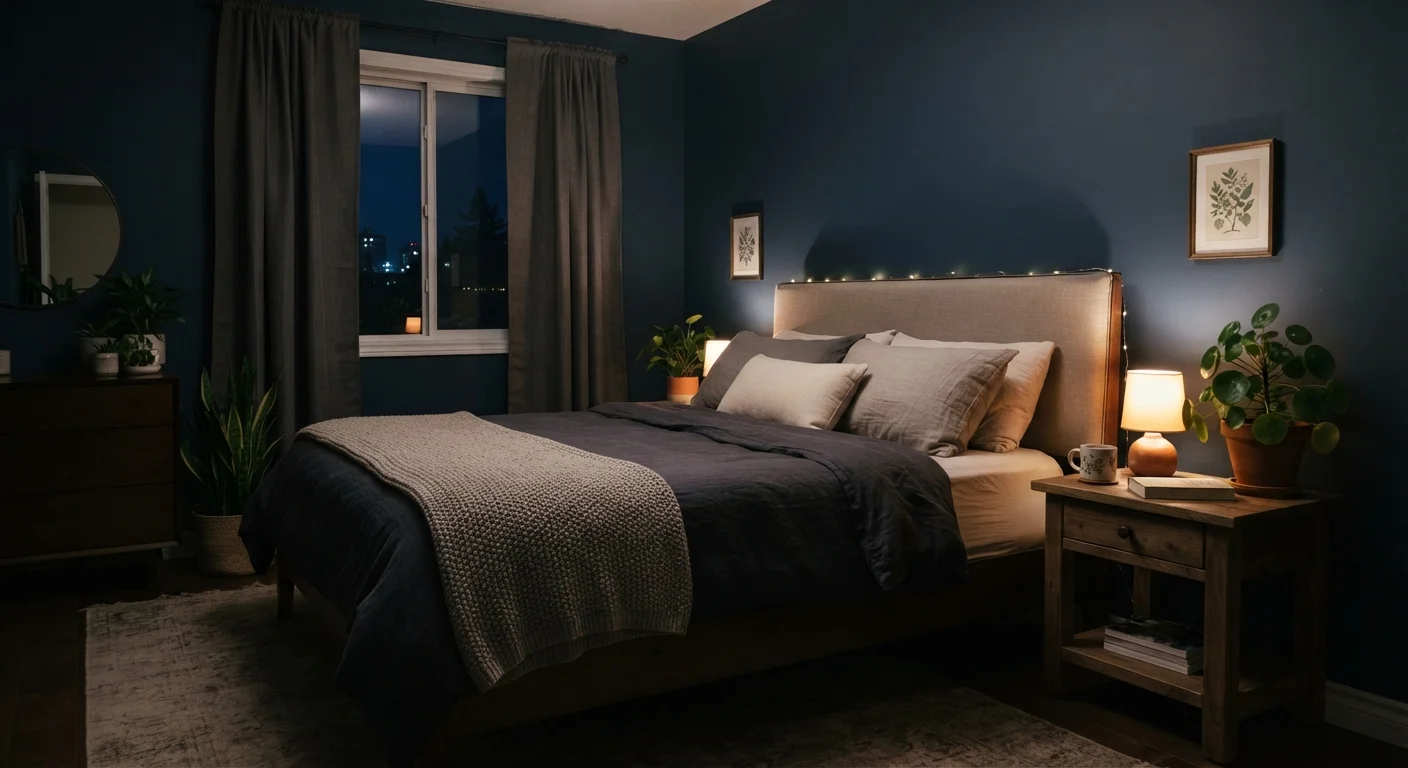
Keep your sleep environment cool, dark, and quiet.
Core body temperature naturally drops during sleep initiation. A cooler room facilitates this process, while heat disrupts it. Darkness preserves melatonin production, and noise fragments sleep architecture even when it doesn't fully wake you.
Quick Wins You Can Implement Today
Not every improvement requires a full lifestyle overhaul. These actions can create noticeable change with minimal friction, making them ideal starting points if you're new to addressing your sleep habits.
For a closer look at how your screen habits specifically affect your mental wellness and sleep, see our guide to digital wellness and screen habits. And because nutrition and sleep quality are more connected than many people realize, the research on eating patterns and long-term health offers useful context.
When Good Habits Aren't Enough
Sleep hygiene is a powerful first step, but it has limits. Conditions such as insomnia disorder, sleep apnea, restless legs syndrome, and circadian rhythm disorders often require professional evaluation and targeted treatment - not simply better bedtime routines. Cognitive behavioral therapy for insomnia (CBT-I) is considered a first-line treatment for chronic insomnia by many major medical organizations, and it addresses the thought patterns and behaviors that sustain poor sleep in ways that hygiene habits alone cannot.
CBT-I: A Clinically Validated Alternative
Cognitive behavioral therapy for insomnia (CBT-I) is a structured, evidence-based program that addresses the underlying thought patterns and behaviors driving chronic sleep difficulties. Unlike sleep hygiene alone, CBT-I has shown durable results in clinical trials and is recommended as a first-line treatment by several major medical bodies. It is available through sleep specialists, trained psychologists, and some digital programs - ask your healthcare provider for a referral or guidance on appropriate options.
If you've consistently applied these practices for several weeks without meaningful improvement - or if your sleep difficulty is accompanied by loud snoring, frequent waking, mood changes, or daytime impairment - consult a healthcare provider. Better sleep is achievable for most people, but getting there may require more than a change in habits.