

| Most common first step | Purging - removing items before organizing what remains |
| Biggest beginner mistake | Buying containers before categorizing and purging |
| Core storage principle | Like with like - group similar items in one location |
| Key maintenance habit | One-in-one-out rule to prevent re-accumulation |
| Most overlooked storage | Dead space - under beds, above cabinets, behind doors |
| Terms in this glossary | 12 core home organization terms defined |
Why Organization Has Its Own Language
Scroll through any organization video or guide and you'll run into terms like decanting, zoning, and negative space - often without definitions. This glossary cuts through the jargon so you can focus on the actual work of tidying your home. Whether you're tackling a single junk drawer or planning a full room overhaul, knowing these terms helps you follow instructions, shop smarter, and explain your plan to other household members.
Think of this as a companion reference. Use it alongside practical how-to resources like the room-by-room organization checklist to build both vocabulary and momentum.
| Most common first step | Purging - removing items before organizing what remains |
| Biggest beginner mistake | Buying containers before categorizing and purging |
| Core storage principle | Like with like - group similar items in one location |
| Key maintenance habit | One-in-one-out rule to prevent re-accumulation |
| Most overlooked storage | Dead space - under beds, above cabinets, behind doors |
| Terms in this glossary | 12 core home organization terms defined |
Core Concepts and Methods
These terms describe the foundational ideas behind most modern organization approaches.
Decanting
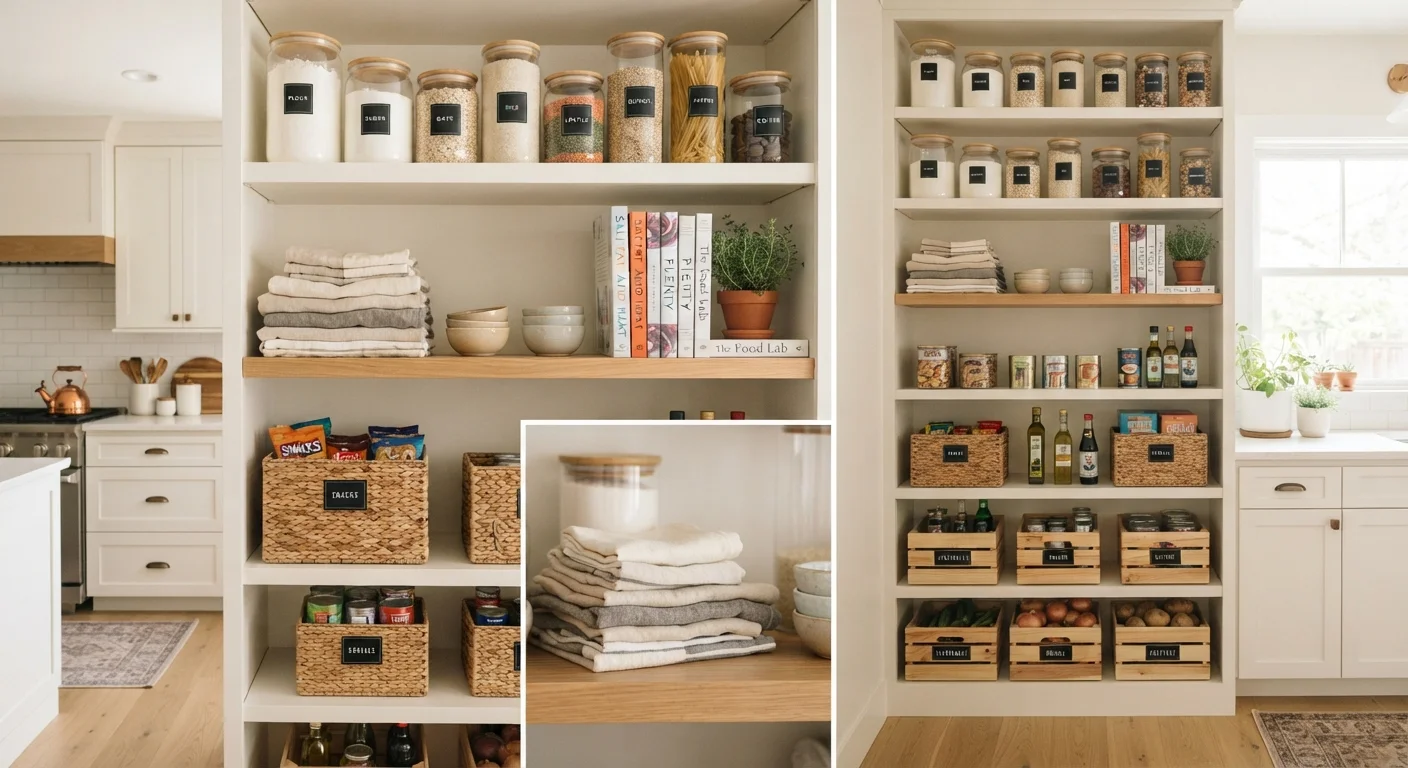
Transferring products from original packaging into uniform containers, typically for pantry, bathroom, or laundry storage. The goal is visual consistency and easier inventory tracking.
Zoning
Dividing a room or storage unit into sections based on activity or category. A kitchen might have a coffee zone, a baking zone, and a snack zone, each containing everything needed for that task.
Negative space
Deliberate empty area left within a storage zone or on a surface. It signals capacity limits and prevents spaces from becoming so full that retrieval becomes difficult.
Prime real estate
The most accessible storage locations - typically eye level and within arm's reach. Everyday items should occupy prime real estate; rarely used items should not.
Purging
Removing items from a space by donating, discarding, or relocating them. Purging before organizing ensures you're only storing things you actually need and use.
Containerizing
Placing sorted, categorized items into containers or bins. Best done after purging and categorizing - buying containers first often leads to purchasing the wrong sizes.
Like with like
A storage principle meaning similar items are stored together in one location. It reduces search time and prevents accidental duplicate purchases.
Dead space
Unused areas in a room - above cabinets, under beds, behind doors - that can often be converted into functional storage with the right organizers or shelving.
One-in-one-out rule
A maintenance habit where one item must leave the home before a new similar item comes in. It keeps total inventory stable and counters gradual accumulation.
Vertical storage
Using wall height rather than floor area for storing items. Pegboards, wall shelves, and over-door racks are common vertical storage solutions.
Capsule inventory
Keeping a pared-down, intentional collection of items in a category - often applied to wardrobes, kitchenware, or linens. The goal is owning only what is regularly used.
Categorizing
Grouping similar items together before assigning them storage locations. This step helps reveal duplicates, clarify true quantities, and inform container size decisions.
Once you understand these concepts, methods like the one-in-one-out rule become much easier to apply consistently. See habits that keep homes clutter-free for practical ways to build these ideas into daily routines.
Storage and Spatial Terms
Organization guides frequently reference how physical space is used. Understanding these terms helps you make better decisions about furniture, bins, and layout.
- Decanting
- Transferring items from their original packaging into uniform, often clear containers. Commonly done in pantries and bathrooms to create visual consistency and make quantities easier to see.
- Negative space
- Intentionally empty space left in a storage area. Leaving room on a shelf or in a drawer signals that a space is at capacity and prevents overflow.
- Zoning
- Dividing a room or storage area into dedicated areas by use or category - for example, a homework zone in a living room or a breakfast zone on a kitchen counter.
- Dead space
- Areas in a room that are not being used for storage or function - tops of cabinets, the space under a bed, or corners behind doors. Identifying dead space reveals hidden storage opportunities.
- Vertical storage
- Using wall height rather than floor footprint to store items. Wall-mounted shelves, pegboards, and over-door organizers all capitalize on vertical space.
If you're starting with a closet, the first-timer's closet walkthrough applies several of these concepts step by step.
Container Shopping: Wait Until After You Sort
One of the most common organization missteps is purchasing bins and baskets before knowing what will go in them. Sizes, quantities, and shapes all depend on what you're storing. Purge and categorize first, then measure your space and items before buying any containers. This saves money and prevents a closet full of mismatched, unused bins.
Process and Decision-Making Terms
These words describe the actions and decisions you make during an organization session.
- Purging
- The act of removing items from a space - whether by donating, discarding, or relocating them. Often the first step in any organization project.
- Categorizing
- Grouping like items together before deciding where they will live. Categorizing reveals duplicate items and clarifies true quantity before storage decisions are made.
- Like with like
- A guiding principle: store similar items in the same location. All batteries together, all wrapping paper together - it reduces search time and prevents accidental repurchasing.
- Prime real estate
- The most accessible storage spots - at eye level and within arm's reach. High-frequency items belong in prime real estate; rarely used items go elsewhere.
- Containerizing
- Placing categorized items into defined containers or bins after purging and sorting. Organization professionals often caution against buying containers before this step, since you won't know the correct sizes needed.
These decision-making habits share a logic with good financial planning - both rely on honest audits of what you actually have. The household budget glossary applies similar plain-language thinking to financial terms.