

Key Takeaways
Why Clutter Keeps Coming Back
Most households don't have a decluttering problem - they have a re-cluttering problem. A thorough sort-and-purge feels satisfying, but without ongoing habits to support it, surfaces fill back up within weeks. The root cause is usually structural: items enter the home faster than decisions are made about where they belong or whether they're needed.
Understanding this cycle matters because it shifts the goal. The aim isn't a perfectly minimalist home achieved through one heroic effort. It's a set of small, consistent practices that prevent accumulation in the first place. If you've ever felt frustrated that your organized spaces seem to collapse quickly, common organization myths may explain why your previous strategies didn't hold.
Core Habits That Actually Sustain Order
The following practices aren't complicated, but they require consistency. Each addresses a specific pattern that allows clutter to take hold.
Apply the one-in-one-out rule for every category of household item.
When a new item enters the home, an equivalent item must leave. This prevents slow accumulation - the kind that's hard to notice until spaces feel unmanageable. It works because it makes the cost of acquisition tangible and immediate.
Give every item a designated home and return it there after every use.
Clutter is often just deferred decisions - items set down temporarily that never get moved. When every object has a fixed location, putting things away becomes automatic rather than effortful. This habit also makes it immediately obvious when something is out of place.
Run a 10-minute household reset at the end of each day.
Small, frequent resets prevent the buildup that makes tidying feel overwhelming. A nightly 10-minute pass through main living areas - returning items to their homes, clearing surfaces, wiping counters - maintains baseline order without requiring a major effort.
Conduct a quarterly review of each room rather than waiting for visible chaos.
Clutter often accumulates in ways that aren't immediately visible - in drawers, cabinets, and closets. Scheduled reviews, tied to seasons or calendar quarters, catch these hidden accumulations before they overflow into living spaces.
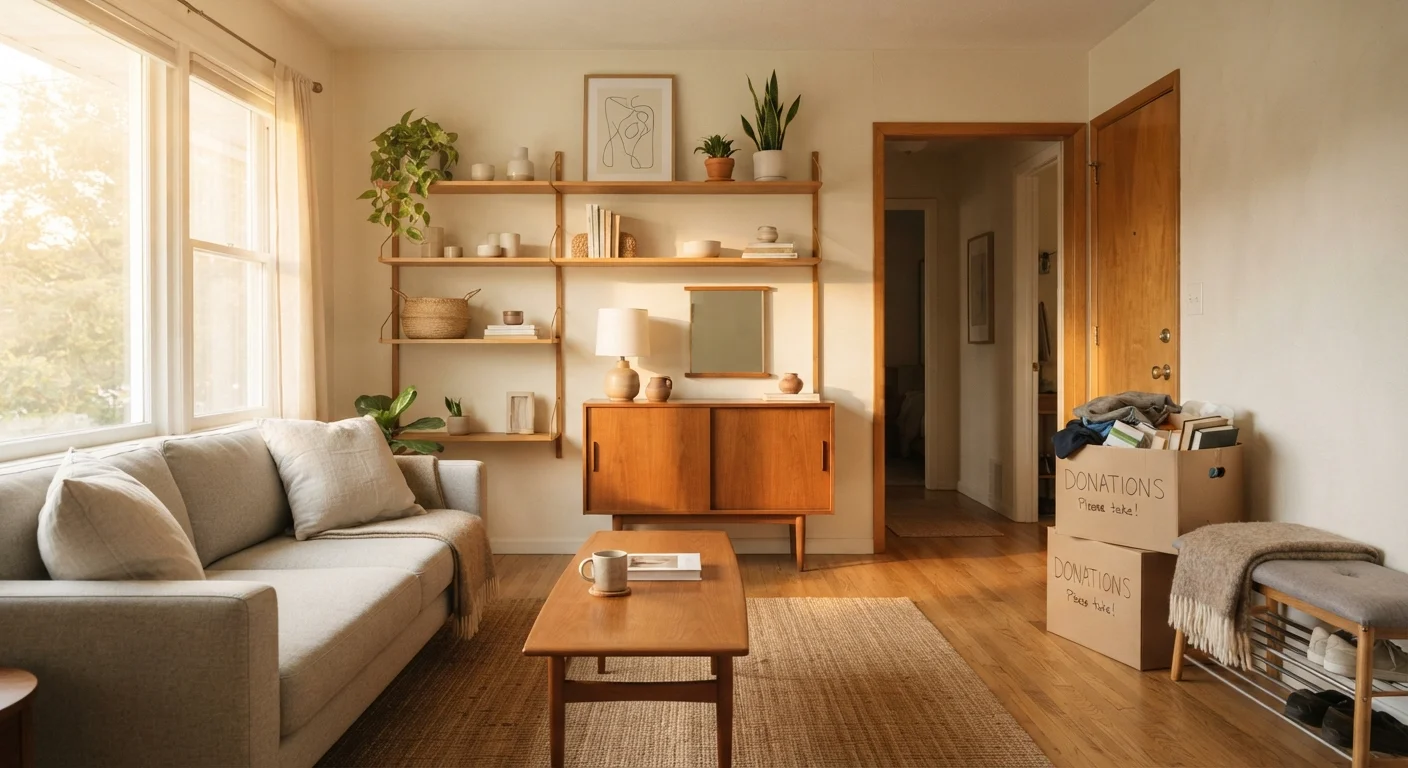
Create a dedicated outbox or donation station in a consistent location.
Without a specific place for items leaving the home, the decision to donate or discard something often stalls indefinitely. A visible, accessible outbox makes it easy to act on the decision immediately and keeps pending donations from drifting back into regular use.
Room-by-Room Pressure Points
Certain areas accumulate clutter more reliably than others. Targeting these spots with tailored strategies yields the biggest return on effort.
Entryways and Drop Zones
The entryway is where clutter begins. Bags, mail, shoes, and keys pile up because there's no clear system for handling them on arrival. Installing hooks at usable heights, a tray for keys, and a single basket for items that need to travel elsewhere creates a functional filter.
Kitchen Counters
Kitchen counters attract what organizers call "counter creep" - appliances, paper, miscellaneous objects that drift in and stay. A useful rule: only items used at least three times a week earn counter real estate. Everything else belongs in a cabinet or drawer.
Paper and Mail
Paper clutter is among the most persistent household challenges, and it requires its own dedicated system. Sorting mail immediately at a single location - shredding junk, filing actionables, and discarding envelopes - prevents the paper piles that accumulate when decisions are deferred. For a comprehensive approach, see our guide on managing mail and documents at home.
Shared Kids' Spaces
Children's rooms and play areas require systems kids can realistically operate themselves. Low, open bins labeled with pictures work better than lids and complex categories. For detailed guidance, our article on organizing shared kids' rooms covers layouts and storage approaches that tend to stick.
The Two-Minute Rule for Stray Items
If returning or dealing with an item takes less than two minutes, do it immediately rather than setting it down. This prevents the temporary placement habit that turns surfaces into holding areas. Applying this consistently during a daily reset makes a noticeable difference within a week.
Handling Seasonal Transitions Without Chaos
One of the biggest triggers for clutter is seasonal changeovers - winter coats crowding summer gear, holiday decorations without a clear home. A methodical rotation system, done twice a year, prevents off-season items from bleeding into everyday spaces. The key is labeled, consistent storage locations and a firm policy: if it's out of season, it's in a designated bin or box, not on a shelf in the main closet.
If seasonal swaps have felt overwhelming in the past, a structured approach makes a significant difference. Our guide on rotating seasonal storage outlines a step-by-step system that reduces the time and stress involved each year.