

Key Takeaways
Why Good Intentions Aren't Enough
Most households don't fall back into disorder because their residents are disorganized people. They fall back because the systems they built were designed for a moment of high motivation - not for the daily reality of busy schedules, shared spaces, and competing demands on attention.
Understanding the structural and behavioral reasons behind this pattern is the first step to actually breaking it. The mistakes below appear across nearly every home type and household size. Recognizing them in your own space is far more useful than buying another set of labeled containers.
Systems Must Fit Real Life, Not Ideal Life
A common trap is designing an organization system around who you wish you were - someone with unlimited time and consistent routines. If your system requires steps you reliably skip, the system is wrong, not you. Build around observed behavior, not aspirational behavior, and you'll spend far less time reorganizing the same spaces.
The Most Common Reasons Organized Systems Collapse
These aren't failures of willpower - they're predictable design errors. Each one is fixable once you can see it clearly.
Designing the system around an idealized version of your daily routine rather than your actual one.
Why it happens: During an organizing session, motivation is high and it's easy to imagine a tidier, more disciplined version of yourself. Systems get built for that imagined person instead of the one who's tired at 7 p.m.
Treating a single big reorganization as the solution rather than the starting point.
Why it happens: A dramatic clean-out produces immediate visible results, which creates the feeling that the problem is solved. Without follow-through habits, the space reverts within weeks.
Creating systems that are too complex or visually rigid for a multi-person household.
Why it happens: Organizers often build systems that work perfectly for one person's logic but aren't intuitive to others in the home, including children or partners with different habits.
Failing to account for seasonal and life-stage shifts in what the household actually needs.
Why it happens: A system built around current routines can become obsolete quickly - a new job, a baby, or a new hobby can all reshape traffic patterns and storage demands within months.
Organizing everything at once and burning out before any system is reinforced.
Why it happens: Whole-home overhauls are exhausting, and fatigue in the later rooms leads to shortcuts that undermine the whole effort. This parallels how new exercise routines fall apart after two weeks - initial enthusiasm rarely sustains the full workload.
Areas like kitchen drawers deserve particular attention because they accumulate entropy fastest. If you're addressing the kitchen, the detailed strategies in organizing kitchen drawer chaos apply many of these same principles to one of the hardest-to-maintain zones in any home.
Buying Supplies Before Planning Backfires
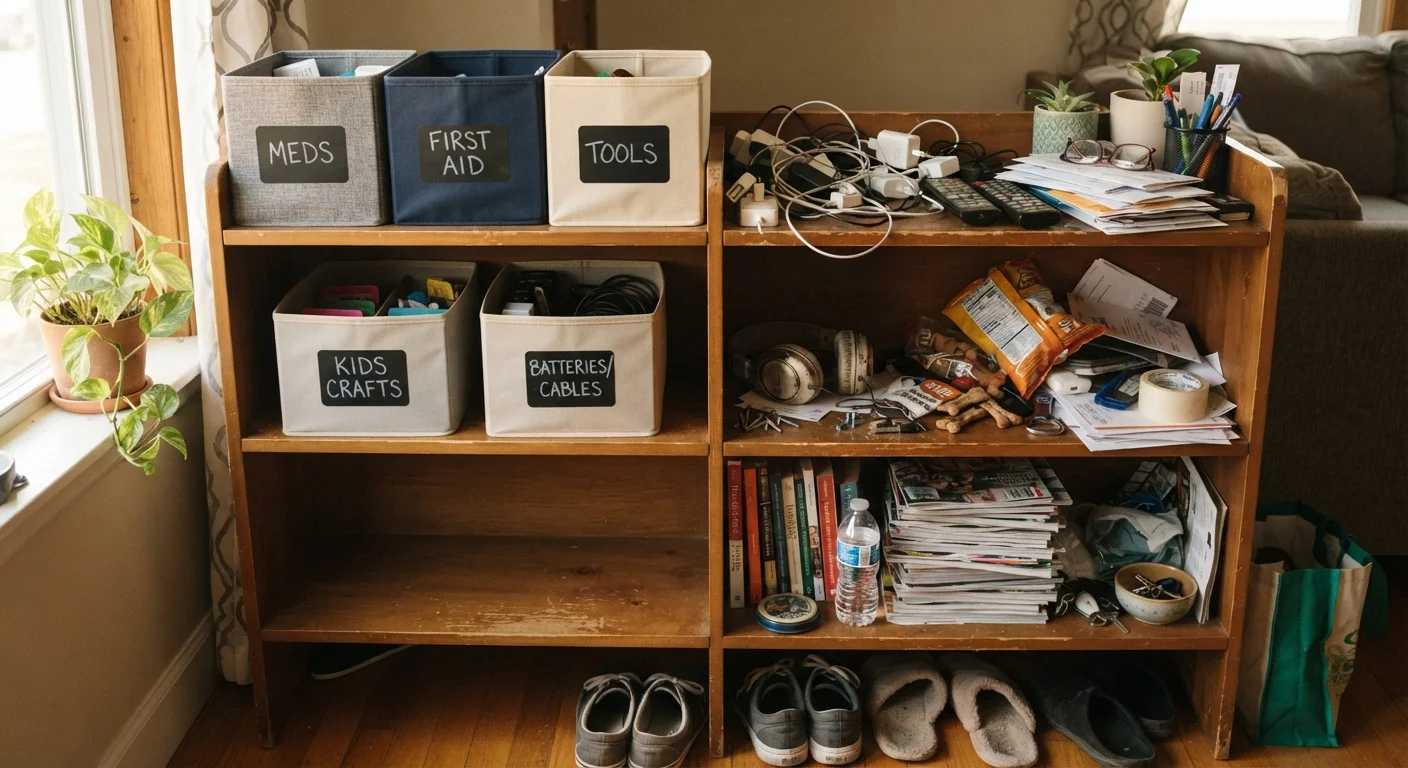
Purchasing bins, labels, and drawer dividers before assessing the actual space and workflow is one of the most common organizing pitfalls. Containers bought in advance often don't fit correctly, don't suit the actual items being stored, or create a false sense of progress that replaces the harder thinking. Sort and plan first - shop only once you know exactly what you need.
Building Systems That Actually Stick
Durable organization isn't about finding the perfect product or method - it's about reducing friction. Every unnecessary step between a person and putting something away is a failure point. The goal is a system where the easy choice and the right choice are the same thing.
80%
Of clutter from indecision, not shortage of space
Professional organizers commonly estimate that the majority of household clutter results from deferred decisions rather than insufficient storage capacity.
~3 weeks
Average time before a new system starts breaking down
Behavioral research on habit formation suggests new routines require consistent reinforcement for several weeks before they become self-sustaining.
It also helps to question received wisdom about what organization is supposed to look like. Many popular approaches backfire in practice. The article on organization myths that make your home messier covers several widely believed strategies that often do more harm than good.
The most resilient systems are modest in ambition, flexible enough to absorb real life, and built in from the start with a plan for maintenance - not as an afterthought.