

Key Takeaways
What a Monthly Budget Actually Does
A monthly budget is a written plan that matches your income to your expenses for one calendar month. That's it. It doesn't tell you what you should value - it tells you where your money is currently going and gives you a structure to direct it more deliberately.
Budgets fail most often for one of two reasons: they're built on income that doesn't account for taxes, or they omit entire categories of real spending. The steps below are designed to avoid both problems.
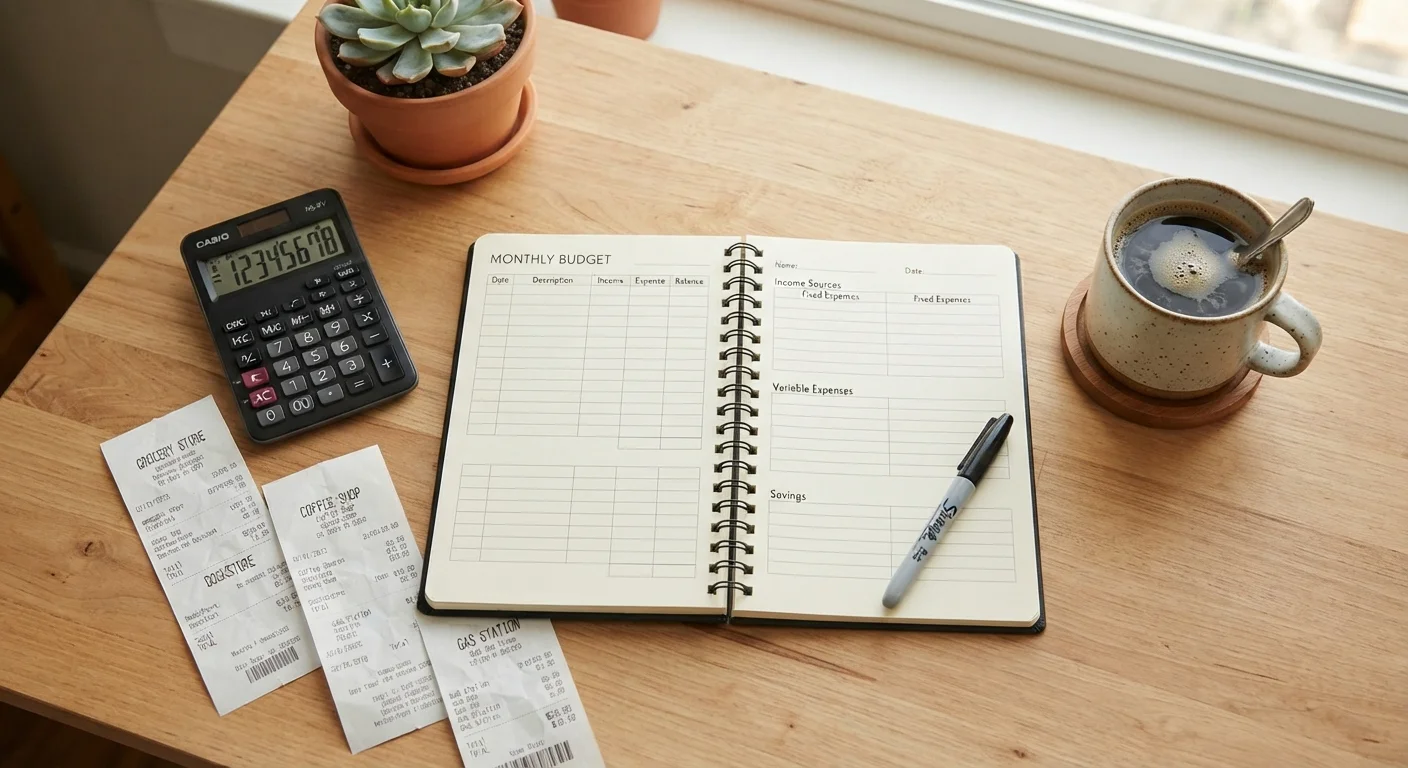
Before you begin, gather the tools you'll need:
What you will need
Bank and credit card statements (2-3 months)
Used to identify actual spending patterns across categories rather than guessing.
Pay stubs or direct deposit records
Confirms your real take-home income after taxes and deductions.
Spreadsheet or budgeting worksheet
Provides a structured place to enter income, expenses, and calculate your balance.
Calculator
Helps quickly total category spending and check that income minus expenses balances.
Once you have everything in front of you, the process takes most people under an hour for a first attempt.
How to Build Your First Budget
Work through these steps in order. Skipping ahead - especially past the income and fixed-expense steps - is how budgets end up unrealistic from the start.
Calculate your monthly take-home income
Write down every source of money coming in each month - your primary job, a side income, freelance work, or any regular benefit payments. Use take-home pay (the amount deposited after taxes and deductions), not your gross salary. If your income varies month to month, average the last three months to get a working figure.
If you share finances with a partner, add both incomes together at this stage.
List all fixed monthly expenses
Fixed expenses are costs that stay the same every month: rent or mortgage, car loan, insurance premiums, and minimum debt payments. Pull these from your bank statements to make sure you haven't missed any. Enter each one with its exact amount.
Add up the total. This number represents money that is already committed before you decide anything else.
Estimate your variable expenses by category
Variable expenses change month to month: groceries, gas, dining out, entertainment, clothing, personal care, and utilities. Go through two or three months of bank and card statements and group spending into categories. For each category, calculate an average monthly spend.
Common categories include:
- Groceries and household supplies
- Dining and takeout
- Transportation (fuel, transit, parking)
- Utilities (electricity, gas, internet, phone)
- Health and medical co-pays
- Entertainment and subscriptions
Use your actual numbers - not what you wish you spent.
Account for irregular and annual expenses
These are the expenses that don't appear monthly but are entirely predictable: car registration, annual insurance renewals, school supplies, holiday gifts, or quarterly subscriptions. Irregular expenses are the most common reason budgets fall short - plan for them now rather than letting them arrive as surprises.
For each irregular expense, estimate the annual total, divide by 12, and add that monthly amount to your budget as a dedicated line item. Even if you don't spend it that month, set it aside mentally (or in a separate savings account).
Add a savings line before calculating your balance
Treat savings as a non-negotiable expense rather than whatever is left over at month-end. Decide on an amount - even a modest one - and enter it as a budget line. This is the core idea behind building a savings habit from scratch: paying yourself first, before discretionary spending has a chance to absorb those dollars.
Calculate your starting balance and adjust
Subtract total expenses (fixed + variable + irregular reserves + savings) from your take-home income. The result is your starting balance:
- Positive balance: You have room - decide intentionally where that money goes.
- Zero balance: Every dollar is assigned, which is the goal of a zero-based budget.
- Negative balance: Expenses exceed income - you need to reduce spending in one or more categories before the month begins.
If your balance is negative, review variable categories first; fixed expenses are harder to change quickly. Look for categories where actual spending significantly exceeds a reasonable estimate.
Your First Budget Is a Draft
No first budget survives contact with a real month unchanged. Track your actual spending as the month progresses and compare it to the plan at month-end. The gaps you find become the basis for a more accurate second budget. Revision is part of the process, not a sign of failure.
Once your first month is complete, the monthly budget setup checklist can help you verify you haven't overlooked any common line items before the next month begins.
Choosing a Format That You'll Actually Use
A budget written on a legal pad works just as well as one built in a dedicated app - as long as you actually use it. The format matters far less than consistency. That said, a few approaches are worth knowing about:
- Spreadsheet: Flexible and visible; you can see all categories at once and customize freely.
- Budgeting apps: Many sync with bank accounts and categorize spending automatically, which reduces manual work.
- Pen and paper: Simple and tactile; some people find physically writing numbers makes spending feel more real.
- Envelope method: A cash-based system where spending categories get literal (or digital) envelopes of allocated money. Envelope budgeting in a digital world explains how this approach works without physical cash.
Budgeting on Gross Income Is a Common Mistake
Using your pre-tax salary instead of your actual take-home pay will make your budget look more comfortable than it really is. Always start with the amount that actually hits your bank account. If you're unsure of your effective take-home, check a recent pay stub or your bank's deposit history.
If you share finances with a partner or household members, choose a format everyone can access and review together. A budget that only one person understands rarely holds for long.
What Comes After the First Month
The goal of month one is to establish a baseline - a realistic picture of what your household actually spends. Expect some categories to be off. That's normal and useful information.
After your first month, compare planned amounts to actual spending in each category. Adjust the next month's budget based on what you learned. Over two or three months, your figures will become much more accurate, and the process will take noticeably less time.
Once your budget is stable, you can start using it more actively - building toward goals, reducing debt, or growing savings. The complete guide to managing a household budget long-term covers how to adapt your budget through life changes and use it as an ongoing financial tool.
For households focused on building savings alongside budgeting, the Saving & Debt hub offers foundational concepts that pair well with what you've built here.
This Is General Financial Information
This article explains general budgeting concepts and is not personalized financial advice. Everyone's financial situation is different. For guidance specific to your circumstances - particularly around debt, taxes, or financial planning - consider speaking with a licensed financial professional.