

Key Takeaways
Envelope Budgeting
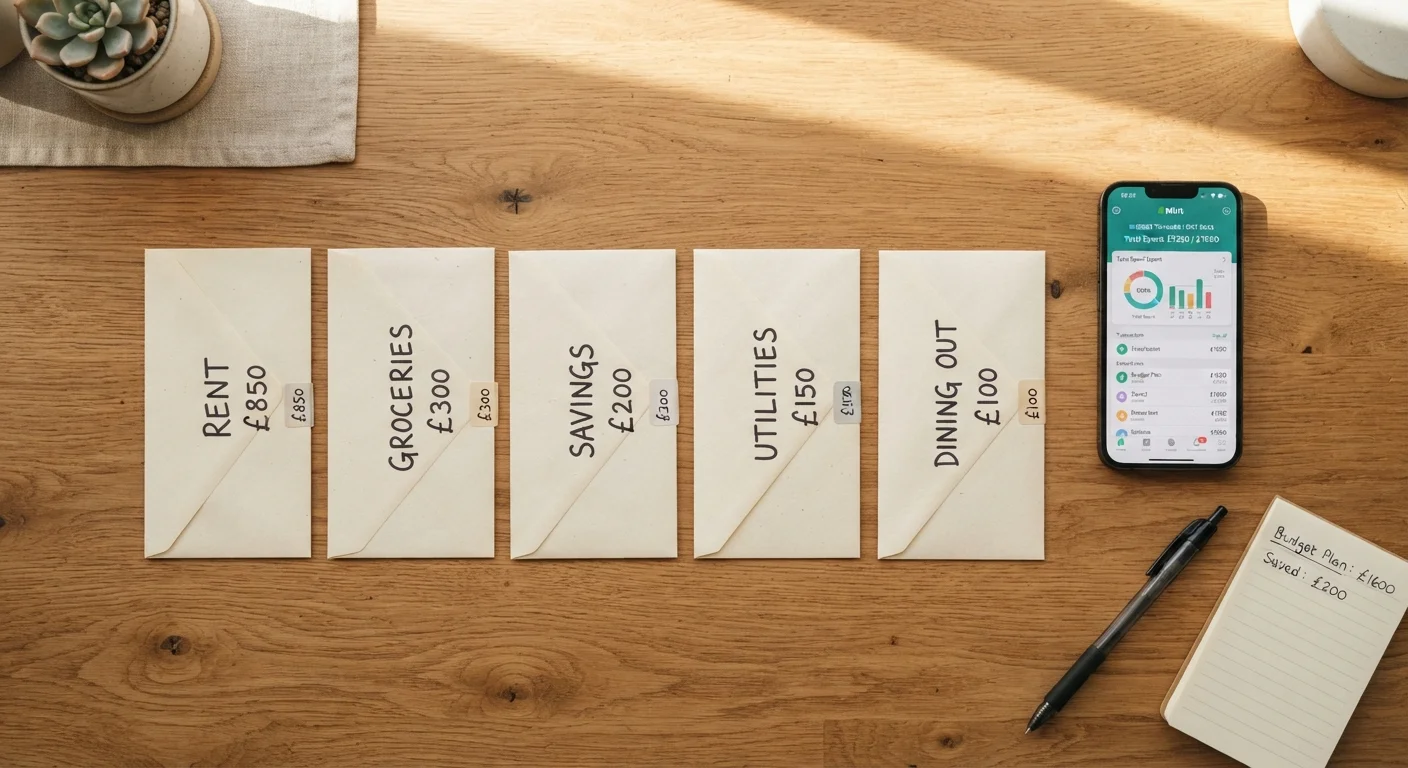
Envelope budgeting is a cash-based system where you divide your monthly income into physical envelopes, each labeled for a spending category - groceries, gas, dining out, and so on. When an envelope is empty, you stop spending in that category for the month. It turns abstract budget numbers into a concrete, tactile limit you can see and feel.
The system is sometimes called the 'cash envelope method' or 'envelope stuffing.' Its digital adaptations replace physical cash with virtual spending buckets tracked in apps or spreadsheets.
How the Original System Worked
Before direct deposit and digital payments, many households managed money one week at a time. When the paycheck arrived, people cashed it and physically sorted bills into labeled envelopes: one for rent, one for groceries, one for utilities. Once the grocery envelope held $80, that was the grocery budget. No envelope shuffling, no exceptions - at least in theory.
The simplicity is the point. There's no math to redo mid-month and no ambiguity about whether you've overspent. You either have money in the envelope or you don't. That immediacy is something a bank app balance can't easily replicate, because a total balance doesn't tell you which category the money belongs to.
If you're newer to budgeting overall, start with the fundamentals of household budgeting before layering in a specific method like envelopes.
Adapting the Method Without Cash
Most people today pay bills electronically and use debit or credit cards for daily purchases. Carrying envelopes stuffed with cash isn't practical for everyone - and it's unnecessary. The mechanism that makes envelope budgeting work is the category limit, not the paper.
Digital adaptations keep the limit structure intact. Common approaches include:
- Spreadsheet tracking: Label columns by spending category and subtract each purchase manually. Simple, free, and fully customizable.
- Sub-account savings buckets: Some banks and credit unions let you divide a checking or savings account into named sub-accounts. Move money into each bucket at the start of the month and spend only from the relevant one.
- Budgeting apps: Several apps are designed specifically around virtual envelopes or spending categories with running balances. You assign income to categories and log transactions against them.
The trade-off with digital methods is that friction decreases. Cash envelopes are hard to ignore; a spreadsheet is easy to skip for a few days. Whatever tool you choose, the habit of recording every transaction promptly is what makes the system function.
Start With Just Two or Three Envelopes
Trying to track a dozen categories at once is a common reason people abandon the system early. Pick the two or three categories where you most often overspend - groceries, dining, or entertainment are typical culprits - and build the habit there first. You can add more categories once the routine feels natural.
Where Envelope Budgeting Fits - and Where It Doesn't
The method is most useful for variable, discretionary spending - the categories where most people actually overspend. Groceries, restaurants, gas, clothing, and entertainment respond well to hard limits. Fixed expenses like rent, a car payment, or an insurance premium don't benefit much from an envelope because the amount is already set.
Envelope budgeting is also a particularly useful tool during a period of debt payoff or when rebuilding savings, because it makes the cost of every discretionary choice visible. For a broader look at how saving and debt repayment interact with your spending plan, see the Saving & Debt hub.
The method requires more active management than a passive approach. If you prefer a percentage-based framework that doesn't require category-by-category tracking, it's worth understanding how the 50/30/20 rule and zero-based budgeting compare before committing to any single system.
~33%
Americans with no written budget
A Gallup survey found roughly one in three U.S. adults does not maintain a detailed household budget, suggesting significant room for structured approaches like envelope budgeting.
60%+
Adults who say they live paycheck to paycheck
Multiple consumer surveys, including those by LendingClub, have consistently found that a majority of U.S. adults report spending most or all of their income before the next pay period.
Making It Work Month to Month
A few practical considerations help the system stay functional over time:
- Set category amounts based on real data. Review two or three months of past spending before deciding how much each envelope gets. Guessing too low leads to constant reshuffling and frustration.
- Build in a buffer or miscellaneous envelope. Unexpected small expenses - a parking meter, a forgotten subscription - will arise. A small catch-all envelope prevents them from derailing other categories.
- Review and adjust monthly. Spending patterns change. A category that needed $200 in summer might need $300 in winter. Treat the allocations as a starting point, not a permanent rule.
- Decide your transfer policy in advance. Will you allow mid-month transfers between envelopes? If so, under what conditions? Agreeing on this upfront - especially in a shared household - prevents conflict and keeps the system honest.
For a structured walkthrough of setting up categories and initial allocations, building your first monthly budget is a useful companion resource.
This article is for general informational purposes only and does not constitute personalized financial advice. Consult a qualified financial professional for guidance specific to your situation.