

Key Takeaways
Why the Introduction Process Matters
Cats are territorial by nature. Unlike dogs, which are largely social animals wired to accept new pack members, cats establish spatial territories and can experience a second cat as a direct threat to resources and safety. When introductions are handled too quickly - or not at all - the resulting stress can manifest as aggression, inappropriate elimination, compulsive grooming, or chronic anxiety in one or both animals.
A structured, phased approach works because it allows each cat to gather information gradually, starting with scent alone, then sound, then sight, then physical presence. This mirrors how cats in the wild would cautiously investigate a newcomer's existence before direct contact. The result is a significantly lower likelihood of entrenched conflict compared to an immediate introduction.
The process outlined below is grounded in established behavior science and widely recommended by veterinary behaviorists. It applies to most adult cat introductions; kittens are generally more adaptable, though the same principles apply and reduce stress for any resident cat regardless of age. If you are also managing introductions involving dogs, introducing a new dog to a multi-pet household follows comparable phased principles.
What you will need
What You'll Need Before You Begin
Gathering the right resources before the new cat arrives prevents the need to improvise during a stressful period. The key principle is redundancy: every resource your resident cat currently owns - food station, water source, resting spots, litter boxes - needs a duplicate for the newcomer.
Separate introduction room
Gives the new cat a safe space to decompress and allows scent exchange without direct contact.
Extra litter boxes
Maintains the recommended ratio of one box per cat plus one extra, preventing resource-guarding conflict.
Feliway or synthetic feline pheromone diffuser
May help reduce ambient stress for both cats during the transition period.
Soft bedding or worn clothing (scent items)
Used to exchange scents between cats before they see each other.
Baby gate or screen door
Allows visual contact with a physical barrier before a fully supervised face-to-face meeting.
Enrichment within the new cat's introduction room also matters. Puzzle feeders, window perches, and rotating toys help the newcomer stay mentally engaged during the isolation phase rather than becoming frustrated or anxious. For ideas on sustained enrichment applicable to both cats after integration, see our guide on keeping indoor cats mentally and physically stimulated.
Step-by-Step Introduction Process
Follow each phase at the pace set by the slower or more reactive of the two cats. Progress only when both animals display calm or neutral body language at the current stage - not simply when a set number of days has passed.
Set up a dedicated room for the new cat
Before the new cat arrives, prepare a separate room with everything it needs: food, fresh water, a litter box, a hiding spot, and comfortable bedding. This space gives the newcomer time to decompress from the stress of travel and a new environment before any feline interaction begins. Keep the door closed at all times during this initial phase.
Allow scent exchange through bedding
After two to three days, swap a piece of bedding or a worn item of clothing between the cats' spaces. Place the resident cat's scent item near the new cat's food bowl and vice versa, so each associates the other's smell with something positive. Repeat this exchange daily, watching for relaxed curiosity rather than hissing or avoidance.
Feed both cats near the closed door
Begin feeding both cats on opposite sides of the closed door, moving their bowls progressively closer to the barrier over several days. If either cat stops eating, growls, or retreats from the bowl, the bowls are too close - increase the distance and slow the pace. The goal is for each cat to associate the other's nearby scent with a rewarding experience.
Introduce visual contact with a barrier
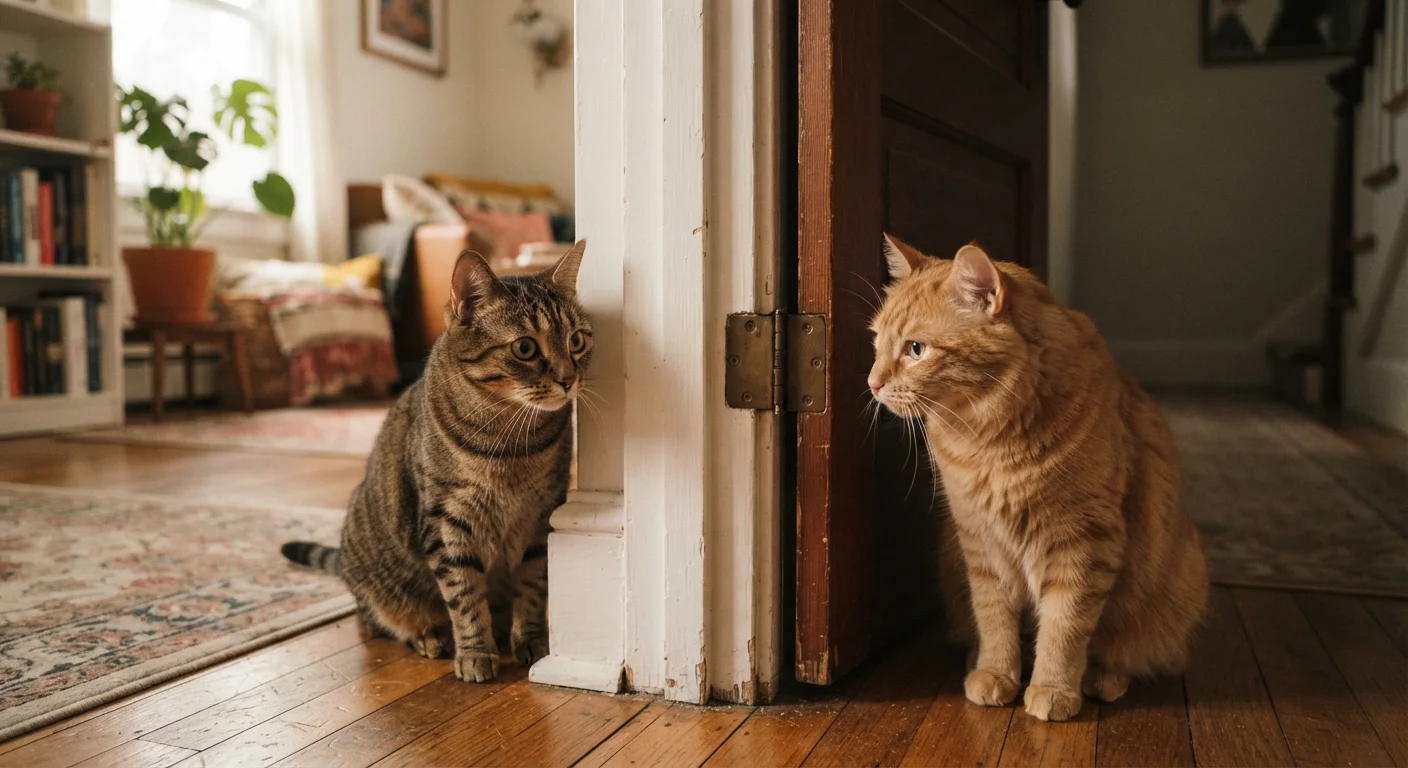
Once both cats eat calmly near the closed door, crack it open slightly or use a baby gate or screen door so they can see each other without physical contact. Keep initial sessions short - five to ten minutes - and end on a calm note. Reward relaxed or curious behavior with treats or play.
Allow supervised face-to-face interaction
When both cats show relaxed body language through the barrier - soft posture, slow blinking, or simple disinterest - open the door and allow brief, fully supervised interaction in a neutral common space. Stay calm and present but avoid hovering or interfering unless genuine aggression (sustained biting, loud screaming, pinning) occurs. Short, positive sessions are far more effective than one long, stressful encounter.
Gradually expand shared space and resources
Incrementally allow the new cat access to more of the home, always ensuring each cat retains its own feeding station, litter box, and core resting area. Maintain the rule of one litter box per cat plus one extra throughout the household permanently. Monitor litter box use closely - inappropriate elimination is frequently an early sign of unresolved inter-cat stress. For more detail on that issue, see litter box avoidance and its causes.
Avoid Rushing the Timeline
The most common reason cat introductions fail is moving too quickly through the phases. Hissing or swatting through a door is normal; sustained, escalating aggression is not. If you skip steps because the cats seem indifferent, you may miss early warning signs. A successful introduction typically unfolds over two to six weeks - occasionally longer for cats with fearful or territorial temperaments.
Reading Body Language and Troubleshooting
Hissing, growling, and swatting through a barrier are normal during early phases and do not indicate failure. These are cats communicating discomfort within a controlled, safe context. Genuine red flags include: prolonged freezing or fleeing at any sound or scent from the other cat, sustained screaming or injurious fighting during supervised sessions, or a sharp change in appetite, litter box habits, or grooming in either animal.
When to Pause and Seek Veterinary Guidance
If either cat shows prolonged hiding lasting more than a week, refuses to eat, develops stress-related symptoms such as over-grooming or urinary issues, or if introductions result in repeated, injurious fights, pause the process and consult a veterinarian or a certified feline behaviorist. Some cats benefit from medical support or a formal behavior intervention plan before integration can succeed.
If setbacks occur at any stage, return to the previous phase without treating it as a failure. Regression is common and temporary. Patience during this period directly predicts long-term compatibility. Many cats that began with intense mutual hostility have successfully integrated into peaceful, even affectionate, co-residents over the course of a few months when their owners maintained a calm, consistent process.
Older Cats May Need Extra Time
Senior cats are often less adaptable to household changes and may find the introduction process more stressful than younger animals. If your resident cat is older, plan for a slower, more patient timeline and watch closely for health changes during the transition. Our overview of senior cat care after age 10 covers additional considerations for aging cats.