

Key Takeaways
Why Indoor Enrichment Matters
Cats are obligate hunters with a nervous system built for stalking, pouncing, and problem-solving. When that drive has no outlet, the result is not a calm, content animal-it is often a bored, anxious, or overweight one. Behaviors such as excessive vocalization, destructive scratching, or overeating frequently trace back to understimulation rather than temperament.
The indoor environment protects cats from traffic, predators, disease, and injury-risks documented in veterinary research. But safety alone does not equal well-being. Understanding why cats behave the way they do helps owners design environments that meet genuine biological needs. Our guide on decoding common feline behaviors explains the instincts that drive many misunderstood actions. For a broader look at how indoor life affects health outcomes, see our overview of indoor vs. outdoor cat research.
Best Practices for Enriching Your Indoor Cat's Life
The following practices address the core behavioral pillars most cats share, regardless of breed or age. Adapt frequency and intensity based on your individual cat's energy level and health status.
Provide dedicated vertical space throughout the room
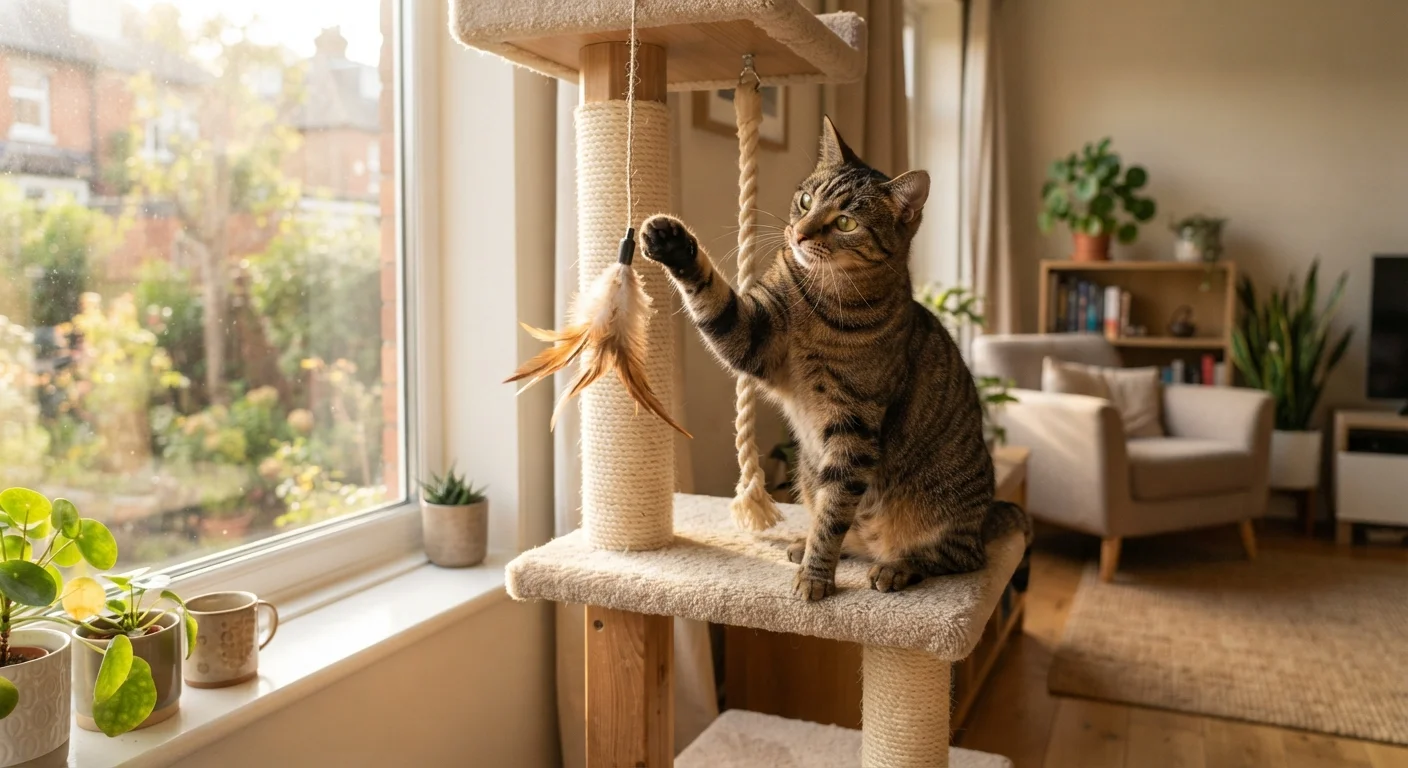
Cats are instinctively drawn to height as a vantage point for surveying territory and feeling secure. Vertical space increases a cat's perceived territory without requiring more floor area, reducing competition stress in multi-cat homes and giving solitary cats a sense of control over their environment.
Schedule two to three short interactive play sessions daily
Play that mimics prey movement-erratic, unpredictable, and involving a 'catch'-satisfies the hunt sequence cats are neurologically primed to complete. Sessions of five to fifteen minutes are sufficient and more effective at reducing boredom than one long, infrequent session.
Use puzzle feeders or scatter feeding instead of a single food bowl
Free-fed cats consume meals in seconds, leaving the bulk of their waking hours with no foraging activity. Puzzle feeders slow consumption, extend mental engagement, and can reduce obesity risk-a significant concern in sedentary indoor cats.
Offer multiple scratching surfaces with varied textures and orientations
Scratching serves three simultaneous purposes: nail maintenance, scent marking via paw glands, and full-body stretching. Cats that lack appropriate surfaces will use furniture-not out of spite, but because the drive is biological and constant.
Rotate and introduce novelty in toys and environmental objects regularly
Habituation is rapid in cats-the same toy left out continuously loses interest within days. Rotating a small collection of toys, or introducing a paper bag or cardboard box, reliably restores curiosity because novelty triggers the same investigative behavior as encountering something in the wild.
Create sensory variety through window access and safe plant or scent exposure
Visual stimulation from outdoor wildlife, insects, and movement activates predatory attention and provides passive enrichment throughout the day. Appropriate olfactory stimulation-such as catnip, silver vine, or cat-safe herbs-engages a cat's highly developed scent processing system.
Quick Wins You Can Start Today
Not every enrichment upgrade requires a major investment of time or money. The actions below can be implemented immediately and yield measurable improvements in activity and engagement.
Adapting Enrichment as Your Cat Ages
A kitten's enrichment needs differ substantially from those of a ten-year-old cat. Senior cats often have reduced mobility or joint discomfort that makes high-platform climbing less appropriate. Lower-level puzzle feeders, gentle wand play at a slower pace, and heated resting spots near windows can sustain engagement without physical strain. Our article on caring for a senior cat covers the full range of adjustments that support aging cats well.
If you are considering a second cat to provide companionship and social stimulation, introduction strategy matters enormously. Rushed introductions often increase stress rather than relieve it-see our guide to introducing a second cat for a structured approach.
When Behavioral Changes Warrant a Vet Visit
Sudden shifts in activity level, appetite, litter box habits, or social behavior are not always enrichment problems-they can be early signs of medical conditions including hyperthyroidism, arthritis, dental pain, or urinary disease. Enrichment improvements should complement, not replace, routine veterinary evaluation. If behavioral changes appear abruptly or are accompanied by physical symptoms, contact your veterinarian before attributing the cause to boredom.
This article is for general informational purposes only and is not a substitute for professional veterinary advice. If your cat shows sudden behavioral changes, consult a licensed veterinarian to rule out underlying medical causes.