

Key Takeaways
Our Verdict
The research consistently favors indoor living when it comes to longevity and safety, but indoor cats require deliberate enrichment to thrive physically and mentally. Neither lifestyle is without tradeoffs, and the right choice depends on the individual cat, the owner's environment, and the commitment to meeting the cat's behavioral and medical needs.
| Best for | Recommended |
|---|---|
| Owners prioritizing maximum lifespan and safety | Indoor-only lifestyle with structured enrichment |
| High-drive cats with strong outdoor instincts in rural or suburban settings | Supervised outdoor access or a secured catio enclosure |
| Urban apartment dwellers with limited outdoor space | Indoor-only with dedicated play and climbing opportunities |
| Owners balancing enrichment with manageable risk | Leash walking or enclosed garden access as a middle ground |
The Lifespan Gap: What Studies Consistently Show
Veterinary research has found a substantial difference in average lifespan between indoor and outdoor cats. Indoor-only cats typically live between 12 and 18 years, while cats with unsupervised outdoor access average closer to 2 to 5 years in some estimates, with many studies placing the outdoor median under 10 years. The American Veterinary Medical Association and multiple veterinary schools cite outdoor exposure as one of the single greatest reducers of feline life expectancy.
The causes are not mysterious: outdoor cats face traffic, predation by dogs and wildlife, accidental ingestion of toxins, exposure to infectious diseases from other cats, and the compounding effects of untreated injuries. These are not low-probability edge cases - they are statistically common outcomes for free-roaming cats.
12-18 yrs
Typical indoor cat lifespan
Consistently reported across veterinary literature and supported by organizations such as the ASPCA and veterinary schools.
~2-5 yrs
Median lifespan for free-roaming outdoor cats
Multiple studies, including research cited by the Wildlife Society, estimate substantially shorter lives for unsupervised outdoor cats.
Up to 3×
Higher FIV/FeLV risk outdoors
Transmission through bites from infected cats makes outdoor contact a primary risk factor for these serious viral diseases.
Health Risks Specific to Outdoor Cats
Infectious disease is among the most serious outdoor hazards. Feline leukemia virus (FeLV) and feline immunodeficiency virus (FIV) spread through close contact and bites from infected cats - both scenarios that are far more common outdoors. Upper respiratory infections, ringworm, and intestinal parasites are also substantially more prevalent in cats with outdoor access.
Trauma from road accidents is a leading cause of death and serious injury in outdoor cats. Beyond physical trauma, outdoor cats in many regions face secondary poisoning from rodenticides and exposure to antifreeze, both of which are acutely lethal. Regular parasite prevention and vaccination become even more critical for cats with outdoor access - something covered in detail in our lifetime vet visit schedule.
Health Risks Specific to Indoor Cats
Indoor living eliminates many hazards but introduces others. Reduced physical activity is the most clinically significant concern. Indoor cats tend to be less active than their outdoor counterparts, and this sedentary pattern contributes to higher rates of obesity - a condition with serious downstream effects on joint health, diabetes risk, and cardiac function. For a detailed look at how excess weight develops and is managed, see our overview of feline obesity.
Lower urinary tract disease, including idiopathic cystitis, is also more common in indoor cats and is thought to be partly stress-related. Cats confined indoors without adequate territory, stimulation, and vertical space may experience chronic low-grade stress, which can manifest as inappropriate elimination, overgrooming, or aggression. Dental disease rates are comparable across both groups, though diet plays the larger role - see what owners often overlook about cat dental health for more context.
Enrichment Is Preventive Medicine
Providing adequate mental and physical stimulation for indoor cats is not optional - it directly affects their physical health. Cats who engage in regular interactive play maintain healthier body weight, show lower rates of stress-related disease, and tend to be easier to examine at veterinary visits. Aim for at least two dedicated play sessions daily, and rotate enrichment items to maintain novelty.
Bridging the Gap: Enrichment and Middle-Ground Options
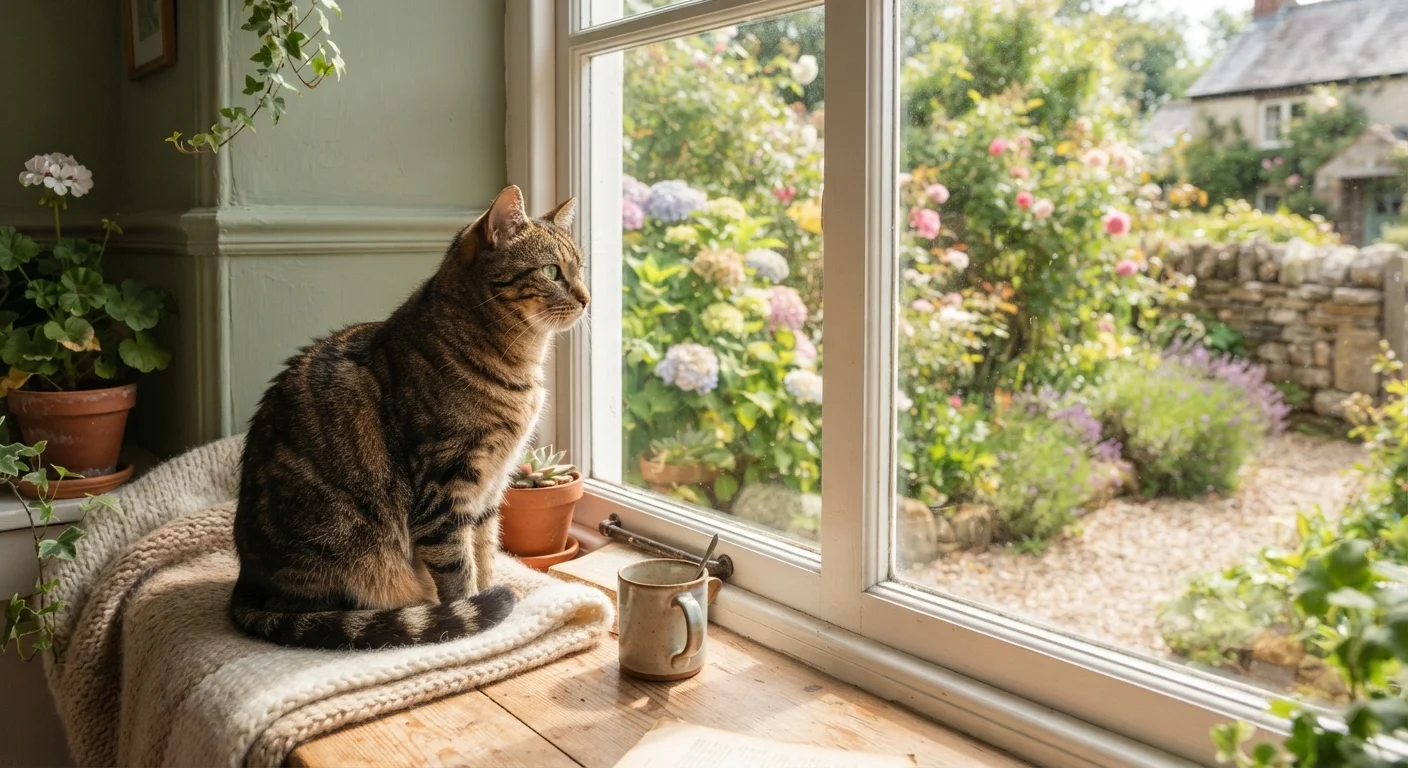
The indoor-outdoor debate does not have to be binary. Many veterinarians and behaviorists recommend enriched indoor environments as the safest route to a long, behaviorally healthy life. This means providing climbing structures, puzzle feeders, interactive play sessions, and window perches that allow visual access to the outdoors. Our guide to keeping an indoor cat mentally and physically stimulated covers these strategies in practical detail.
Supervised outdoor time - whether through leash walking, a secured catio, or a cat-proofed garden - offers meaningful environmental enrichment while dramatically reducing the risks associated with free-roaming. These approaches are increasingly recognized by veterinary behaviorists as a practical compromise for cats with strong outdoor drive. As cats age, their needs shift further; caring for a senior cat outlines how indoor management becomes especially valuable in a cat's later years.
| Indoor Cats | Outdoor Cats | |
|---|---|---|
| Average lifespan | 12-18 years | 2-10 years (varies widely) |
| Trauma risk | Very low | High (traffic, predators) |
| Infectious disease exposure | Low (if vaccinated) | Significantly elevated |
| Parasite burden | Low to moderate | High without prevention |
| Obesity risk | Higher (sedentary lifestyle) | Lower (more activity) |
| Behavioral enrichment | Requires deliberate effort | Naturally higher stimulation |
| Stress-related illness | Higher if understimulated | Lower in suitable environments |