

Key Takeaways
Why Dental Disease Is So Easy to Miss
Dental disease is among the most common health conditions diagnosed in cats, yet it routinely goes undetected by owners for months or even years. Unlike dogs, cats rarely paw at their mouths or refuse food dramatically - they tend to adapt quietly to oral discomfort, continuing to eat even when it causes pain. By the time visible symptoms appear, the disease has often been progressing for some time.
The condition typically begins with the accumulation of plaque - a soft bacterial film - on tooth surfaces. Without removal, plaque mineralizes into tartar (also called calculus) within days. Tartar harbors bacteria that inflame the gums, a stage called gingivitis, which is reversible with treatment. Left unaddressed, gingivitis can advance to periodontitis, a deeper infection of the structures supporting the tooth. This stage involves bone loss and is not reversible, though it can be managed. Cats are also prone to a painful condition called tooth resorption, in which the tooth structure itself breaks down from the inside out - a process vets estimate affects a substantial proportion of adult cats.
Dental problems don't stay confined to the mouth. Oral bacteria can enter the bloodstream and are associated with systemic health risks affecting the heart, kidneys, and liver. This is one reason veterinary guidelines treat oral health as an integral part of overall wellness rather than a cosmetic concern. See our lifetime vet visit schedule for when oral exams typically occur across a cat's life stages.
Warning Signs Owners Should Know
Because cats mask discomfort effectively, learning the subtler indicators of oral disease is important. None of these signs confirms a diagnosis on its own, but any of them warrants a veterinary evaluation.
- Bad breath - Some odor is normal, but a consistently foul or unusually strong smell is a meaningful signal.
- Dropping food or chewing on one side - Cats in pain may shift how they eat to avoid using sore teeth.
- Increased drooling or drooling with blood - Can indicate significant gum inflammation or a resorptive lesion.
- Reduced interest in hard food or play toys - A subtle change in eating habits is easy to attribute to preference rather than pain.
- Visible red or swollen gum tissue - Healthy gums are pale pink and smooth; redness along the gumline signals inflammation.
- Weight loss - If eating becomes uncomfortable enough, cats may eat less without making it obvious.
For a broader look at how cats signal pain and illness, our guide on signs your cat may be unwell covers behavioral and physical patterns worth watching.
When to Call the Vet Sooner
If your cat suddenly stops eating, drools blood, or shows rapid weight loss, don't wait for a scheduled visit - contact your veterinarian promptly. Severe dental infections can cause significant pain and, in rare cases, spread beyond the oral cavity. Oral symptoms can also overlap with other conditions, so professional evaluation is the right next step.
Best Practices for Home Dental Care
Home care won't replace professional dental cleaning, but it's the single most impactful thing owners can do to slow plaque accumulation between vet visits. The practices below are grounded in veterinary consensus.
Brush your cat's teeth daily using a cat-specific toothpaste
Daily brushing disrupts plaque before it hardens into tartar, which typically occurs within 24-48 hours. Human toothpaste contains fluoride and other compounds that are toxic to cats, so species-appropriate formulations are essential. Consistency is more important than technique - even brief, gentle contact helps.
Introduce dental care gradually during kittenhood when possible
Cats that are acclimated to mouth handling early are significantly easier to care for throughout their lives. Adult cats can also be trained, but the process typically requires more patience and smaller incremental steps.
Schedule a professional oral exam at every annual wellness visit
Veterinarians can detect early-stage gingivitis, tooth resorption, and bone loss that owners cannot see or feel. Catching disease at an early, reversible stage significantly reduces the extent of treatment needed.
Use only dental products that carry veterinary professional organization acceptance
The pet dental product market includes many items with unsubstantiated claims. Organizations such as the Veterinary Oral Health Council (VOHC) evaluate products for demonstrated plaque or tartar reduction, providing a reliable filter.
Monitor your cat's eating behavior for subtle changes between vet visits
Changes in how or how much a cat eats are among the earliest detectable signs of oral discomfort. Because cats instinctively conceal pain, behavioral shifts often precede any visible or smellable symptom.
Diet also plays a supporting role. Dry versus wet food choices each have tradeoffs - some dry diets are formulated specifically to reduce plaque through mechanical abrasion, though wet food supports hydration. Your vet can advise on the most appropriate option for your cat's overall health picture. For more on what cats need nutritionally, see our overview of feline nutritional requirements.
70-85%
Adult cats affected by dental disease
Veterinary dentistry literature consistently estimates that the majority of cats over age three show some degree of periodontal disease on examination.
~28-72%
Cats affected by tooth resorption
Studies cited in veterinary reference texts suggest tooth resorption is highly prevalent in domestic cats, though exact figures vary by study population and diagnostic method.
Professional Dental Cleaning: What to Expect
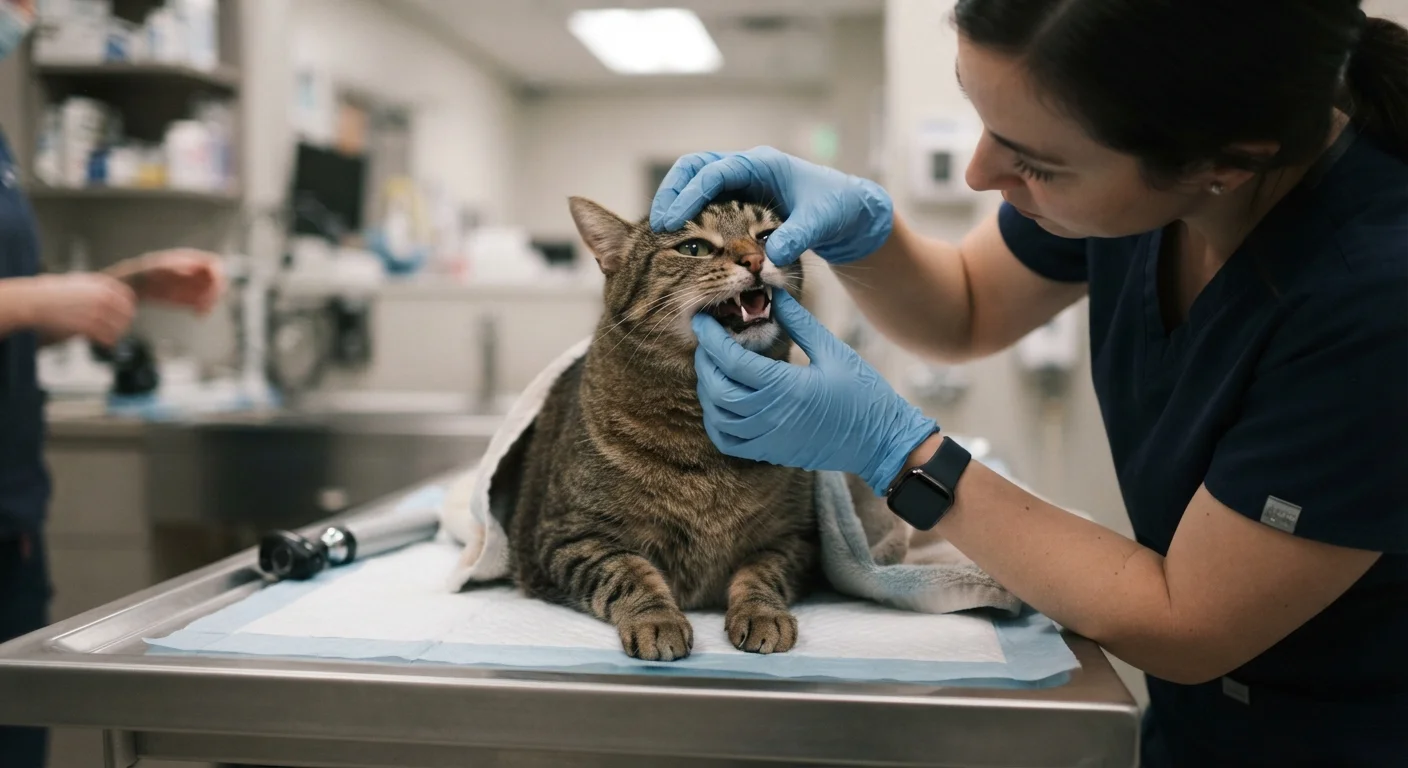
Professional cleanings performed by a veterinarian are essential because they address tartar below the gumline - an area no toothbrush can reach. These procedures are carried out under general anesthesia, which allows thorough examination of every tooth surface, probing of gum pockets, dental X-rays to identify root and bone issues invisible to the naked eye, and treatment such as extractions when necessary.
Anesthesia is a concern many owners raise. Modern veterinary anesthesia protocols include pre-anesthetic bloodwork, monitoring throughout the procedure, and individualized drug selection, making the risk profile for most healthy cats acceptably low. For senior cats or those with health conditions, your vet will discuss any additional considerations. Our guide to caring for senior cats addresses how health management evolves with age, including dental considerations. Frequency of professional cleaning varies by individual - some cats need it annually, others less often - and is best determined by your veterinarian based on examination findings. Owners of dogs should note that oral care principles apply there too; see our counterpart article on dental health in dogs.
This article is for general informational purposes only and does not constitute veterinary advice. Always consult a licensed veterinarian for guidance specific to your cat's health needs.