

Key Takeaways
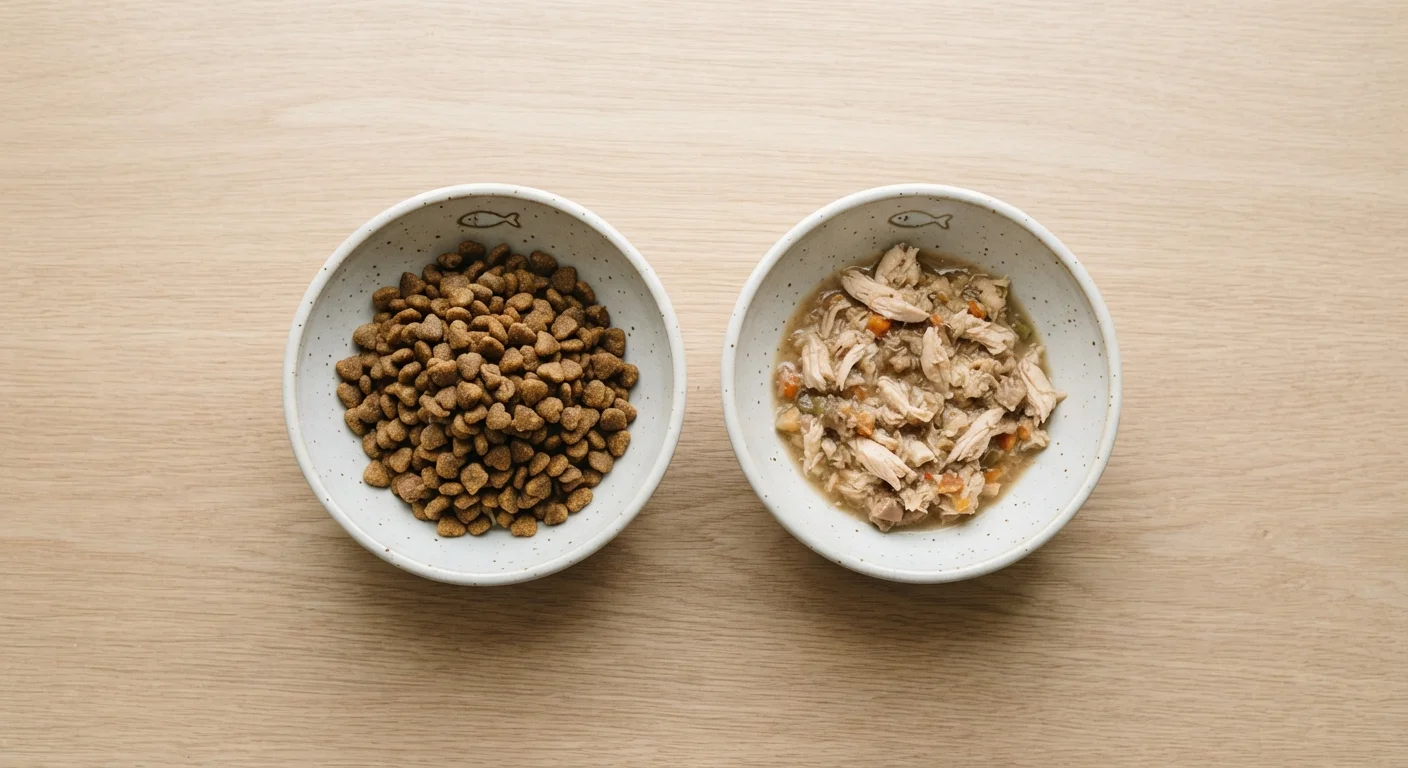
Option A
Dry Cat Food (Kibble)
The convenient, calorie-dense staple.
Best for: Owners looking for a shelf-stable, easy-to-portion option that supports free-feeding or multi-cat households.
Option B
Wet Cat Food (Canned or Pouched)
The moisture-rich, high-protein alternative.
Best for: Cats with lower water intake, urinary health concerns, or those who benefit from higher palatability and controlled portions.
If your cat has a history of urinary tract issues or kidney disease
Wet Cat Food
The high moisture content in wet food helps increase overall fluid intake, which supports urinary tract health and kidney function - an important consideration for cats prone to these conditions.
If convenience and budget are your primary concerns
Dry Cat Food
Dry kibble is shelf-stable, easier to portion, and generally less expensive per calorie. It's also suitable for timed feeders and multi-cat households where monitoring individual intake is harder.
If your cat is overweight or prone to overeating
Wet Cat Food
Wet food's higher water content means fewer calories per gram, which can help with satiety and portion control. Always discuss a weight management plan with your veterinarian.
If you want a balanced approach that addresses both nutrition and convenience
Dry Cat Food
Using dry food as the daily base, supplemented with scheduled wet food portions, allows for hydration benefits while keeping feeding practical. Your vet can help you determine appropriate ratios.
If your cat is a picky eater or has a poor appetite
Wet Cat Food
Wet food tends to be more palatable and aromatic, which can encourage eating in cats with reduced appetite - though persistent appetite changes should always be evaluated by a veterinarian.
How Dry and Wet Cat Food Differ at a Glance
The most fundamental difference between dry and wet cat food is moisture content. Dry kibble typically contains around 6-10% water, while canned or pouched wet food generally falls between 70-80% water. This gap has real nutritional consequences, particularly for cats - animals that evolved in arid environments and have a naturally low thirst drive.
Beyond hydration, the two formats differ in caloric density, ingredient composition, and preservation methods. Understanding these distinctions is the first step toward making a confident, informed choice for your cat. For a deeper look at what cats require nutritionally, see what cats actually need to eat.
| Criterion | Dry Cat Food | Wet Cat Food |
|---|---|---|
| Moisture content | ~6-10% | ~70-80% |
| Caloric density | Higher per gram | Lower per gram |
| Hydration contribution | Minimal | Significant |
| Protein-to-carb ratio | Varies; often higher carbs | Typically higher protein |
| Shelf life after opening | Weeks (sealed bag) | 1-2 days (refrigerated) |
| Palatability | Moderate | Generally higher |
| Cost per serving | Generally lower | Generally higher |
| Dental benefit | Modest (standard kibble) | Minimal |
| Portion control ease | Simple to measure | Requires scheduled feeding |
Hydration, Protein, and Nutritional Considerations
Cats are obligate carnivores, meaning they require nutrients - including taurine, arachidonic acid, and preformed vitamin A - that can only be obtained from animal-based sources. Both dry and wet foods can be formulated to meet these requirements, provided they carry an AAFCO (Association of American Feed Control Officials) nutritional adequacy statement.
Where they diverge is in how they deliver those nutrients. Wet food generally provides a higher proportion of protein and fat relative to carbohydrates, and its moisture content directly supplements a cat's daily fluid intake. Dry food, by contrast, is more calorie-dense by volume - a smaller portion delivers more energy, which makes careful portioning important for weight management. Owners concerned about feline weight can find useful context in our overview of feline obesity and healthy weight management.
~70-80%
Moisture in wet cat food
Wet food's high water content can meaningfully supplement a cat's daily fluid intake, according to veterinary nutrition references.
~60%
Cats with dental disease by age 3
The American Veterinary Medical Association estimates the majority of cats show signs of dental disease by age three, regardless of food type.
Low
Cats' natural thirst drive
Research in feline physiology consistently shows cats have a lower innate thirst drive than dogs, making dietary moisture especially important for overall health.
Neither format is inherently superior in nutritional completeness - quality varies widely by product and brand. The nutritional label, AAFCO statement, and your veterinarian's guidance are the most reliable references.
Dental Health, Palatability, and Practical Realities
One frequently cited advantage of dry food is dental health - the idea that crunching kibble reduces tartar buildup. Research on this claim is mixed. While some specially formulated dental kibbles (often labeled with a Veterinary Oral Health Council seal) do show measurable benefit, standard dry food provides only modest mechanical cleaning. Wet food, by contrast, leaves more residue on teeth. Either way, diet alone is rarely sufficient for good oral hygiene. Our article on cat dental health covers what a comprehensive approach looks like.
On palatability, wet food generally wins. Its aroma and texture more closely mimic fresh prey, which matters for finicky cats or those recovering from illness. Dry food, however, offers convenience: it doesn't spoil quickly after serving, suits automated feeders, and stores easily.
Many veterinarians recommend a mixed feeding approach - incorporating wet food at scheduled mealtimes alongside a controlled dry portion - to balance hydration benefits, palatability, and practical ease. The right ratio depends on the individual cat's health status, age, and activity level.
This article is for general informational purposes only and is not a substitute for professional veterinary advice. Consult your veterinarian before making significant changes to your cat's diet, especially if your cat has an existing health condition.