

Key Takeaways
Our Verdict
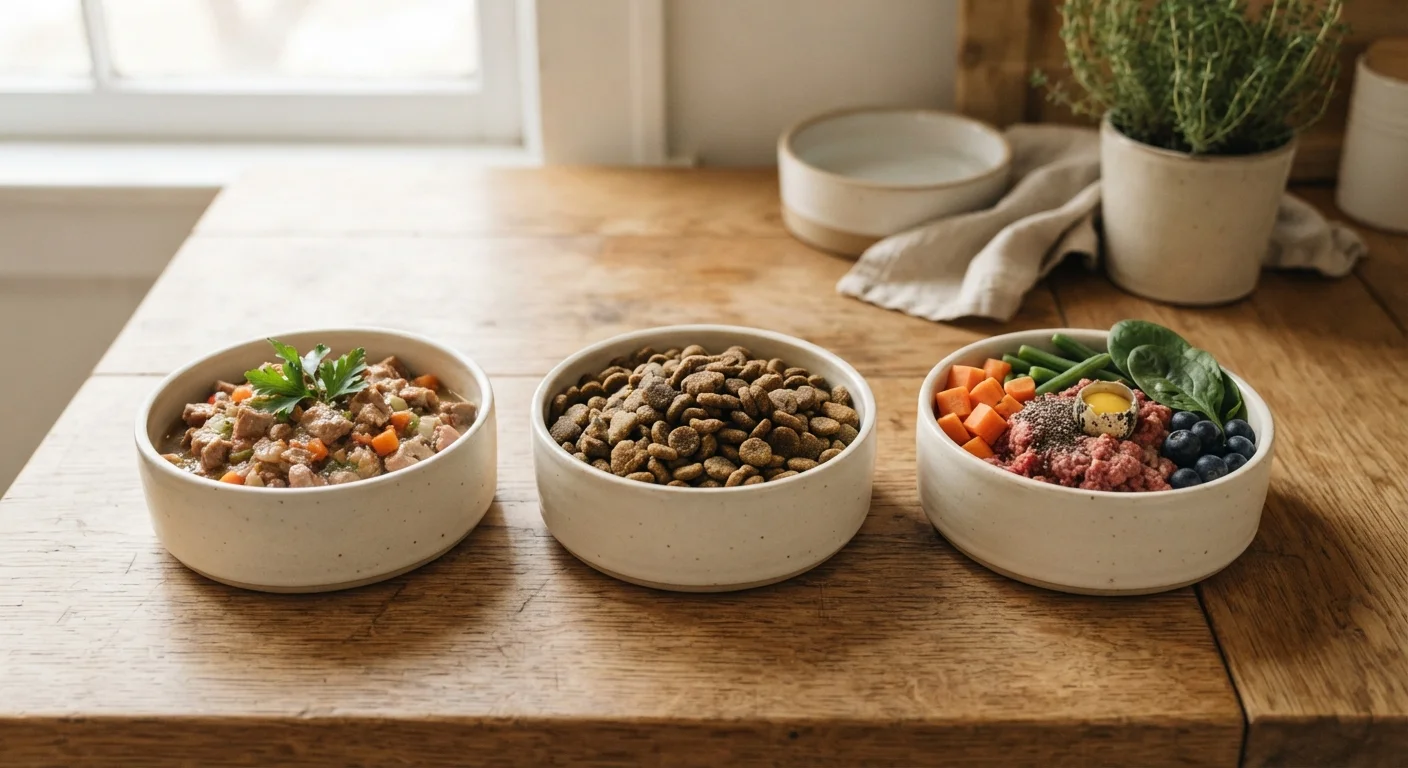
Wet food, dry kibble, and raw diets each have legitimate strengths and real limitations. For most dog owners, a complete-and-balanced commercial diet - wet, dry, or a combination - provides a safe and nutritionally sound foundation. Raw feeding can be done, but requires rigorous food-safety protocols and professional guidance. When in doubt, a veterinary nutritionist is the most reliable resource for your individual dog.
| Best for | Recommended |
|---|---|
| Owners prioritizing convenience and dental texture benefits | Dry Kibble |
| Dogs with low thirst drive, dental pain, or reduced appetite | Wet Food |
| Experienced owners committed to food-safety protocols and veterinary oversight | Raw Diet |
| Most dogs across life stages seeking a balanced, evidence-supported approach | Dry Kibble or Wet Food (AAFCO-compliant) |
Why Diet Format Matters for Dogs
What a dog eats is inseparable from how that food is prepared and delivered. Diet format - wet, dry, or raw - affects moisture content, nutrient bioavailability, caloric density, shelf life, food safety, and even oral health. Understanding these differences helps owners move past marketing language and make choices grounded in veterinary science.
For a solid foundation on what nutrients dogs actually need, see our guide to balanced canine nutrition. This comparison focuses on how the three most common formats compare in practical, measurable terms.
| Dry Kibble | Wet Food | Raw Diet | |
|---|---|---|---|
| Moisture Content | 6-10% | 70-80% | 60-75% (varies) |
| AAFCO Compliance | Widely available | Widely available | Variable; home-prep often lacking |
| Shelf Life (unopened) | 12-18 months | 2-5 years | Frozen: 6-12 months |
| Food Safety Risk | Low | Low | Higher (bacterial pathogens) |
| Cost per Serving | Generally lower | Generally higher | Variable; often high |
| Palatability | Moderate | High | High |
| Preparation Required | Minimal | Minimal | Significant (home-prep) |
Dry Kibble: Convenience with Caveats
Dry kibble remains the most widely fed format in the US. It is shelf-stable, calorie-dense, and typically the most cost-effective option per serving. Most commercial kibbles are formulated to meet AAFCO nutritional profiles, making it relatively straightforward to confirm a product is complete and balanced for a given life stage.
Kibble's low moisture content - generally 6-10% - is its most significant nutritional limitation. Dogs fed exclusively dry food must compensate through drinking, and those that don't consume adequate water may be at higher risk for urinary tract issues over time. The extrusion process used to manufacture most kibble also involves high heat, which can degrade some heat-sensitive vitamins that manufacturers then supplement back in.
One frequently cited benefit of dry food is its texture's potential role in dental hygiene. While chewing kibble does create some mechanical abrasion, the evidence that standard kibble meaningfully reduces tartar or periodontal disease is modest. Owners interested in oral health should review our article on dental health in dogs for a fuller picture of what actually works.
Wet Food: Hydration and Palatability
Canned and pouch wet foods typically contain 70-80% moisture, closely mimicking the water content of whole prey. This makes wet food particularly valuable for dogs that are reluctant drinkers, have urinary health concerns, or are recovering from illness. The higher moisture content also contributes to a feeling of fullness at lower caloric intake, which can support weight management when portioned correctly.
Wet food is generally more palatable than kibble, making it useful for picky eaters, senior dogs with diminished senses of smell, or dogs managing dental pain. The tradeoff is cost - wet food is typically more expensive per calorie than dry - and perishability. An open can must be refrigerated and used within a day or two.
Mixing Formats Strategically
Combining wet and dry food is a common approach that can offer the hydration benefits of wet food alongside the convenience and cost savings of kibble. If you take this route, calculate your dog's total daily caloric needs first and apportion each format accordingly - overfeeding is the most common pitfall. Your veterinarian can help you establish the right total intake for your dog's weight and activity level.
Nutritionally, high-quality wet foods can be just as complete as dry options when they carry AAFCO certification. Owners sometimes mix wet and dry food to balance hydration benefits with cost and convenience, a strategy that can work well as long as total daily caloric needs are calculated across both formats.
Raw Diets: Potential Appeal and Real Risks
Raw diets - which include commercially prepared raw frozen or freeze-dried products as well as home-prepared BARF (Biologically Appropriate Raw Food) or whole-prey models - have grown in popularity. Proponents often cite improved coat condition, digestion, and energy, though rigorous peer-reviewed research supporting these specific outcomes is limited.
The food safety concerns associated with raw feeding are well-documented and taken seriously by major veterinary organizations, including the American Veterinary Medical Association (AVMA) and the American Animal Hospital Association (AAHA). Raw meat, bones, and organs can harbor Salmonella, Listeria, E. coli, and other pathogens that pose risks not only to dogs but to humans in the household - particularly children, elderly individuals, and immunocompromised people.
Raw Diets and Household Health Risks
Handling raw meat for your dog carries real cross-contamination risks for human household members. The AVMA and AAHA specifically caution against raw feeding in homes with infants, elderly individuals, or anyone who is immunocompromised. If you choose to feed raw, strict food-handling protocols - separate preparation surfaces, thorough handwashing, and careful bowl sanitation - are essential, not optional.
Nutritional imbalance is a second documented concern. Home-prepared raw diets frequently fall short of calcium, phosphorus, or essential vitamins unless carefully formulated by a board-certified veterinary nutritionist. Bone content, in particular, must be calibrated precisely to avoid both deficiency and toxicity. Commercial raw products vary widely in quality and testing rigor.
Raw feeding is not categorically impossible to do responsibly, but it demands a higher level of owner knowledge, food-handling discipline, and professional veterinary oversight than either wet or dry commercial feeding.
Choosing the Right Fit for Your Dog
No single format wins outright across all criteria. The most appropriate choice depends on your dog's life stage, health status, activity level, and your household's practical realities. Puppies, pregnant or nursing dogs, senior dogs, and those with chronic conditions have specific nutritional requirements that may make certain formats more or less suitable - always consult your veterinarian before making major dietary changes for these groups.
When evaluating any diet, look for an AAFCO statement confirming the food is complete and balanced for your dog's life stage. Foods that carry this statement have either been formulated to meet AAFCO nutrient profiles or have passed feeding trials - two different standards with different implications for confidence in the nutritional claim.
If you're curious how deliberate dietary patterns relate to long-term health outcomes more broadly, our overview of eating patterns linked to long-term health offers useful comparative context from human nutritional science. For cat owners navigating similar questions, the wet vs. dry cat food breakdown covers species-specific considerations.
This article is for general informational purposes only and does not constitute veterinary or nutritional advice. Always consult a licensed veterinarian or board-certified veterinary nutritionist before making significant changes to your dog's diet.