

Key Takeaways
Loss Leader Pricing
A loss leader is a product that a retailer sells at or below its own cost - deliberately taking a financial loss on that item - in order to attract shoppers into the store or onto the site. The expectation is that customers will purchase additional, higher-margin items during the same trip, offsetting the loss and generating overall profit. Doorbuster pricing follows the same logic but is typically tied to limited-time events and extremely scarce quantities.
In retail accounting, a loss leader generates negative gross margin on the unit itself; profitability is evaluated at the basket or transaction level, not the individual SKU.
The Basic Mechanics: Why Would a Store Sell Something at a Loss?
Retail profitability is measured at the transaction level, not the individual product level. A grocery store that sells a gallon of milk below wholesale cost doesn't necessarily lose money - because most shoppers don't walk out with just milk. They pick up bread, produce, household supplies, and a dozen other items that carry normal or above-average margins.
That's the engine behind loss leader pricing: sacrifice margin on one visible, attention-grabbing item to increase the total value of the average shopping basket. Electronics retailers have long used this model with accessories - a television might be priced aggressively while cables, mounts, and extended service plans carry margins that more than compensate.
To understand how this fits into broader retail economics, it helps to know how markups and margins work across a store's full inventory. Our guide to retail pricing and markups explains the mechanics in detail.
~35%
Shoppers who make unplanned purchases during deal events
Research on retail consumer behavior consistently finds that promotional events increase unplanned purchasing, with studies from consumer behavior journals estimating unplanned buys at roughly one-third or more of items purchased during sale trips.
Single digits
Typical doorbuster unit count per store location
Retail industry observers note that doorbuster quantities are often in the single digits per location, though retailers are not legally required to disclose exact quantities in most US states.
Doorbuster Pricing: The Scarcity Version of the Same Tactic
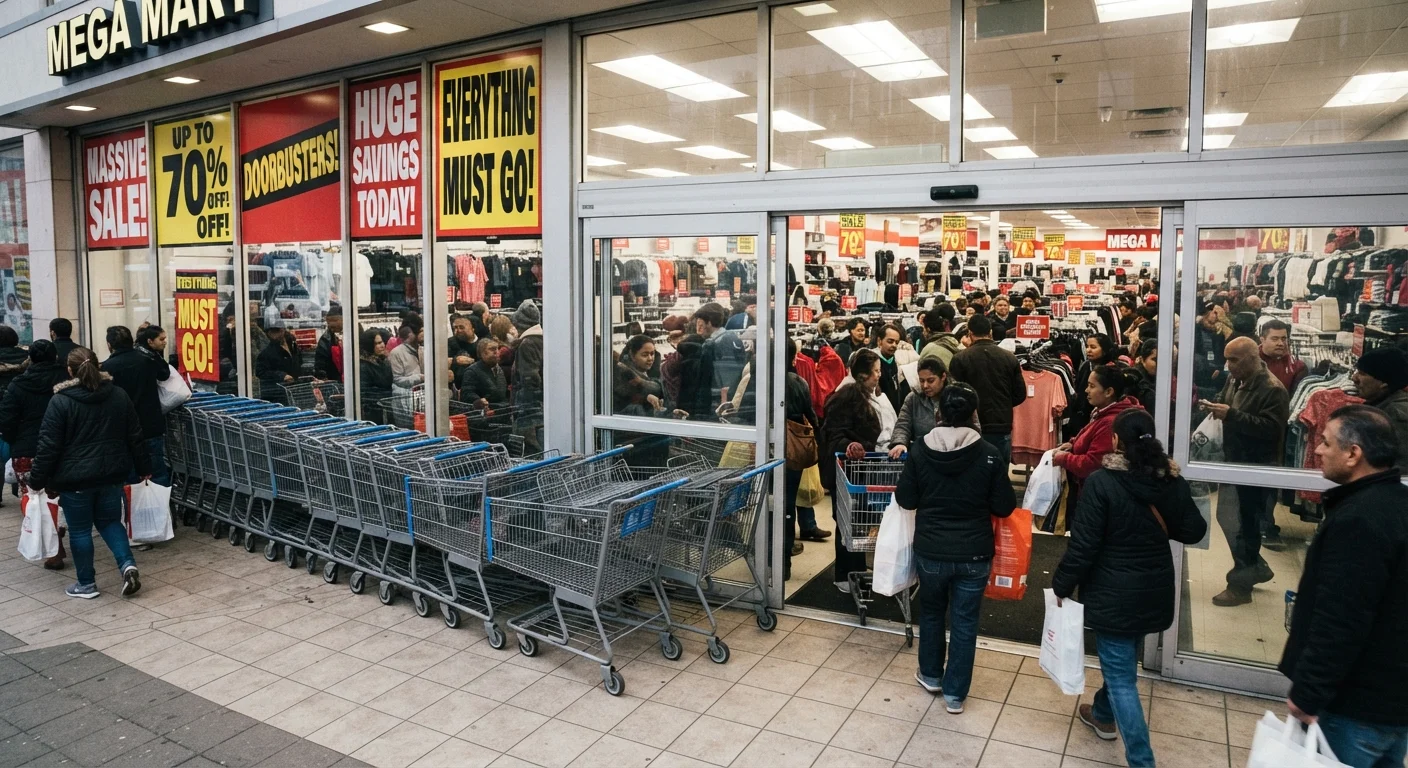
Doorbuster deals add a layer of artificial urgency on top of below-cost pricing. Retailers advertise a small number of units - sometimes just a handful per store location - at a dramatic price point. The deal is real in the narrow sense that those specific units are genuinely cheap. But the quantities are deliberately constrained.
The strategic purpose is twofold. First, the doorbuster generates media attention and drives foot traffic to the store. Second, shoppers who don't get the deal - the majority - are already inside the store, already in a purchasing mindset, and often make substitute purchases at regular prices.
This is why doorbuster advertising tends to be conspicuous but vague about quantities. Phrases like "while supplies last" or "limited quantities available" are legally protective language, not genuine transparency. Savvy shoppers treat doorbuster availability as uncertain by default.
“The store doesn't advertise the loss leader to sell that item - it advertises it to sell everything else. The featured product is the cost of buying your attention.”
— Retail Industry Analyst, Consumer pricing researcher and retail strategy commentator
What Loss Leaders Are Not: Separating Real Savings from Marketing Theater
A common mistake is assuming that a store running loss leaders is offering broad value across its inventory. The discounted item functions as a hook - it signals value without delivering it universally. Once you're in the store or on the site, most prices return to normal margin levels.
This is meaningfully different from everyday low pricing strategies, where a retailer competes by maintaining consistently low prices across categories rather than cycling through promotional events. Understanding the difference between sale events and everyday low pricing helps clarify when waiting for a promotion actually saves money - and when it doesn't.
Loss leaders are also distinct from manufactured discounts, where a retailer inflates a reference price and then marks it down to create the appearance of savings. Loss leaders involve real below-cost pricing on that specific item. The deception, if any, lies in what the consumer infers about the rest of the store - not the price of the deal itself. For more on that pattern, see our breakdown of when sale discounts are real versus theater.
How to Shop Loss Leader Events Without Getting Outmaneuvered
The most effective approach is to treat the loss leader as the only reason you're there - and be disciplined about everything else in your cart. That requires pre-planning: know exactly what you need before you walk in, and set a mental ceiling on additional spending.
A few practical considerations:
- Verify the price independently. Use price-tracking history to confirm the advertised deal is genuinely below what the item normally sells for - not just below an inflated reference price.
- Check stock before you go. Some retailers allow in-store inventory checks online. If the doorbuster item is already listed as unavailable, the trip may not be worth it.
- Bring a list. Retailers design store layouts to maximize exposure to high-margin products. A specific shopping list reduces impulse purchasing.
- Separate the math. If you're buying three full-priced items to "justify" getting one loss leader, calculate whether the full transaction is actually a good deal - or whether the loss leader just made normal-priced shopping feel discounted.
Loss leaders and doorbuster events are legitimate tools in retail competition, and informed shoppers can benefit from them. The key is recognizing that the strategy is designed to influence your entire purchase, not just the one item in the ad.