

Key Takeaways
Why a Price Tag Is More Than a Number
A price tag looks like a simple fact: this item costs this much. In practice, it is a carefully constructed signal designed to create an impression of value - not necessarily to communicate it. Retailers, pricing teams, and behavioral economists have studied for decades how numeric presentation shapes perception. Reading a tag with a researcher's mindset means disaggregating its components and asking what each one actually tells you.
This matters across nearly every category of consumer spending. Whether you're evaluating a grocery shelf, a car lot, or an online product listing, the same toolkit applies. The steps below walk through each element in the order you're most likely to encounter it.
What you will need
Step-by-Step: Decoding What You're Looking At
Work through these steps whenever a price claim is trying to influence your decision. You don't need to complete every step for every purchase - match the depth of your analysis to the size of the decision.
Identify the Sticker Price and Its Context
Note the displayed price, then immediately ask: compared to what? A price in isolation is not information - it needs a reference point. Is there a crossed-out "original" price alongside it? A "compare at" figure? These reference prices are marketing constructs, not audited historical facts. The Federal Trade Commission has guidance requiring that advertised "former prices" must have been genuinely offered for a reasonable period, but enforcement is inconsistent and definitions vary by state.
Treat any reference price as a claim to verify, not a given.
Calculate the Unit Price
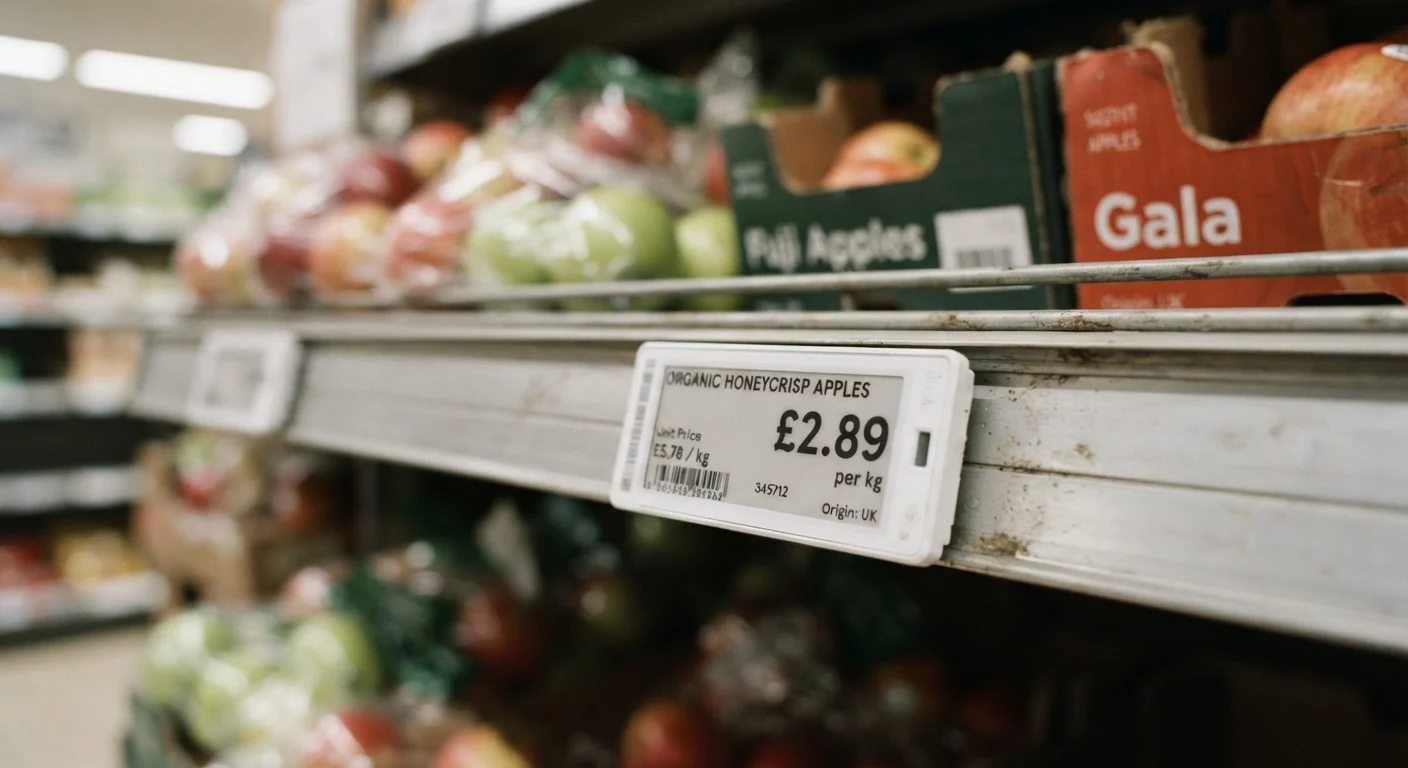
Unit pricing - the cost per ounce, per sheet, per serving, or per comparable unit - is the most reliable way to compare products across different package sizes. Many US grocery stores are required to display unit prices on shelf labels, but the format varies and the label may not be adjacent to the product you're actually looking at.
To calculate manually: divide the total price by the quantity (e.g., $7.49 ÷ 32 oz = $0.234/oz). Do this for each option you're comparing, using the same unit. Larger packages do not automatically win - storage cost, expiration dates, and actual consumption rate all affect whether a bulk price is genuinely better for your situation.
Check Price History Before Treating a Discount as Real
A discount percentage is only meaningful relative to a stable baseline price. If a product was raised from $40 to $60 two weeks before a "33% off" sale returns it to $40, the discount is real on paper but delivers no savings over the typical price. Price history tracking tools - available for many online retailers - let you verify whether a sale price is actually lower than the norm.
Our article on why price history often matters more than today's tag covers the practical tools and habits for this kind of verification.
Estimate Total Cost of Ownership
The sticker price is what you pay once. The total cost of ownership - including consumables, maintenance, accessories, subscription fees, or energy use - is what you actually pay over the life of the product. A lower purchase price frequently comes with higher ongoing costs that erode the apparent savings quickly.
For a structured approach to this calculation, see our guide on total cost of ownership and what makes "cheap" complicated. This framework applies equally to appliances, vehicles, electronics, and many other durable goods. If you're evaluating a vehicle specifically, the car buying hub covers category-specific cost factors in more depth.
Cross-Reference Specs Against the Price
Two products at similar prices may differ substantially in what they deliver. Spec sheets are the most direct way to evaluate whether a price reflects the actual capability of a product - but specs are frequently written to obscure meaningful differences. Understanding how to parse the technical language in a listing is a distinct skill. Our plain-English product spec reference decodes common jargon across categories so you can make direct comparisons.
For the full product research workflow, the product research hub brings together the methods that go beyond price alone.
Price Tags Tell Part of the Story
A price tag communicates what a seller wants you to pay - not necessarily what something is worth, what it typically costs, or what you'll spend over time. Pairing tag-reading skills with an understanding of how ratings and reviews work gives you a more complete picture before committing to a purchase.
Common Pitfalls and How to Avoid Them
Even informed shoppers get tripped up by a few persistent tactics worth naming explicitly.
- Charm pricing: Prices ending in .99 or .95 are processed as meaningfully lower than the next round number. The gap is psychological, not substantive.
- Bundle inflation: A product bundled with accessories can appear cheaper per-item while carrying a higher margin than individual purchases would.
- Anchor framing: A premium option displayed first makes adjacent mid-range options feel like restraint, even when they're still expensive relative to alternatives.
Understanding how retailers set prices and structure markups helps put these tactics in context. Similarly, a crossed-out "was" price is worth interrogating - our companion piece on why the "compare at" price is often misleading explains what those figures are required to represent and when they aren't.
If the price seems tied to a seasonal promotion, keep in mind that pricing often follows predictable category cycles - what looks like a limited opportunity may recur reliably.