

Key Takeaways
What 'Compare At' Actually Means
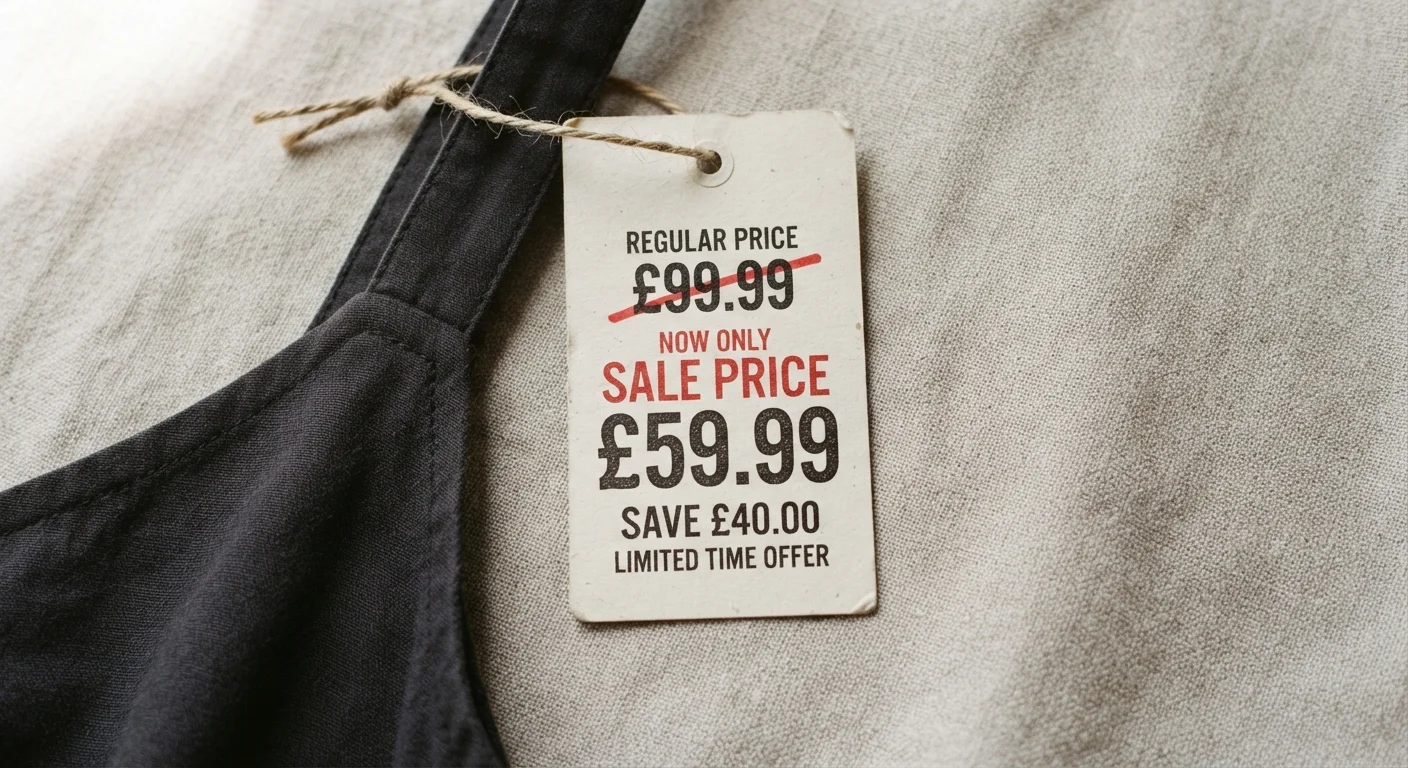
Walk through any retail store or scroll an online shop and you'll see it constantly: a price crossed out in red, a lower number beneath it, and some version of the phrase "compare at," "was," or "originally." The implication is clear - you're getting a deal. But what that reference price actually represents is far murkier than it looks.
"Compare at" is a form of reference pricing: a higher number displayed alongside the selling price to anchor your perception of value. Retailers set these figures themselves. There is no neutral third party verifying that the item ever sold at that price in a meaningful way, or that a comparable item costs that much elsewhere. The Federal Trade Commission (FTC) has published guidance stating that a reference price should reflect a price at which the item was actually offered for sale - but enforcement is limited, and the rules leave significant room for interpretation.
For a deeper look at how these tactics fit into broader sale psychology, see how discounts are constructed.
~40%
Of online products flagged for inflated reference prices
A study by consumer advocacy researchers found that a significant share of "sale" reference prices on major e-commerce platforms could not be substantiated by the item's actual price history.
Varies by state
Legal standard for reference price validity
The FTC provides general guidance on reference pricing, but enforcement and specific thresholds - such as how recently an item must have sold at the reference price - differ across U.S. states.
Common Mistakes Shoppers Make With Reference Prices
Understanding what can go wrong is the first step toward making smarter decisions. Here are the most frequent errors consumers make when encountering "compare at" pricing.
Treating the crossed-out price as an established market value.
Why it happens: The visual presentation is persuasive: a higher number in grey or red with a line through it reads intuitively as "what it cost before." Most shoppers don't pause to ask who set that number or when.
Assuming a large percentage discount signals proportionally large savings.
Why it happens: "60% off" is attention-grabbing regardless of the actual dollar amount or whether the inflated starting price was ever realistic. Percentage framing is easy to process and hard to immediately fact-check.
Conflating 'compare at' with a verified competitor price.
Why it happens: Phrases like "compare at $89" sound like a factual market comparison. Shoppers reasonably assume the retailer has done that comparison honestly.
Skipping price history research because the sale feels time-limited.
Why it happens: Urgency cues - countdown timers, "limited stock" labels, sale end dates - create pressure that crowds out deliberate research. This is by design.
Assuming reference pricing regulations protect consumers from inflated comparisons.
Why it happens: Many shoppers believe that if a price appears on a tag, some authority has verified it. In practice, state laws vary, enforcement is inconsistent, and retailers often operate across jurisdictions where different rules apply.
How to Verify Whether a Markdown Is Real
Skepticism is useful, but it needs a practical outlet. A few concrete habits can help you distinguish genuine savings from manufactured ones.
The Reference Price Is an Unverified Claim
No federal law requires retailers to prove that an item actually sold at the "compare at" price before displaying it. State consumer protection statutes vary considerably in their requirements and enforcement. Treat any reference price as an advertising claim - plausible, but unconfirmed until you check it yourself.
Check price history first. Browser extensions and dedicated websites track historical prices for products sold online. If an item's "original" price only appeared for a week before a sale event, that context matters. Understanding price history is one of the most reliable habits you can build as a consumer.
Search the item across multiple retailers. If the "compare at" claim references competitor pricing, check those competitors directly. Often, the exact same item - or a sufficiently similar one - is available at or below the "sale" price elsewhere without any crossed-out figure involved.
Read the fine print on the reference price. Some tags clarify whether "compare at" means the store's own former price, a manufacturer's suggested retail price (MSRP), or an estimated price at other retailers. Each of those means something different, and none is a guarantee. You can learn more about what MSRP and similar figures actually signal in reading a price tag like a researcher.
Being alert to reference pricing is also part of a broader skill: recognizing when presentation is doing more work than substance. Sponsored content that looks editorial uses a similar mechanism - appearance of objectivity without the underlying independence.