

Key Takeaways
Why Travel Money Myths Persist - and What They Actually Cost
Travel money decisions are made under pressure: unfamiliar currencies, jet lag, time constraints, and the anxiety of being in an unknown place. That environment makes travelers unusually susceptible to assumptions that sound reasonable but don't hold up to scrutiny. The result isn't just minor inconvenience - these myths can quietly drain hundreds of dollars from a trip budget.
This article tests six of the most common travel money beliefs against the facts, drawing on how currency markets, card networks, and payment systems actually work. For context on how similar myths play out in trip planning more broadly, see Trip Planning Myths That Lead Travelers Astray.
Myth
Hotels and airport kiosks give you the best exchange rates because they're convenient and official.
Fact
These venues typically offer some of the least favorable rates available, with wide margins built in to cover overhead and generate profit.
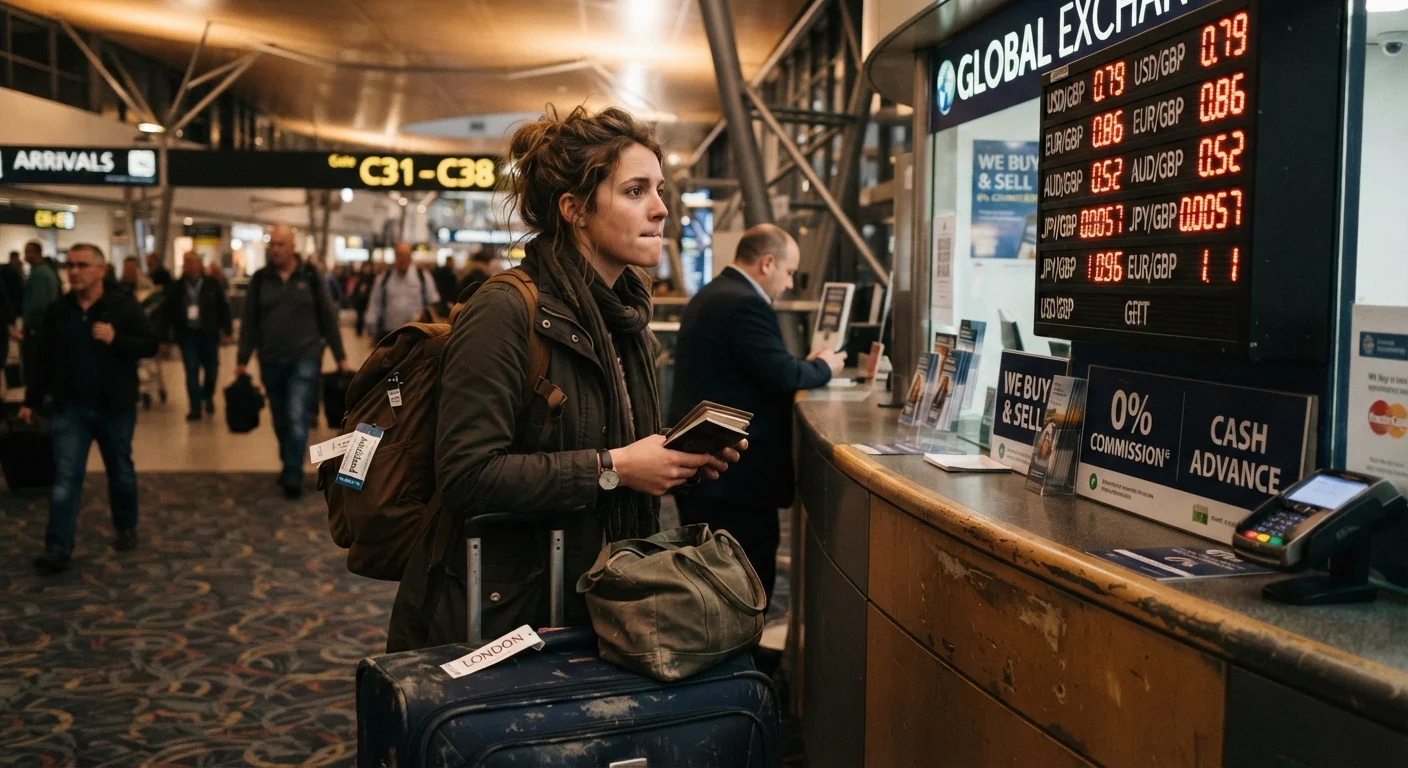
Convenience comes at a cost. Hotel desks and airport kiosks operate in low-competition environments where travelers have few immediate alternatives. The spread between the mid-market rate and the rate offered to you can easily be 8-15% or more. By contrast, withdrawing local currency from a bank-network ATM at your destination - or spending on a card with no foreign transaction fee - usually gets you much closer to the interbank rate. For a deeper breakdown of the fees involved, see our guide to foreign transaction fees and hidden currency costs.
Myth
ATMs abroad always rip you off with hidden fees, so it's safer to exchange cash at home before you leave.
Fact
ATMs on major bank networks abroad often provide competitive rates, though fees vary - exchanging a large amount of cash before departure doesn't automatically save money.
ATM fees are real, but they're not uniform. Many travelers find that withdrawing larger, less frequent amounts from a reputable bank ATM abroad keeps per-transaction fees manageable. Exchanging substantial amounts of foreign currency at home before a trip can also lock you into a rate that isn't favorable, and leaves you holding leftover cash to convert back later. The smarter approach is understanding which fees your card and bank charge, then planning withdrawals accordingly. Travel Money Explained covers this in plain language.
Myth
You don't need to carry any cash abroad - cards are accepted everywhere now.
Fact
Card acceptance remains uneven globally; many markets, local vendors, transit systems, and rural areas still operate primarily or exclusively in cash.
While card infrastructure has expanded significantly, a cards-only strategy can strand travelers in real situations: small restaurants in southern Europe, markets in Southeast Asia, rural guesthouses, local buses, and tips. Even in card-friendly cities, terminal outages happen. A practical approach is to maintain a working card and a modest amount of local cash. Managing Travel Money: Bank Accounts, Cards, Cash, and Apps Compared offers an even-handed look at combining these tools.
Myth
Telling your bank about your travel plans is no longer necessary because fraud detection algorithms handle it automatically.
Fact
While card networks have improved, notifying your bank or card issuer before international travel still reduces the risk of a legitimate transaction being declined.
Fraud detection systems are more sophisticated than they were a decade ago, but they're not infallible. A card flagged and temporarily frozen overseas - especially outside business hours - can create a genuine emergency. Spending five minutes notifying your bank or setting a travel notice in your card's app costs nothing and provides a practical safety net. It also gives you an opportunity to confirm your card's international customer service number before you need it.
Myth
All travel credit cards are basically the same - any card with 'travel rewards' on it works well abroad.
Fact
Travel-branded cards vary significantly in foreign transaction fees, ATM policies, and network acceptance; some charge 3% or more on every foreign purchase.
The label 'travel card' doesn't guarantee fee-free foreign spending. Some cards marketed to travelers still charge a foreign transaction fee - typically around 3% of each purchase - which compounds quickly over a trip. Before traveling, it's worth reading the fee schedule of any card you plan to use abroad. Look specifically at: the foreign transaction fee, cash advance fees and APR, and whether the card runs on a network (Visa, Mastercard, etc.) with broad international acceptance. This is general information; consult your card agreement for the terms that apply to your specific account.
Myth
Exchanging money on the street from informal vendors gets you a better deal than any official channel.
Fact
Unofficial currency exchange is illegal in many countries and exposes travelers to counterfeit notes, short-changing, and scams with no recourse.
The apparent 'rate advantage' offered by street vendors is rarely real. Common tactics include sleight-of-hand short-changing, mixing in counterfeit or out-of-circulation notes, or initially offering a good rate and switching it at the last moment. Beyond the financial risk, participating in unofficial exchange can violate local currency laws, potentially creating legal complications. Stick to licensed exchange offices, bank ATMs, or your card for all currency needs. For a broader look at how financial myths travel across contexts, see Shopping Myths That Cost People Money.
The Fees You Can Control Before You Leave
Several of the most avoidable travel money costs are determined before a traveler ever boards a plane. Choosing which card to carry, understanding what your bank charges for international ATM use, and knowing how to respond when a terminal abroad asks whether you want to pay in your home currency - these decisions are entirely within your control at the planning stage.
Dynamic Currency Conversion: Always Decline
When a card terminal abroad offers to charge you in your home currency instead of the local one, that option - called Dynamic Currency Conversion (DCC) - almost always uses a worse exchange rate than your card's own conversion. The markup can range from roughly 3% to over 7%, depending on the merchant. Always choose to pay in the local currency, even if the screen makes the home-currency option look more convenient.
Petty theft and scams are a related financial risk that travelers frequently underestimate. If you're carrying cash, how and where you carry it matters. Why Travelers Underestimate Petty Crime - and What That Costs Them explains the patterns and how awareness helps. For overall safety considerations abroad, the Travel Safety hub is a useful starting point.
Airport Exchange Counters: Use Only as a Last Resort
Airport currency exchange booths are among the least favorable places to convert money. Margins are wide, and advertised 'no commission' signs can obscure poor underlying rates. If you need foreign cash on arrival, withdrawing a modest amount from an airport ATM affiliated with a major bank network is generally a better starting point - though ATM fees still apply. Plan ahead whenever possible.
This article provides general financial education for travelers and does not constitute personalized financial or legal advice. Fee structures, card terms, and currency regulations vary by provider and destination. Verify details with your card issuer and check official government sources for entry and currency rules before traveling.