

Health & Wellness

Building a Grocery List That Reflects Balanced Eating Principles

Share
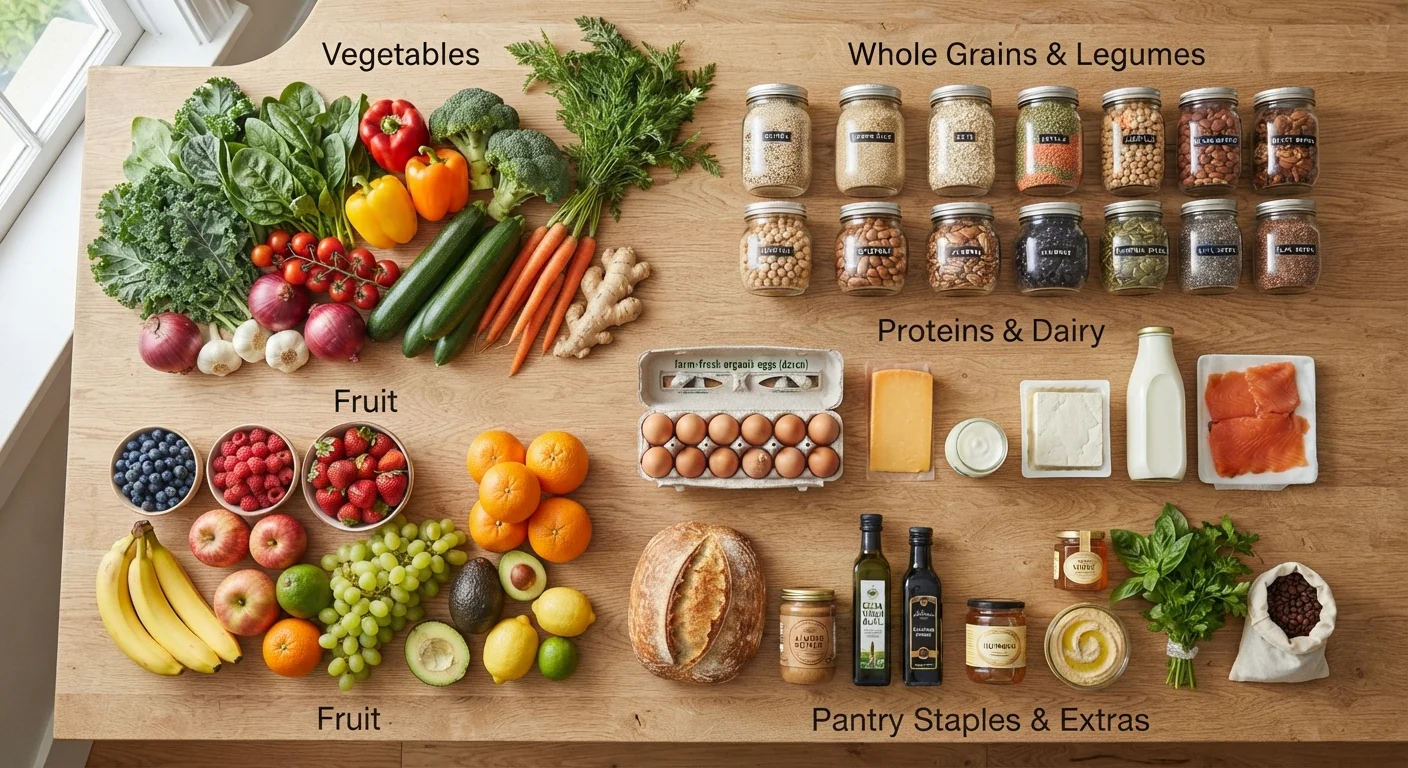
Overhead view of diverse nutrient-dense groceries arranged by food group on a wooden surface.

Key Takeaways

Balanced grocery lists prioritize variety across all major food groups, not perfection in any single one.
Whole and minimally processed foods generally deliver more fiber, vitamins, and minerals per calorie.
Reading ingredient lists — not just nutrition facts panels — helps you identify ultra-processed items.
Protein needs can be met through animal, plant, or mixed sources depending on dietary preference.
Staple pantry items reduce reliance on convenience foods during busy weeks.
Individual nutritional needs vary — consult a registered dietitian for personalized guidance.
20–40 min

Summary

28 items · 20–40 minutes

Why Your Grocery List Is a Nutritional Blueprint

The foods you bring home are the foods you eat. That makes grocery shopping one of the highest-leverage moments in any approach to balanced eating — far more so than any single meal decision made in the moment. Yet most people shop from habit or impulse rather than from a framework.

This checklist is built around evidence-informed principles shared by dietary patterns linked to long-term health in population research: variety across food groups, emphasis on whole and minimally processed foods, and adequate representation of fiber, healthy fats, lean proteins, and micronutrient-rich produce. It does not prescribe specific amounts or calorie targets — those depend on individual factors best discussed with a qualified healthcare professional.

Use this checklist as an audit tool before you shop, a planning guide when you're building a weekly menu, or a reset when your kitchen has drifted toward convenience foods.

Required

Weekly Meal Planner (paper or digital)

Maps planned meals to required ingredients, preventing over-buying and nutrient gaps.

Required

Nutrition Facts Panel

Use the per-serving data on packaged foods to compare sodium, fiber, and added sugar content across products.

Required

Ingredient List (separate from Nutrition Facts)

Reveals the actual composition of a product — order of ingredients by weight indicates what dominates the formulation.

Optional

Frozen and canned food inventory list

Tracks pantry and freezer staples so you avoid duplicate buying and maintain a functional backup stock.

The Checklist: Stocking a Nutritionally Varied Kitchen

Work through each category below. The goal is not to purchase every item — it's to ensure your cart isn't systematically missing entire food groups or nutrient categories week after week.

Vegetables

Include at least two dark leafy greens (such as spinach, kale, or Swiss chard) for folate, iron, and vitamins K and C. Must
Add cruciferous vegetables (broccoli, cauliflower, Brussels sprouts, or cabbage) for fiber and glucosinolate compounds. Should
Select vegetables across a range of colors to broaden your intake of different antioxidants and phytonutrients. Should
Include at least one root or starchy vegetable (sweet potato, squash, beets) for complex carbohydrates and potassium. Should

Fruits

Choose whole fruits over juices — the fiber content is preserved and the sugar impact is moderated. Must
Include berries (fresh or frozen) at least once per week; they are among the most micronutrient-dense fruit options available. Should
Keep frozen fruit stocked as a practical backup when fresh options are limited or out of season. Nice to have

Whole Grains and Complex Carbohydrates

Choose whole grain bread, pasta, or rice rather than refined white versions to retain fiber and B vitamins. Must
Stock oats (rolled or steel-cut) as a versatile, high-fiber breakfast and cooking staple. Should
Include a whole grain variety you haven't tried recently — quinoa, farro, bulgur, or barley — to diversify nutrient intake. Nice to have

Protein Sources

Ensure at least one protein source is present from each meal occasion planned for the week. Must
Include legumes (lentils, chickpeas, black beans, edamame) — they provide protein, fiber, and key minerals simultaneously. Must
If including animal proteins, prioritize fish (especially fatty fish like salmon or sardines) at least once for omega-3 fatty acids. Should
Stock eggs — a cost-effective, complete protein with meaningful micronutrient density including choline. Should
Add plain Greek yogurt or cottage cheese for protein, calcium, and gut-supportive probiotics. Should

Healthy Fats

Keep unsalted nuts and seeds on hand (walnuts, almonds, chia, flaxseed) for healthy fats, fiber, and convenient snacking. Must
Include at least one source of monounsaturated fat — avocados or olive oil are widely used and well-researched options. Should
Limit products with partially hydrogenated oils (a source of trans fats) by checking ingredient lists, not just nutrition panels. Must

Pantry and Staples

Stock canned or dried legumes — they extend meal options significantly without requiring fresh shopping. Must
Keep low-sodium canned tomatoes, broths, and sauces for quick nutrient-rich cooking bases. Should
Include a variety of herbs and spices — they add flavor without sodium and many have antioxidant properties. Nice to have
Check that cooking oils at home are not exclusively saturated — consider olive or avocado oil for higher-heat cooking. Should

Label and Ingredient Audit

Before adding a packaged product, check that whole food ingredients appear at the top of the ingredient list. Must
Look beyond 'low fat' or 'multigrain' front-of-pack claims — these do not guarantee nutritional quality on their own. Must
Compare sodium levels across similar products (breads, soups, sauces) and choose lower-sodium options where practical. Should
Flag items with added sugars listed among the first three ingredients for possible replacement with less-processed alternatives. Should

Front-of-Pack Health Claims Can Mislead

Terms like 'natural,' 'multigrain,' 'made with real fruit,' and 'reduced fat' are marketing descriptions, not regulated nutritional quality standards. A product can carry these phrases while containing significant added sugars, sodium, or refined ingredients. Always cross-reference with the full ingredient list and Nutrition Facts panel before concluding a product fits your goals.

For a deeper look at how plant and animal proteins compare in amino acid completeness and practical use, see our companion piece on plant-based protein versus animal sources. And if you'd like to understand the vitamins and minerals behind many of these food choices, our micronutrients reference guide breaks down what each one does and where to find it.

This article is for general informational and educational purposes only and does not constitute medical or dietary advice. Nutritional needs vary by individual. Consult a registered dietitian or qualified healthcare professional before making significant changes to your diet, especially if you have a chronic health condition, are pregnant, or have other specific health needs.

Health & Wellness Editorial Team is the collective byline for our editorial team and contributor network. Articles published under this byline or an editorial pen name are researched, written, and reviewed according to our editorial standards for clarity, consistency, and independence before publication.

View all articles by Health & Wellness Editorial Team →
Disclaimer: The content provided on our blog site traverses numerous categories, offering readers valuable and practical information. Readers can use the editorial team’s research and data to gain more insights into their topics of interest. However, they are requested not to treat the articles as conclusive. The website team cannot be held responsible for differences in data or inaccuracies found across other platforms. Please also note that the site might also miss out on various schemes and offers available that the readers may find more beneficial than the ones we cover.