

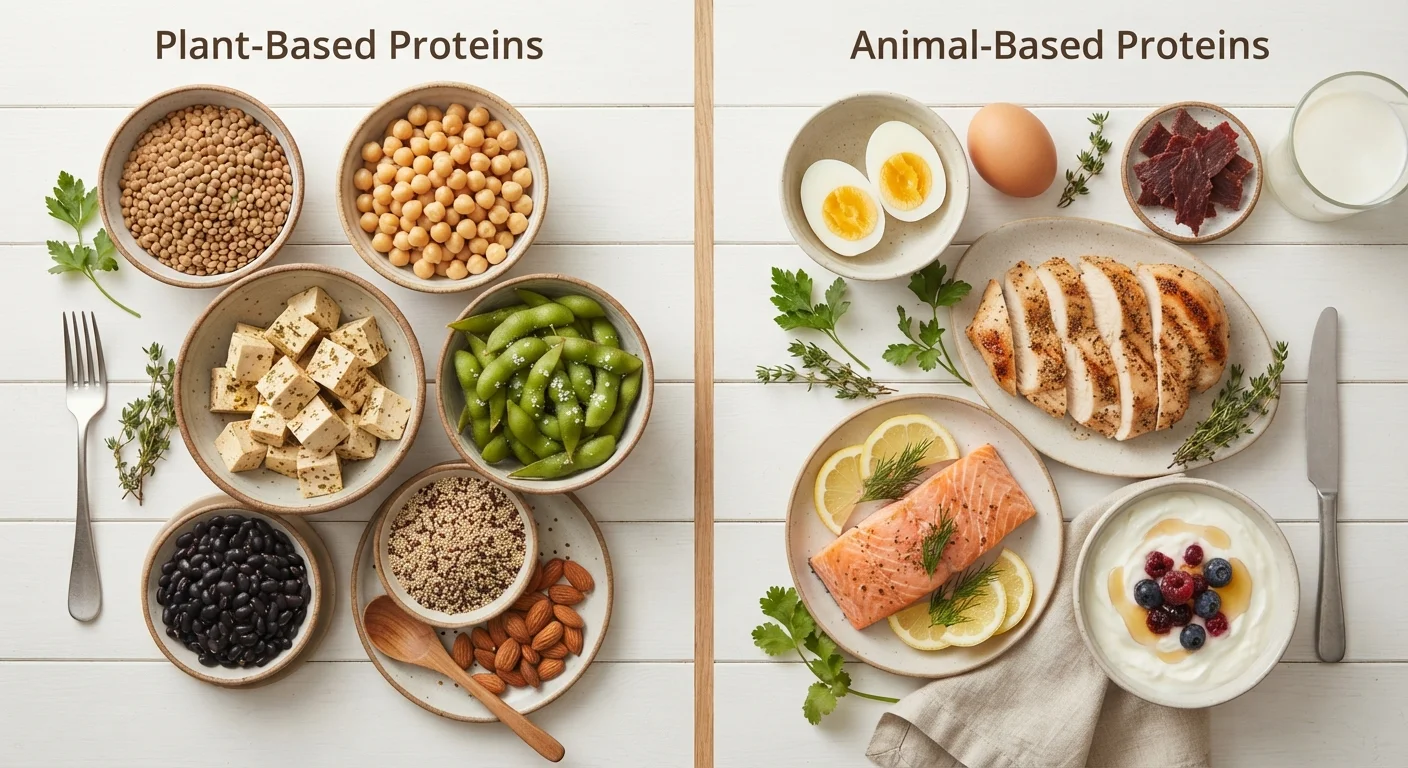
Key Takeaways
Option A
Plant-Based Protein
The fiber-rich, environmentally lighter protein path.
Best for: People pursuing more plant-forward diets who want to meet protein needs without animal products.
Option B
Animal-Based Protein
The complete, highly bioavailable conventional protein source.
Best for: People who want efficient, complete amino acid delivery and are comfortable including meat, fish, dairy, or eggs.
If you want the most efficient complete protein per serving
Animal-Based Protein
Eggs, fish, poultry, and dairy deliver all essential amino acids in a single food with high digestibility, requiring less dietary planning.
If you follow a vegan or predominantly plant-forward diet
Plant-Based Protein
Legumes, soy, quinoa, and varied whole grains together cover full amino acid needs while adding fiber and beneficial phytonutrients.
If managing cardiovascular health is a priority
Plant-Based Protein
Plant proteins generally come with less saturated fat and no dietary cholesterol, which research links to more favorable heart-health markers - though individual context matters and a clinician's guidance is essential.
If you have elevated protein needs, such as during recovery or older age
Animal-Based Protein
Animal proteins, particularly those rich in leucine like dairy and eggs, are strongly associated with muscle protein synthesis - important when protein efficiency is especially critical.
If you want a flexible approach that balances nutrition and sustainability
Plant-Based Protein
Centering meals on diverse plant proteins while including some animal foods allows nutritional flexibility and aligns with evidence-based dietary patterns like the Mediterranean diet.
What Makes a Protein 'Complete'?
Protein is made up of amino acids - 20 in total, nine of which are considered essential because the body cannot produce them and must obtain them from food. A protein source is labeled complete when it supplies all nine essential amino acids in roughly the proportions the human body requires.
Animal proteins - including eggs, dairy, poultry, fish, and red meat - are complete by this definition. Most plant proteins fall short in at least one essential amino acid when eaten in isolation. Legumes, for example, tend to be low in methionine, while grains are typically low in lysine. The concept of protein complementation addresses this: eating varied plant foods throughout the day (not necessarily in the same meal) covers the full amino acid spectrum. Soy and quinoa are notable exceptions - both are complete plant proteins. For a broader understanding of how protein fits alongside other macronutrients, see our plain-language macronutrient guide.
Bioavailability: How Much Protein Actually Gets Used?
Eating protein and absorbing it are different things. Bioavailability describes how efficiently the body digests, absorbs, and uses the amino acids in a given food. Nutritionists often use the DIAAS - the current gold standard metric - to rank protein quality.
By DIAAS measures, animal proteins generally score higher. Whole eggs, milk, and beef consistently rank near the top. Many plant proteins score lower due to fiber, phytic acid, and other compounds that can reduce digestibility - though food processing (cooking, fermenting, soaking) meaningfully improves absorption. Importantly, people eating sufficient total calories from a varied whole-food diet tend to meet protein needs regardless of source.
| Criterion | Plant-Based Protein | Animal-Based Protein |
|---|---|---|
| Amino acid completeness | Incomplete (most); soy and quinoa are exceptions | Complete across all sources |
| Digestibility (DIAAS) | Moderate; improved by cooking or fermentation | Generally high across sources |
| Saturated fat | Typically low | Varies; higher in red and processed meats |
| Fiber content | High in whole-food sources | None |
| Vitamin B12 | Absent; supplementation usually needed | Naturally present |
| Heme iron / zinc | Non-heme iron; lower absorption rate | Heme iron; absorbed more readily |
| Environmental footprint | Generally lower land and water use | Higher, especially ruminant meat |
| Cost (whole-food sources) | Often lower (legumes, tofu) | Varies widely by type |
Beyond Protein: What Else Comes With the Package?
Protein sources are never just protein. The nutritional context surrounding them matters considerably for long-term health.
Plant proteins arrive with dietary fiber, antioxidants, and phytonutrients. Diets rich in legumes and whole grains are consistently associated with better digestive health and lower risks of certain chronic conditions in observational research. They also tend to be lower in saturated fat.
Animal proteins bring along nutrients that can be harder to obtain from plants - including heme iron (absorbed more readily than non-heme plant iron), vitamin B12, zinc, and long-chain omega-3 fatty acids from fatty fish. These nutrients matter especially for groups with higher needs, including pregnant individuals, children, and older adults.
A Note on Special Populations
Protein needs and the ability to absorb key nutrients vary significantly across life stages. Older adults, pregnant individuals, young children, and people managing chronic illness may have higher or more specific protein requirements than general guidelines suggest. Anyone in these groups should consult a registered dietitian or healthcare provider rather than relying on general population recommendations.
The wider dietary pattern matters more than any single food. Evidence-based eating frameworks - explored in our comparison of Mediterranean, DASH, and whole-foods diets - show that both plant-forward and mixed diets can support good health when built thoughtfully.
Practical Considerations for Everyday Eating
Theory is useful, but what matters most is what works in your kitchen and on your plate. A few evidence-grounded observations for day-to-day planning:
- Diversity beats perfection. Rotating protein sources - lentils one day, eggs the next, salmon on another - naturally fills nutritional gaps without requiring precise meal engineering.
- Processed versions change the equation. Highly processed plant-based meat alternatives and processed deli meats alike can be high in sodium and additives; whole-food versions of both categories are generally preferable.
- Cost and access are real variables. Legumes and eggs are among the most affordable protein sources available, while specialty plant-based products and premium animal proteins can be considerably more expensive.
- Cooking unlocks plant protein. Soaking, cooking, and fermenting legumes and grains reduces antinutrients and improves protein availability meaningfully.
For practical help putting these principles into a shopping routine, our guide to building a balanced grocery list offers food-group-by-food-group guidance.
~0.8 g
Daily protein per kg body weight (general adult RDA)
The U.S. Dietary Reference Intakes set 0.8 g/kg/day as the minimum recommended intake for sedentary adults; needs increase with age, activity, and health conditions.
~30%
Share of global protein from plant sources (FAO estimates)
According to the Food and Agriculture Organization, roughly two-thirds of global protein supply comes from animal sources, though this varies significantly by region and income level.
91%
Digestibility score for whole eggs (DIAAS)
Whole eggs consistently achieve among the highest DIAAS scores of any food, making them a common reference point for protein quality research.
This article is for general informational and educational purposes only and is not a substitute for personalized medical or nutritional advice. Consult a registered dietitian or qualified healthcare provider before making significant dietary changes, particularly if you have an existing health condition, are pregnant, or have elevated nutritional needs.