

Key Takeaways
Option A
Soluble Fiber
The gel-forming, cholesterol-managing fiber.
Best for: Supporting heart health, stabilizing blood sugar, and feeding beneficial gut bacteria.
Option B
Insoluble Fiber
The bulk-building, digestion-moving fiber.
Best for: Promoting regular bowel movements and supporting overall digestive tract health.
If you want to support healthy cholesterol and blood sugar levels
Soluble Fiber
Soluble fiber forms a viscous gel in the digestive tract that slows glucose absorption and binds bile acids, supporting healthy lipid profiles. Foods like oats, beans, and apples are particularly rich sources.
If you struggle with constipation or irregular bowel movements
Insoluble Fiber
Insoluble fiber adds physical bulk to stool and speeds transit time through the colon, which can help promote regularity. Whole wheat bran, vegetables, and nuts are good sources.
If you want to support a healthy gut microbiome
Soluble Fiber
Certain soluble fibers act as prebiotics, selectively feeding beneficial bacteria in the large intestine. This fermentation process produces short-chain fatty acids that support gut lining health.
If you are looking to increase overall fiber intake with minimal effort
Soluble Fiber
A balanced, whole-food diet rich in legumes, fruits, oats, and vegetables will naturally provide both fiber types - no need to track each separately.
If you want comprehensive, balanced digestive and metabolic support
Soluble Fiber
Eating a varied plant-based diet ensures you get both fiber types working together, since most whole foods naturally contain both in complementary proportions.
What Sets These Two Fibers Apart
Dietary fiber is the umbrella term for the indigestible carbohydrates found in plant foods. Unlike proteins, fats, and digestible carbohydrates, fiber passes largely intact through the small intestine - but what happens next depends on the type of fiber involved.
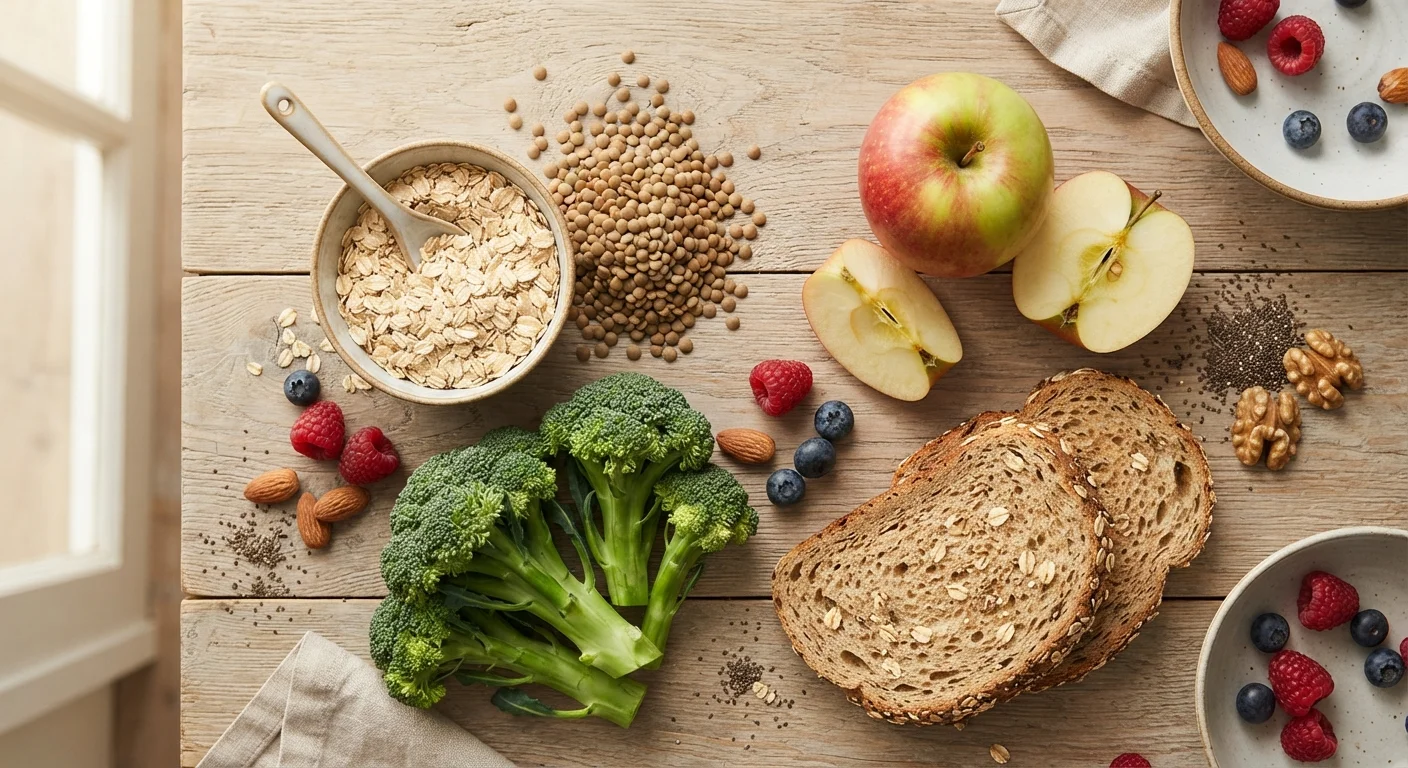
Soluble fiber dissolves in water and forms a thick, gel-like substance in the gut. This gel slows the movement of food through the digestive system, which moderates how quickly glucose enters the bloodstream and helps trap cholesterol-containing bile acids before they can be reabsorbed. Common sources include oats, barley, legumes (such as lentils and chickpeas), apples, citrus fruits, and psyllium husk.
Insoluble fiber does not dissolve in water. Instead, it absorbs water and adds physical bulk and softness to stool, speeding its passage through the colon. This mechanical action supports regularity and may reduce the time that potentially harmful compounds spend in contact with the intestinal wall. Whole wheat bran, vegetables like broccoli and carrots, nuts, and the skins of many fruits and vegetables are rich in insoluble fiber.
It is worth noting that most whole plant foods contain both types of fiber - the ratio just varies. Oats, for instance, are well known for their soluble fiber (particularly a form called beta-glucan), but they also provide some insoluble fiber. Understanding the distinction helps explain why food variety matters more than focusing on a single source.
| Criterion | Soluble Fiber | Insoluble Fiber |
|---|---|---|
| Dissolves in water | Yes - forms a gel | No - retains structure |
| Primary digestive action | Slows digestion, traps compounds | Adds bulk, speeds transit |
| Blood sugar effect | Moderates glucose absorption | Less direct impact |
| Cholesterol support | Binds bile acids, may lower LDL | Limited direct effect |
| Bowel regularity | Modest support | Primary mechanism |
| Gut microbiome (prebiotic effect) | Fermented by gut bacteria | Less fermentable |
| Key food sources | Oats, beans, apples, psyllium | Wheat bran, vegetables, nuts |
| Found in most whole plant foods | Yes, in varying amounts | Yes, in varying amounts |
How Each Fiber Type Affects the Body
The health effects of these two fiber types are well-established in nutritional research, though they operate through different mechanisms.
Soluble Fiber's Roles
- Blood sugar regulation: The gel formed by soluble fiber slows carbohydrate absorption, blunting post-meal blood glucose spikes. This is particularly relevant for individuals managing blood sugar, though dietary fiber is not a treatment for any condition - always consult a healthcare professional for personalized guidance.
- LDL cholesterol support: Soluble fiber binds bile acids in the gut, prompting the liver to draw more cholesterol from the blood to make new bile. This mechanism is associated with modest reductions in LDL ("bad") cholesterol, according to research reviewed by the American Heart Association.
- Prebiotic effect: Many soluble fibers are fermented by beneficial bacteria in the large intestine, producing short-chain fatty acids (SCFAs) such as butyrate. SCFAs help nourish the cells lining the colon and support immune function.
Insoluble Fiber's Roles
- Bowel regularity: By adding bulk and drawing water into the stool, insoluble fiber reduces transit time and can ease constipation. This is generally why fiber intake is one of the first lifestyle factors discussed when addressing irregular digestion.
- Colon health: Faster transit may limit prolonged exposure of the colon lining to waste products, which is one proposed reason why higher fiber intakes are associated with colorectal health in observational research - though research in this area continues to evolve.
Fiber on Nutrition Labels
The Nutrition Facts label required on most packaged foods in the US lists "Dietary Fiber" as a single total figure. Some labels also break this down into soluble and insoluble fiber, but this is not universally required. If you want to understand the fiber profile of a specific food, checking databases like the USDA FoodData Central can provide more detailed breakdowns.
Whole grains versus refined grains is a closely related concept: whole grains retain their fiber-rich bran and germ layers, while refining strips much of this away - significantly reducing both soluble and insoluble fiber content.
Practical Ways to Get Enough of Both
Despite fiber's well-documented benefits, surveys consistently show that most American adults fall well short of recommended intake levels. The Dietary Guidelines for Americans suggest roughly 14 grams of fiber per 1,000 calories consumed - translating to approximately 25-38 grams per day for most adults, though individual needs vary.
~5-10g
Average daily fiber intake for US adults
Research published in the American Journal of Lifestyle Medicine estimates that most American adults consume only about 5-10 grams of fiber below the recommended daily amount - and many fall significantly further short.
95%
Americans not meeting fiber recommendations
According to dietary intake data cited by nutrition researchers, an estimated 95% of Americans do not meet the recommended daily fiber intake from food alone.
~3g
Beta-glucan per serving in oats
A standard serving of rolled oats (roughly 40g dry) provides approximately 3 grams of beta-glucan, the soluble fiber linked to cholesterol and blood sugar benefits, according to FDA-reviewed evidence.
The good news is that eating a varied, plant-forward diet naturally delivers both soluble and insoluble fiber without careful tracking. Some practical strategies:
- Choose whole grains over refined ones - swapping white bread for whole wheat or choosing oats over instant cereals adds both fiber types simultaneously.
- Eat the skin of fruits and vegetables where appropriate (apples, potatoes, zucchini) - skins tend to be higher in insoluble fiber.
- Include legumes regularly - lentils, black beans, and chickpeas are among the most fiber-dense foods available and contribute meaningfully to both types.
- Add flaxseed or chia seeds to meals - both contain a useful mix of soluble and insoluble fiber along with other nutrients.
- Increase fiber gradually to allow the digestive system time to adapt; a sudden large increase can cause bloating or discomfort in some people.
Fiber supplements (such as psyllium) can help bridge gaps but are generally considered secondary to whole-food sources, which also provide vitamins, minerals, and phytochemicals that supplements do not replicate. Anyone considering significant dietary changes - particularly those with gastrointestinal conditions - should discuss their approach with a registered dietitian or healthcare provider.
This article is for general informational and educational purposes only and is not a substitute for professional medical or dietary advice. Always consult a qualified healthcare professional before making significant changes to your diet, particularly if you have an existing health condition.