

Key Takeaways
Option A
Deep Watering
The root-focused, drought-resilient approach.
Best for: Established trees, shrubs, perennials, and vegetable beds where building strong, drought-tolerant root systems is the priority.
Option B
Frequent Shallow Watering
The surface-level, high-touch routine.
Best for: Newly seeded lawns, seedlings, and container plants that need consistent surface moisture to establish or survive heat.
If you have established perennials, shrubs, or vegetable beds
Deep Watering
Mature root systems need moisture delivered below the surface. Infrequent deep watering trains roots downward and reduces overall water use.
If you're germinating seeds or caring for new transplants
Frequent Shallow Watering
Seeds and fragile new roots sit near the surface and must stay consistently moist during establishment - deep watering can leave the top layer too dry.
If you're gardening in sandy, fast-draining soil
Frequent Shallow Watering
Sandy soil loses moisture quickly; shorter, more frequent cycles may be necessary to maintain adequate moisture in the root zone.
If you're gardening in clay or dense soil
Deep Watering
Clay absorbs water slowly but retains it well. Deep, slow watering allows moisture to penetrate without runoff, reducing the need for frequent applications.
If water conservation or efficiency is a priority
Deep Watering
Watering deeply and less often reduces evaporation loss from the soil surface and encourages plants to access stored soil moisture between sessions.
Why Watering Depth Matters More Than Frequency
Many home gardeners default to a daily watering routine, assuming consistency equals care. But for most established plants, what matters isn't how often you water - it's how far that water travels into the soil.
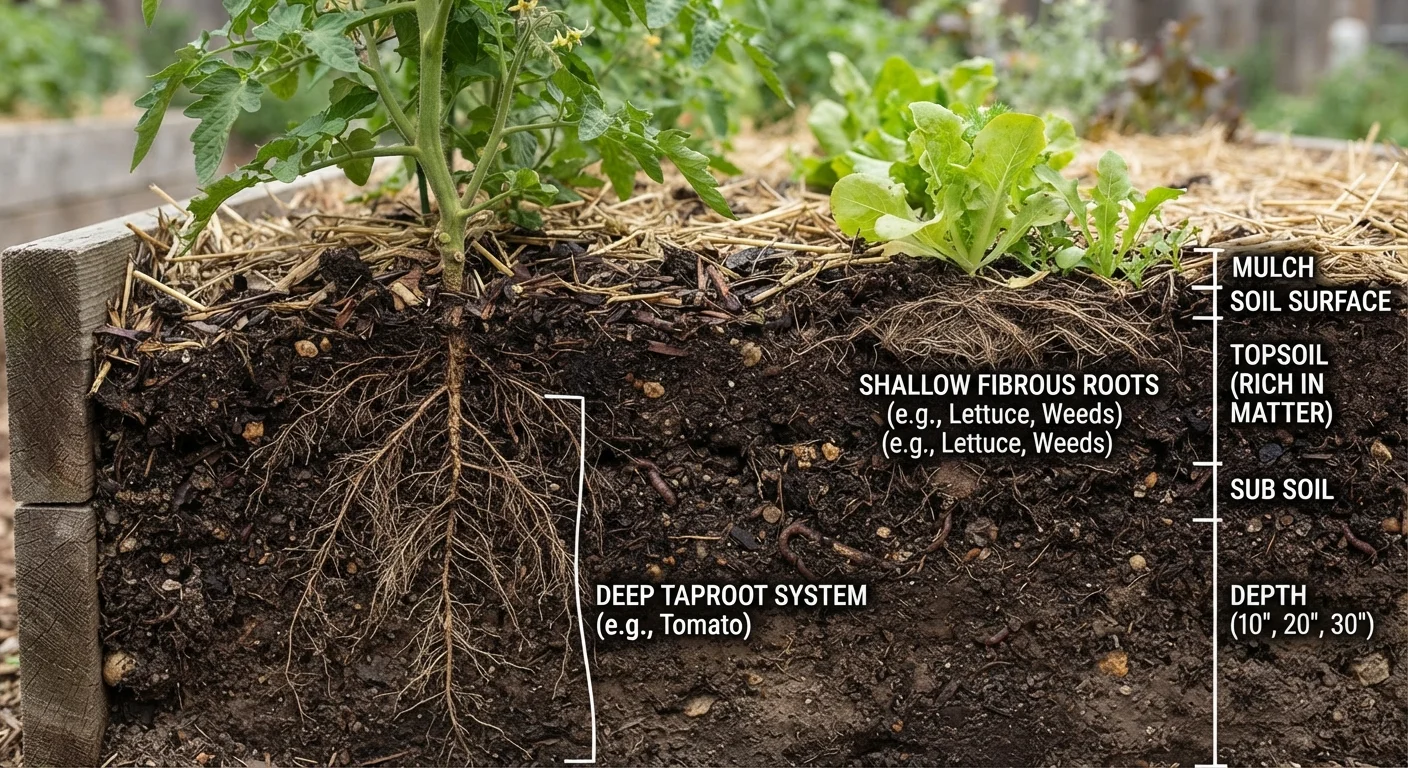
Plant roots follow moisture. When water is applied lightly and frequently, it saturates only the top inch or two of soil before evaporating. Roots adapt by staying shallow, where they're vulnerable to heat, drought, and foot compaction. In contrast, deep watering - applying water slowly and thoroughly enough to reach 6 to 12 inches below the surface - draws roots downward into cooler, more stable soil layers.
This distinction has real consequences. A tomato plant with a 12-inch-deep root system can access soil moisture even during a dry week. The same plant trained on shallow water may wilt within a day of skipping irrigation. Understanding this dynamic is the starting point for smarter watering decisions in any US home garden.
Soil type is a key variable. Clay soils absorb water slowly but hold it well, while sandy soils drain quickly but lose moisture fast. Knowing your soil profile helps you calibrate both depth and frequency effectively. For more on how soil composition shapes these decisions, see understanding your soil type.
| Criterion | Deep Watering | Frequent Shallow Watering |
|---|---|---|
| Watering frequency | Every 3-7 days | Daily or multiple times daily |
| Moisture depth reached | 6-12 inches below surface | Top 1-2 inches only |
| Root development | Encourages deep, drought-resistant roots | Roots stay near surface |
| Best plant stage | Established plants and mature beds | Seeds, seedlings, new transplants |
| Soil type match | Clay and loam soils | Sandy or fast-draining soils |
| Water efficiency | Higher - less surface evaporation | Lower - more evaporation loss |
| Container plants | Less suitable for small pots | Often appropriate for containers |
When Shallow Watering Is Actually the Right Call
Frequent shallow watering isn't always a mistake - it's a matter of matching technique to plant stage and setup.
Seeds and seedlings are the clearest case. Germinating seeds require consistent surface moisture; the top half-inch of soil must stay evenly damp until the seedling establishes. Deep watering in this stage can actually leave the uppermost layer too dry between applications. For more on why moisture conditions at germination matter so much, see why seeds fail to germinate.
Container plants also behave differently from in-ground beds. Pots have limited soil volume and often dry out quickly in summer heat. Smaller containers may genuinely need watering once or twice daily during peak heat. The container gardening context matters here - dense plantings and compact pots lose moisture faster than open beds.
Newly seeded lawns represent another scenario where light, frequent watering keeps germination zones consistently moist without washing seeds away.
50%
Water lost to surface evaporation
The EPA estimates that as much as 50% of outdoor irrigation water is lost to evaporation, runoff, or wind - losses that deep, targeted watering can substantially reduce.
6-12 in
Target moisture depth for most vegetables
University cooperative extension guides commonly recommend watering vegetable gardens to a depth of 6 to 12 inches to adequately support mature root zones.
The key is recognizing when shallow watering is serving a purpose versus when it's simply a habit that's limiting plant development.
How to Water Deeply Without Wasting Water
Deep watering doesn't mean flooding your beds. It means applying water slowly enough that it can percolate down rather than run off the surface.
Drip irrigation and soaker hoses are among the most efficient tools for this. They release water gradually at soil level, allowing even clay soils time to absorb moisture. Overhead sprinklers, by contrast, deposit water quickly and much of it evaporates before reaching deeper roots.
A practical test: after watering, push a wooden dowel or a screwdriver into the soil. It should slide easily through moist soil. Stop where resistance increases - that's your current wet-dry boundary. Aim to move that boundary progressively deeper over a season.
Mulching meaningfully supports deep watering by slowing evaporation from the soil surface, which extends the benefit of each deep irrigation session. See our guide on mulching your garden beds for coverage depth and material guidance.
For in-ground beds, watering deeply every 3 to 7 days (adjusted for season and rainfall) is generally more effective than light daily application. Raised beds may need slightly more frequent sessions given their faster drainage - a point worth considering if you're weighing raised beds versus in-ground planting for your yard.