
Growing Vegetables in Small Spaces: Containers, Vertical Structures, and Dense Planting

Key Takeaways
Why Small-Space Vegetable Growing Works
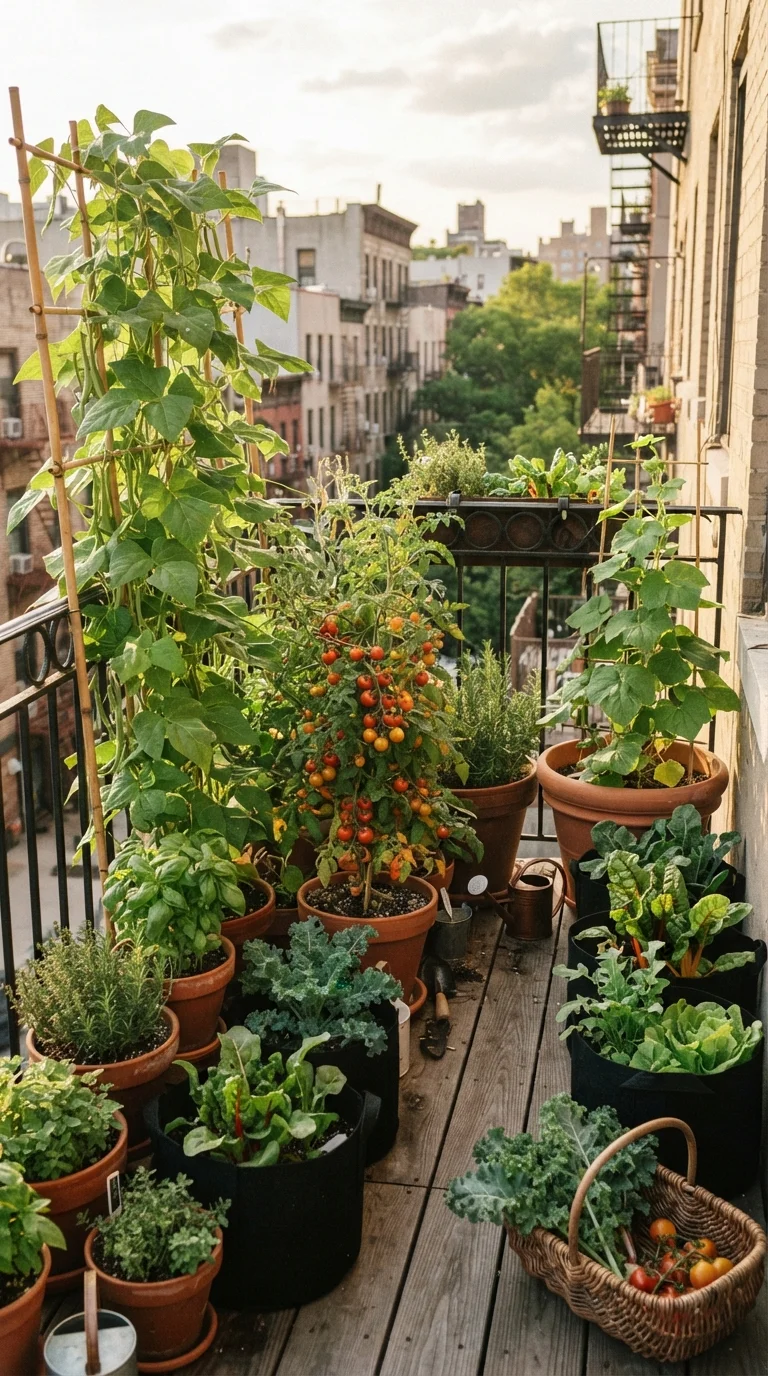
Many gardeners assume a meaningful vegetable harvest requires a large yard. In practice, balconies, patios, stoops, and narrow side yards can all support productive growing - provided you match your methods to your constraints. The key is working in three dimensions rather than just spreading out horizontally.
Small-space gardening also tends to reward attentiveness. A compact container garden is easier to monitor for pests, water stress, and nutrient deficiency than a large open plot. If you're weighing whether containers or a dedicated bed suits your situation, the comparison of raised beds vs. in-ground planting covers that decision in depth.
Before selecting plants, assess two non-negotiables: sunlight and water access. Most fruiting vegetables - tomatoes, peppers, cucumbers, squash - require at least six hours of direct sun daily. Leafy greens and herbs tolerate partial shade and are generally better candidates for shadier spots. Know which US hardiness zone you're in, because your frost dates determine when you can safely start and how long your season runs.
What you will need
Tools and Materials You'll Need
Gathering the right supplies before you start prevents mid-project delays and helps you avoid common setup mistakes.
Containers or grow bags (various sizes)
Primary growing vessels for vegetables when in-ground planting isn't possible.
High-quality potting mix
Provides the well-draining, nutrient-rich medium container plants require.
Trellis, stakes, or cage supports
Supports vining and tall crops vertically to maximize limited horizontal space.
Balanced vegetable fertilizer
Replenishes nutrients leached from containers during regular watering.
Watering can or hose with adjustable nozzle
Delivers water gently and precisely to containers and dense plantings.
Soft plant ties or clips
Secures vines and stems to vertical structures without cutting into plant tissue.
Drip irrigation timer
Automates watering for containers, reducing the risk of moisture stress during absences.
Moisture meter
Gives a more precise reading of soil moisture in deep containers than the finger-test method.
Step-by-Step: Setting Up Your Small-Space Garden
Follow these steps in sequence. Each builds on the previous, so skipping ahead - especially the soil and drainage steps - tends to create problems that are difficult to correct mid-season.
Assess your sun exposure and available space
Walk your growing area at midday and again in late afternoon. Note which surfaces receive unobstructed direct sun and for how long. Use this to assign crops: full-sun spots (6+ hours) for tomatoes, peppers, and beans; partial-shade spots for lettuce, spinach, kale, and most herbs. Measure the total usable area in square feet - even ten square feet, managed well, can support a meaningful harvest.
Select appropriately sized containers
Container size is directly linked to plant health and yield. As a general guide: herbs and lettuce thrive in containers as small as 6-8 inches deep; tomatoes, cucumbers, and peppers need at least 12-15 inches of depth and a minimum of 5-gallon volume. Fabric grow bags are a practical option - they air-prune roots and prevent the compaction that often occurs in rigid plastic pots. Ensure every container has drainage holes; standing water at the root zone is a leading cause of failure in container gardens.
Fill containers with quality potting mix
Do not use garden soil in containers - it compacts in pots, restricts root growth, and drains poorly. Use a commercial potting mix formulated for vegetables, or blend your own with compost, perlite, and coconut coir. A common ratio used by experienced container gardeners is roughly 60% compost, 30% perlite, and 10% coir by volume, though premixed products vary. Fill containers to within an inch of the rim to allow for watering without overflow.
Install vertical structures before planting
Set up trellises, cages, stakes, or wall-mounted pocket planters before you put plants in the ground. Trying to install supports around established plants risks root and stem damage. Anchor freestanding trellises securely - a trellis loaded with cucumber vines can act like a sail in wind. For balconies or walls, use sturdy hooks rated for the expected load and check with your building or HOA guidelines if applicable.
Plant at correct spacing and train vines early
Follow seed packet or transplant tag spacing as a starting minimum, then adjust toward the denser end of recommended ranges if you're using enriched potting mix and plan to fertilize regularly. For vertical crops, begin guiding vines to the trellis within the first week of visible new growth - young stems are flexible and easy to redirect. Use soft ties, strips of fabric, or clips rather than wire, which can cut into stems.
Establish a consistent watering and feeding routine
Containers dry out significantly faster than in-ground beds - in hot summer weather, daily watering is often necessary. Check soil moisture by inserting a finger two inches deep; water when it feels dry at that depth. Feed container vegetables every two to three weeks with a balanced water-soluble fertilizer, following product label directions. Dense plantings in beds also benefit from regular feeding, since many plants compete for the same nutrient pool.
Start With Proven Small-Space Crops
Some vegetables are inherently better suited to compact growing. Lettuce, radishes, spinach, bush beans, cherry tomatoes, dwarf peppers, and most herbs perform reliably in containers and dense beds. Sprawling crops like pumpkins, indeterminate melons, and full-size sweet corn are difficult to manage in tight spaces and are generally better reserved for larger gardens. Beginning with high-success crops builds confidence and gives you a productive first season to learn from.
Dense Planting, Companion Crops, and Vertical Stacking
Once your containers or beds are established, the real productivity gains come from how you arrange plants within the available space. Square-foot gardening, popularized by Mel Bartholomew, divides growing area into a grid and assigns each square a specific crop density based on mature plant size - for example, one tomato per square foot, sixteen radishes per square foot. This approach minimizes bare soil, which in turn reduces weed pressure and moisture loss.
Combining compatible crops in the same container or bed adds another layer of efficiency. Some pairings have documented benefits - see companion planting combinations with documented evidence for an evidence-grounded overview. A practical rule: pair shallow-rooted crops (lettuce, radishes) with deeper-rooted ones (carrots, tomatoes) to reduce root competition in shared containers.
Vertical stacking - training vining crops like cucumbers, pole beans, or indeterminate tomatoes up a trellis, cage, or fence - is perhaps the single highest-impact technique for small spaces. A six-foot trellis panel occupying just a few inches of horizontal depth can support a cucumber plant that would otherwise sprawl four feet across the ground. When planning which crops to grow season over season, understanding perennials vs. annuals can help you build a rotation that keeps containers productive year-round.
Overloading Vertical Structures Is a Common Hazard
A trellis supporting mature cucumber or squash vines carries considerable weight, especially after rain. Lightweight, poorly anchored structures can topple and damage plants - or injure people nearby. Always verify that vertical supports are rated for the expected load and secured to a stable anchor point before vines become established.