

Key Takeaways
Our Verdict
Neither perennials nor annuals win outright - they serve different purposes in a well-designed garden. Most experienced gardeners treat perennials as the backbone of a bed and annuals as the seasonal accent layer. Combining both produces gardens that are both dependable and visually dynamic across the growing season.
| Best for | Recommended |
|---|---|
| Gardeners prioritizing low-maintenance, long-term plantings | Perennials |
| Those who want bold, season-long color and design flexibility | Annuals |
| New gardeners building their first bed from bare ground | A mix weighted toward annuals initially |
| Established gardeners seeking year-round structure with rotating interest | A perennial-dominant bed with annual infill |
What Separates Perennials From Annuals
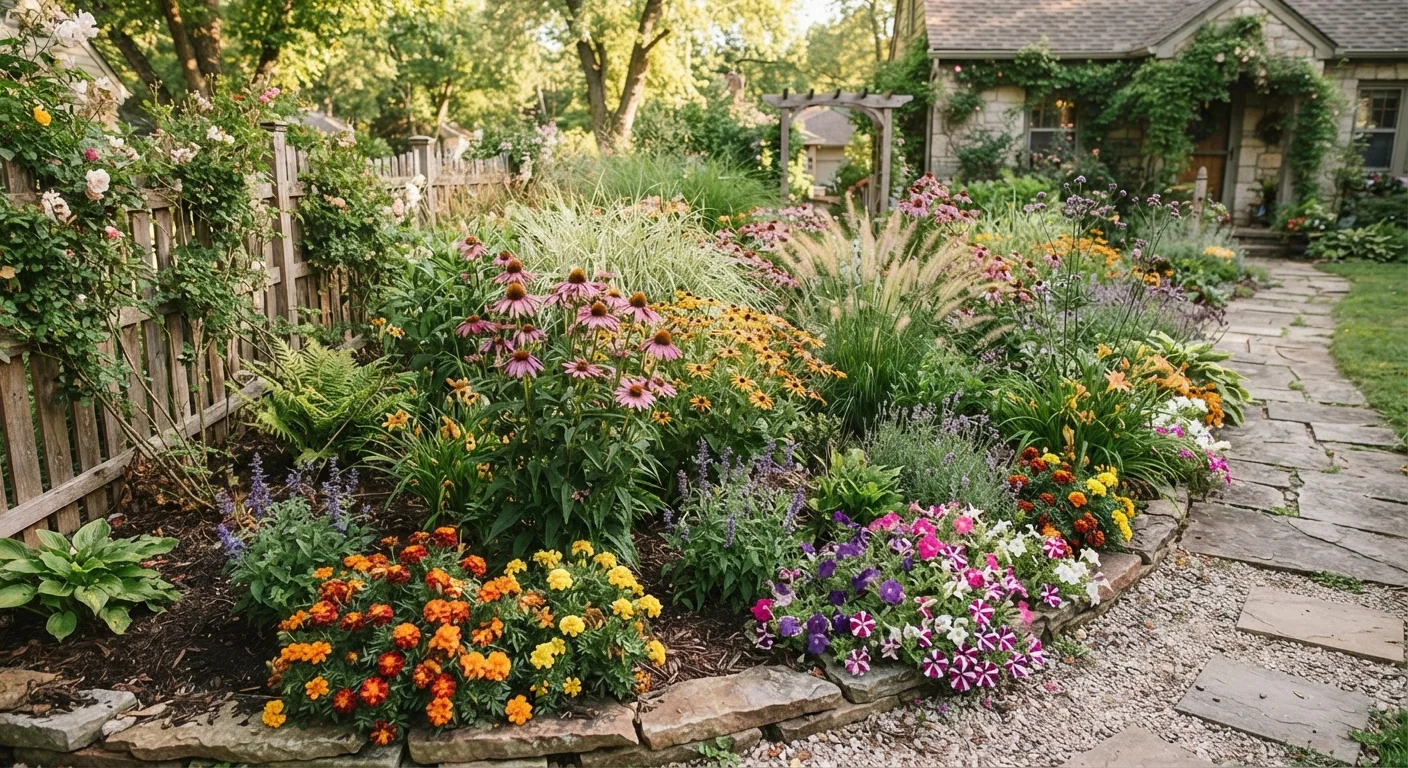
The distinction is rooted in plant biology. Perennials are plants that live for more than two years. Their above-ground growth dies back in winter (in most US climates), but the root system survives and sends up new growth each spring. Common examples include coneflowers (Echinacea), black-eyed Susans, hostas, and daylilies.
Annuals complete their entire life cycle - germination, growth, flowering, seed production - within a single growing season. They die when frost arrives and must be replanted the following year. Marigolds, zinnias, petunias, and impatiens fall into this category.
A third category, biennials, lives for two years, blooming in the second season. Foxglove and hollyhock are biennials sometimes sold alongside perennials. Worth knowing, but they're less central to the perennial-vs.-annual planning conversation.
If you're starting from bare ground, see our first-timer's complete walkthrough for foundational site prep before choosing plant types.
| Perennials | Annuals | |
|---|---|---|
| Lifespan | 3+ years from established roots | One growing season only |
| Bloom duration per season | Typically 2-4 weeks | Continuously until frost |
| Upfront cost | Higher per plant | Lower per plant |
| Long-term cost | Lower - no annual replanting | Higher - replanted each year |
| Maintenance effort | Moderate - division every few years | Low setup, but replanting required annually |
| Design flexibility | Fixed once established | High - changes each season |
| Pollinator value | Generally high once established | Variable - some species very attractive |
| Best for beginners | After first season | Immediately rewarding |
The Case for Perennials: Reliability and Root Investment
Perennials reward patience. In their first year, many gardeners observe modest growth - a phenomenon captured by the old nursery saying: "first year sleeps, second year creeps, third year leaps." That slow start reflects energy going into root development rather than showy blooms. By year three, an established perennial clump often outperforms annuals in plant mass and ecological value.
From a cost standpoint, perennials carry a higher initial price per plant, but over a multi-year span they often become less expensive than replanting annuals each season. Many perennials can also be divided every few years to propagate new plants at no additional cost.
Perennials also provide ecological benefits that annuals typically cannot match. Deep-rooted species improve soil structure, support pollinators across multiple seasons, and - once established - require less supplemental watering than shallow-rooted annuals.
Stagger Bloom Times for Continuous Color
When selecting perennials, note their peak bloom period and aim to include at least one species blooming in early spring, one in midsummer, and one in late summer or fall. This staggered approach reduces your reliance on annuals to fill quiet periods while keeping the garden visually active across the whole growing season.
One planning consideration: most perennials bloom for only a portion of the season, often two to four weeks. Layering species with staggered bloom times - early spring bulbs, summer coneflowers, fall asters - is essential for sustained visual interest without filling every gap with annuals.
The Case for Annuals: Flexibility and Season-Long Color
Annuals exist to reproduce - and they do so with remarkable vigor. Because their entire life goal is to flower and set seed before dying, annuals often bloom continuously from planting until frost. That sustained performance is something most perennials simply cannot match within a single season.
This makes annuals especially valuable for filling gaps during the years your perennials are establishing, for containers and window boxes that need to look good all summer, and for gardeners who enjoy experimenting with new colors and combinations each year without a long-term commitment.
Annuals are also generally more forgiving for new gardeners. Many are fast-growing, visually rewarding within weeks, and available at garden centers as transplants ready to bloom almost immediately. The learning curve for establishing an annual bed is considerably shorter than coaxing perennials to their full potential.
For compact spaces where every square foot counts, annuals pair well with the strategies covered in our container and small-space growing guide.
How to Build a Garden That Uses Both Strategically
Most successful residential gardens use a layered approach: perennials form the structural skeleton of a bed, while annuals provide color where perennials have gaps or go dormant. Here's how to apply that in practice:
- Map your bloom calendar first. Identify which perennials bloom when. Use a seasonal garden calendar to visualize gaps across spring, summer, and fall.
- Anchor corners and focal points with perennials. Ornamental grasses, coneflowers, and rudbeckia give reliable structure year after year without replanting.
- Fill mid-bed gaps with annuals. Zinnias, cosmos, and salvias thrive in the spaces between perennial clumps, particularly in years one and two before perennials fill in fully.
- Use containers for pure flexibility. Annual-filled containers can be repositioned throughout the season to direct the eye wherever interest is currently lacking in the ground-level beds.
- Plan for fall cleanup differently for each type. Perennials benefit from selective cleanup - leaving some seed heads for birds and winter structure - while annual debris should be cleared to reduce overwintering pest and disease pressure. See our end-of-season garden cleanup checklist for specifics.
Climate Zone Considerations for the US
Plant hardiness plays a significant role in how you approach the perennial-vs.-annual decision. The USDA Plant Hardiness Zone Map divides the US into zones based on average annual minimum winter temperatures - a critical factor for perennial survival.
In colder northern zones (Zones 3-5), winters are severe enough that many plants sold as perennials in warmer climates must be treated as annuals. Cannas, dahlias, and certain salvias fall into this category - they won't survive ground freezes without being dug and stored. Conversely, gardeners in zones 8-11 (much of the South, Southwest, and coastal California) often grow plants year-round that northern gardeners consider purely seasonal.
Before purchasing perennials, always check the zone rating on the plant label or nursery tag. Choosing perennials rated for one full zone colder than your location provides a buffer against harsh winters and improves long-term survival rates. The cooperative extension service in your state is a reliable, free resource for region-specific plant recommendations - extension offices are university-affiliated and provide research-backed guidance without commercial bias.