

| Average last frost - Zone 5 | Mid-April to early May (USDA / local extension guidelines) |
| Average last frost - Zone 7 | Late March to mid-April (USDA / local extension guidelines) |
| Average last frost - Zone 9 | Late January to mid-February (USDA / local extension guidelines) |
| Weeks indoors before transplant (tomatoes) | 6-8 weeks (Standard horticultural guidance) |
| Recommended mulch depth | 2-3 inches (University extension recommendations) |
| Bulb cold stratification needed | 12-16 weeks below 40°F (Standard bulb planting guidance) |
How to Use This Calendar
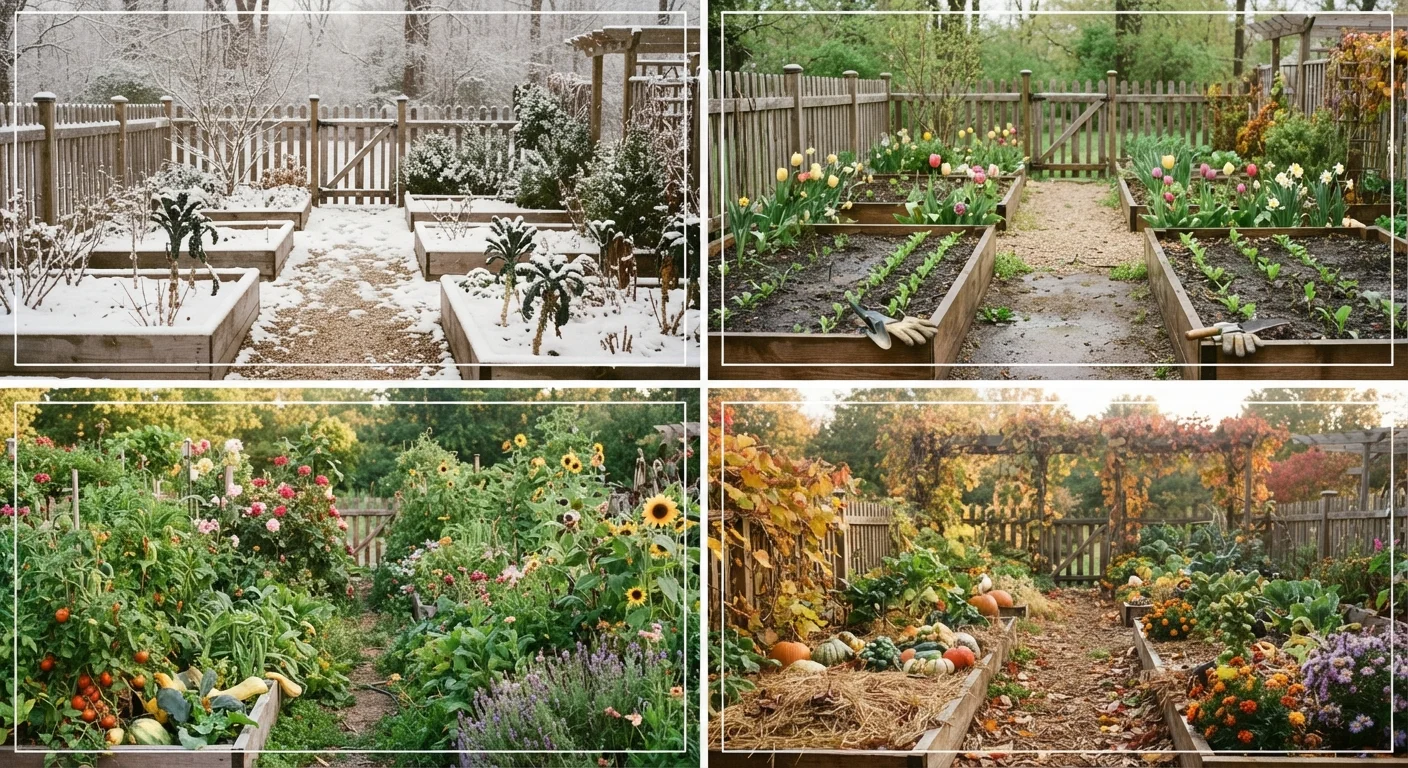
Gardening tasks don't follow the same calendar everywhere. A gardener in coastal Georgia is starting tomato transplants outdoors while one in Minnesota is still weeks from last frost. This seasonal calendar organizes common tasks by season rather than calendar month, with notes on how timing shifts across US climate zones. Use it alongside your USDA hardiness zone to calibrate dates for your specific region.
As a general rule, task windows shift earlier as you move south and later as you move north. Coastal areas may also differ from inland regions at the same latitude due to moderating ocean influence. Local cooperative extension services publish frost date charts specific to your county - these are among the most reliable free resources available to home gardeners.
| Average last frost - Zone 5 | Mid-April to early May (USDA / local extension guidelines) |
| Average last frost - Zone 7 | Late March to mid-April (USDA / local extension guidelines) |
| Average last frost - Zone 9 | Late January to mid-February (USDA / local extension guidelines) |
| Weeks indoors before transplant (tomatoes) | 6-8 weeks (Standard horticultural guidance) |
| Recommended mulch depth | 2-3 inches (University extension recommendations) |
| Bulb cold stratification needed | 12-16 weeks below 40°F (Standard bulb planting guidance) |
Late Winter and Early Spring: Seed Starting and Soil Preparation
Zones 3-5 (Upper Midwest, Northern New England): Late February through March is prime time for starting slow-growing crops indoors - onions, leeks, and peppers typically need 10-12 weeks before outdoor transplant. Keep soil mix consistently moist and provide bright light to prevent leggy seedlings.
Zones 6-8 (Mid-Atlantic, Pacific Northwest, Upper South): Direct sow cool-season crops like spinach, peas, and lettuce outdoors 4-6 weeks before your last expected frost. Amend beds with compost now rather than waiting - early incorporation gives organic matter time to integrate before planting.
Zones 9-11 (Southern California, Deep South, Hawaii): Spring arrives early; warm-season planting of tomatoes, squash, and beans may begin as early as February or March. Begin irrigation planning before peak heat arrives.
Across all zones, late winter is the right time to test soil pH and nutrient levels. Many county extension offices offer low-cost testing kits. If you're starting a new garden bed, early spring is the ideal window for site preparation.
Summer: Maintenance, Pest Watch, and Succession Planting
Once warm-season crops are established, the summer calendar shifts toward consistent maintenance. Water deeply and infrequently to encourage deep root systems - shallow daily watering tends to keep roots near the surface and increases drought stress. Mulching beds with 2-3 inches of organic material significantly reduces soil moisture loss and suppresses weed germination.
Summer is also peak season for garden pests. Aphids, squash vine borers, and Japanese beetles all reach damaging population levels during warm months. Regular scouting - checking the undersides of leaves, looking for entry holes in stems - catches infestations early when control options are most effective. For a full overview, see our guide to identifying and managing common US garden pests.
Succession planting - sowing small batches of fast-maturing crops every two to three weeks - extends harvests through the season. Lettuce, radishes, and bush beans are well-suited to this approach. In zones 7 and warmer, start a second round of cool-season crops in late summer for a fall harvest.
Last frost date
The average calendar date after which freezing temperatures are unlikely in a given location. Used to time outdoor seed sowing and transplanting. Actual dates vary by year and microclimate.
Succession planting
A practice of sowing the same crop in small batches every one to three weeks to stagger harvest over an extended period rather than producing all at once.
Cold stratification
A period of cold, moist conditions that some seeds and bulbs require to break dormancy and germinate or bloom reliably. Often satisfied naturally by overwintering in the ground.
Soil amendment
Any material added to soil to improve its structure, fertility, drainage, or pH. Common examples include compost, aged manure, lime, and sulfur.
Crop rotation
The practice of planting different plant families in the same bed across successive seasons to reduce the buildup of soil-borne pests and diseases that target specific plant families.
Fall and Winter: Putting the Garden to Bed
Fall tasks set the foundation for next year's success. After the first killing frost, remove spent annuals and diseased plant material from beds - composting healthy material and discarding anything showing fungal or bacterial issues. Cutting back perennials can wait until early spring in colder climates, where standing stems provide overwintering habitat for native beneficial insects.
Fall is also the ideal window for planting spring-blooming bulbs such as tulips, daffodils, and alliums. In zones 4-7, bulbs need a cold stratification period of at least 12-16 weeks to bloom reliably. Amend beds with a slow-release fertilizer or aged compost before the ground freezes. For a thorough fall task list, refer to our end-of-season garden cleanup checklist.
Winter offers time for planning. Review what worked, rotate crop families on paper for next season (to reduce soil-borne disease pressure), and consider whether your plant mix is serving you well. Our guide to balancing perennials and annuals can help you refine the mix.
Frost Dates Are Averages, Not Guarantees
Published last and first frost dates represent historical averages, typically based on a 50% probability threshold - meaning there's still a meaningful chance of frost before or after those dates in any given year. Many gardeners use the 10% probability date (later in spring, earlier in fall) when protecting sensitive crops. Check your local National Weather Service office or cooperative extension service for the most precise local data.