

Key Takeaways
Why Pest Identification Comes First
Reaching for a control method before confirming which pest you're dealing with is one of the most common gardening mistakes. Misidentification wastes time, risks harming beneficial insects, and can leave the actual problem untouched. A few minutes of careful observation - looking at leaf undersides, stems, soil surfaces, and feeding patterns - usually reveals the culprit and points toward the most appropriate response.
Garden pests in the US vary significantly by region and season. What thrives in a humid Mid-Atlantic summer may not be the same challenge facing a gardener in the arid Southwest or the cool Pacific Northwest. Understanding the life cycle of a pest helps you act at the right moment - when populations are most vulnerable and least established. Our seasonal garden calendar can help you anticipate when certain pests typically emerge in your climate zone.
The eight pests below are among the most widespread across US home gardens. Each entry covers what to look for, how the pest develops, and which control strategies are generally most effective.
Aphids
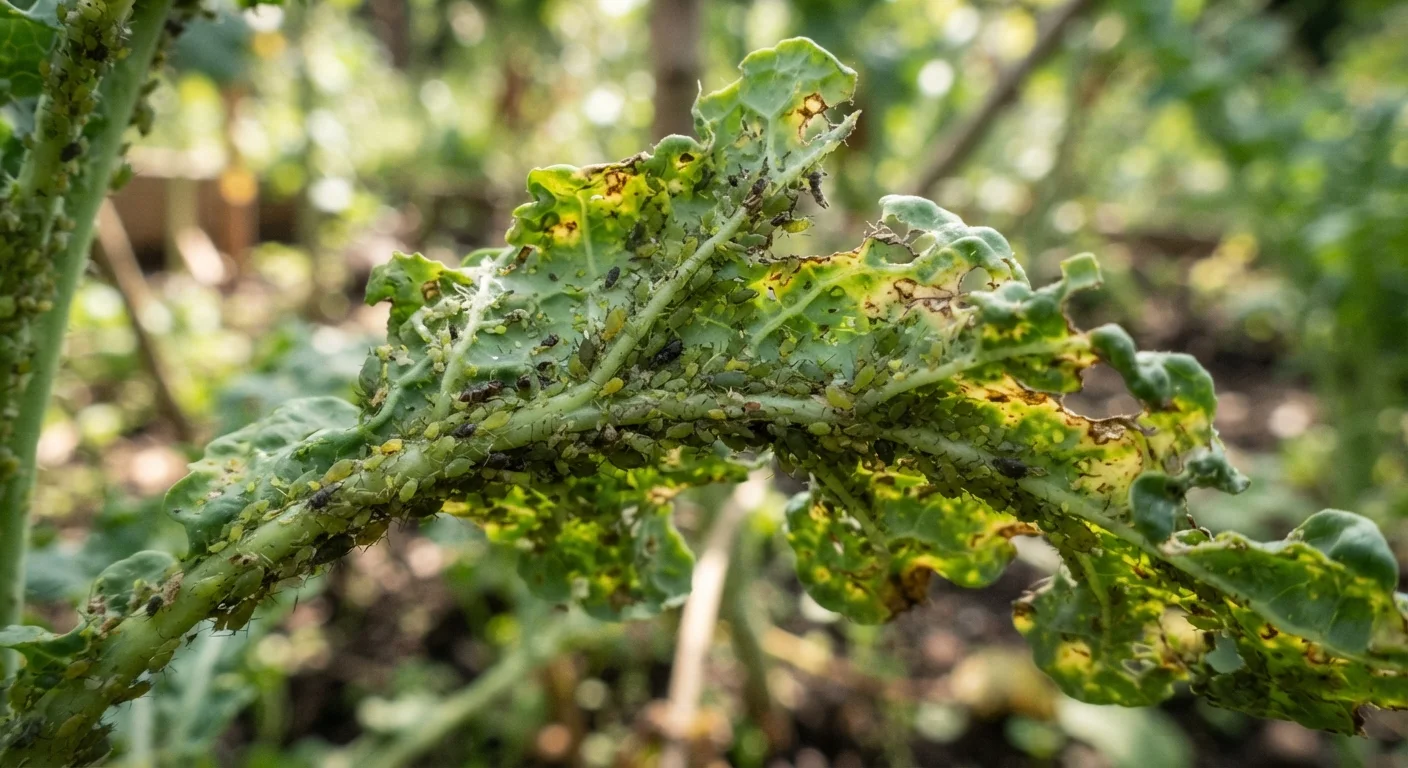
What to look for: Tiny (1-3 mm), soft-bodied insects clustered on new growth, undersides of leaves, and tender stems. Colors range from green and yellow to black or woolly gray depending on species. Sticky honeydew residue and curled, distorted leaves are common signs.
Life cycle: Aphids reproduce rapidly - females can produce live young without mating in warm months, cycling through many generations per season. Populations can explode within days under ideal conditions.
Control options: A strong blast of water dislodges most colonies. Insecticidal soap or neem oil sprays are effective on contact. Encouraging natural predators - ladybug adults and larvae, lacewings, parasitic wasps - provides ongoing biological control. Avoid excess nitrogen fertilizer, which produces the succulent growth aphids prefer.
Aphid populations can double within days, making early detection essential.
Japanese Beetles
What to look for: Metallic green-and-copper beetles about ½ inch long, feeding in groups on leaves, flowers, and fruit. They skeletonize foliage, leaving a lacy appearance. Their C-shaped white grubs damage lawns by feeding on grass roots underground.
Life cycle: Adults emerge in early summer (typically June-August in most of the US), feed for 4-6 weeks, then lay eggs in soil. Grubs overwinter and pupate in spring before emerging as adults.
Control options: Hand-pick adults in early morning when they're sluggish, dropping them into soapy water. Row covers protect vulnerable plants during peak emergence. Beneficial nematodes applied to moist soil in late summer can reduce grub populations. Avoid pheromone traps near the garden - they tend to attract more beetles than they catch.
Handpicking Japanese beetles in early morning is among the most effective controls available.
Slugs and Snails
What to look for: Irregular holes in leaves, especially near soil level, with a characteristic silvery slime trail. Most active at night or on overcast, wet days. Common in shaded, moist gardens throughout the US, but most problematic in the Pacific Northwest and humid Southeast.
Life cycle: Slugs and snails lay clutches of eggs in moist soil and decomposing debris. They can live 1-5 years depending on species, and a single adult may lay hundreds of eggs annually.
Control options: Reduce moisture and hiding spots - clear dense mulch near plant bases and water in the morning so soil dries by evening. Copper tape creates a mild deterrent barrier around raised beds. Iron phosphate-based baits are widely used and considered lower risk to wildlife than older metaldehyde formulations, though any pesticide should be used per label directions.
Watering in the morning rather than evening meaningfully reduces slug activity in most gardens.
Tomato Hornworms
What to look for: Large (up to 4 inches), bright-green caterpillars with white diagonal stripes and a prominent horn on the rear. They feed on tomato, pepper, eggplant, and potato foliage, causing dramatic defoliation. Look for dark droppings on leaves as an early sign.
Life cycle: The five-spotted hawkmoth lays eggs on host plants in late spring. Caterpillars feed for 3-4 weeks, then pupate in soil. One to two generations occur per year in most US regions.
Control options: Hand-pick caterpillars as soon as spotted - they're large enough to find by inspection. If you see white egg sacs attached to a hornworm, leave it: those are parasitic wasp cocoons that will emerge to control future populations. Bacillus thuringiensis (Bt), a naturally occurring soil bacterium, can be applied to foliage as a biological control for young caterpillars.
Hornworms with parasitic wasp cocoons attached should be left in place to support natural biocontrol.
Squash Vine Borers
What to look for: Sudden wilting of squash, zucchini, or pumpkin vines despite adequate water. Look at the base of the stem for a small entry hole surrounded by sawdust-like frass. The culprit is a cream-colored caterpillar tunneling inside the stem.
Life cycle: The adult is a day-flying moth that lays flat, reddish-brown eggs at the base of stems in late spring to midsummer. Larvae bore in and feed for 4-6 weeks before exiting to pupate in the soil over winter.
Control options: Row covers placed at transplant time (removed for pollination) block egg-laying. Timing planting later in summer can help plants escape peak moth activity in some regions. In early infestation, some gardeners carefully slit the stem to remove larvae and then mound soil over the wound to encourage re-rooting, though success varies. Crop rotation reduces overwintering populations in soil.
Row covers installed at transplant time are the most reliable preventive strategy for vine borers.
Whiteflies
What to look for: Tiny (1-2 mm) white-winged insects on leaf undersides that fly up in a cloud when disturbed. Infested leaves yellow and may drop prematurely. Like aphids, whiteflies excrete honeydew, promoting sooty mold growth. Most common on tomatoes, peppers, cucumbers, and ornamentals.
Life cycle: Females lay eggs in circular patterns on leaf undersides. The life cycle from egg to adult spans 3-4 weeks in warm conditions, enabling rapid population buildup in greenhouses and warm-climate gardens.
Control options: Yellow sticky traps monitor and reduce adult populations. Insecticidal soap and neem oil target immature stages (nymphs) on leaf undersides - thorough coverage is essential. Strong water sprays help. Reflective mulches can deter adults from landing. Avoid broad-spectrum insecticides that kill parasitic wasps, which are key whitefly predators.
Targeting whitefly nymphs on leaf undersides is more effective than chasing the flying adults.
Cabbage Worms and Cabbage Loopers
What to look for: Ragged holes in the leaves of cabbage, broccoli, kale, cauliflower, and related brassicas. Cabbage worms are velvety green and move in a straight crawl; cabbage loopers are lighter green and arch their bodies in a characteristic loop while moving. Both blend in well with foliage.
Life cycle: The imported cabbageworm is the larva of the white cabbage butterfly, which is active spring through fall. Multiple overlapping generations can occur in a single season, especially in the South.
Control options: Row covers are highly effective when placed at planting and sealed at edges. Inspect plants regularly, especially under leaves, and hand-pick egg clusters (pale yellow ovals) and caterpillars. Bt applied to foliage controls young larvae effectively and doesn't harm beneficial insects when used correctly.
Row covers sealed at the edges prevent egg-laying and are the most effective brassica protection strategy.
Spider Mites
What to look for: Fine webbing on leaf undersides and between stems, stippled or bronzed foliage, and a general loss of plant vigor. Spider mites are barely visible to the naked eye - hold a white sheet of paper under a suspect leaf and tap; moving specks confirm their presence. They thrive in hot, dry conditions.
Life cycle: Spider mites complete a generation in as little as one week during warm weather, making populations extremely difficult to manage once established. They overwinter as adults or eggs in plant debris and bark.
Control options: Maintain adequate soil moisture and avoid water stress, which makes plants more susceptible. Strong water sprays disrupt colonies. Insecticidal soap and horticultural oil smother mites on contact. Predatory mites are available commercially and can provide effective biological control in gardens with recurring problems. Avoid pyrethroids - they kill predatory mites and often worsen infestations.
Hot, dry conditions accelerate spider mite reproduction - consistent watering is a legitimate preventive measure.
Building a Long-Term Pest Management Approach
No single season of control eliminates a persistent pest permanently. The most resilient gardens use Integrated Pest Management (IPM) - a framework that layers physical, biological, and chemical controls based on monitoring and economic thresholds rather than routine spraying. IPM begins with observation and ends with evaluation, treating intervention as a last resort rather than a first response.
Start With the Least Disruptive Control
IPM practitioners follow a hierarchy: cultural controls first, then physical, then biological, and chemical treatments only when other methods haven't been sufficient. This approach protects beneficial insect populations that do significant free pest-control work in your garden. When chemical controls are necessary, choose the most targeted option and apply per label instructions - more is not more effective.
Cultural practices do significant work in keeping pest populations below damaging levels. Rotating crop families each season, removing spent plant material promptly, and avoiding over-fertilizing with nitrogen (which produces the lush, soft growth that many pests prefer) all reduce habitat and food availability for common insects and mollusks. If you're setting up a new garden, see our first-timer's complete walkthrough for guidance on building pest-resistant soil and plant selection from the ground up.
Fall cleanup is another underused tool. Overwintering eggs and pupae often hide in dead stems, leaf litter, and soil debris. Our end-of-season garden cleanup checklist walks through the specific steps that reduce next year's pest load before it even begins. Consistent attention across the full growing calendar - not just reactive spraying mid-summer - is what separates a struggling garden from a productive one.