

Key Takeaways
Summary
22 items · 1.5-4 hours depending on garden size
Why Fall Cleanup Timing Matters Across US Climate Zones
End-of-season garden cleanup is not a single universal date on the calendar - it's a window tied to your local climate. In USDA Hardiness Zones 4-6, the window typically runs from late September through early November, when nights consistently drop below 40°F. In Zones 7-8, November into December is more realistic. Gardeners in Zones 9-10 may do a lighter version of this work in December or January during their cooler, drier period.
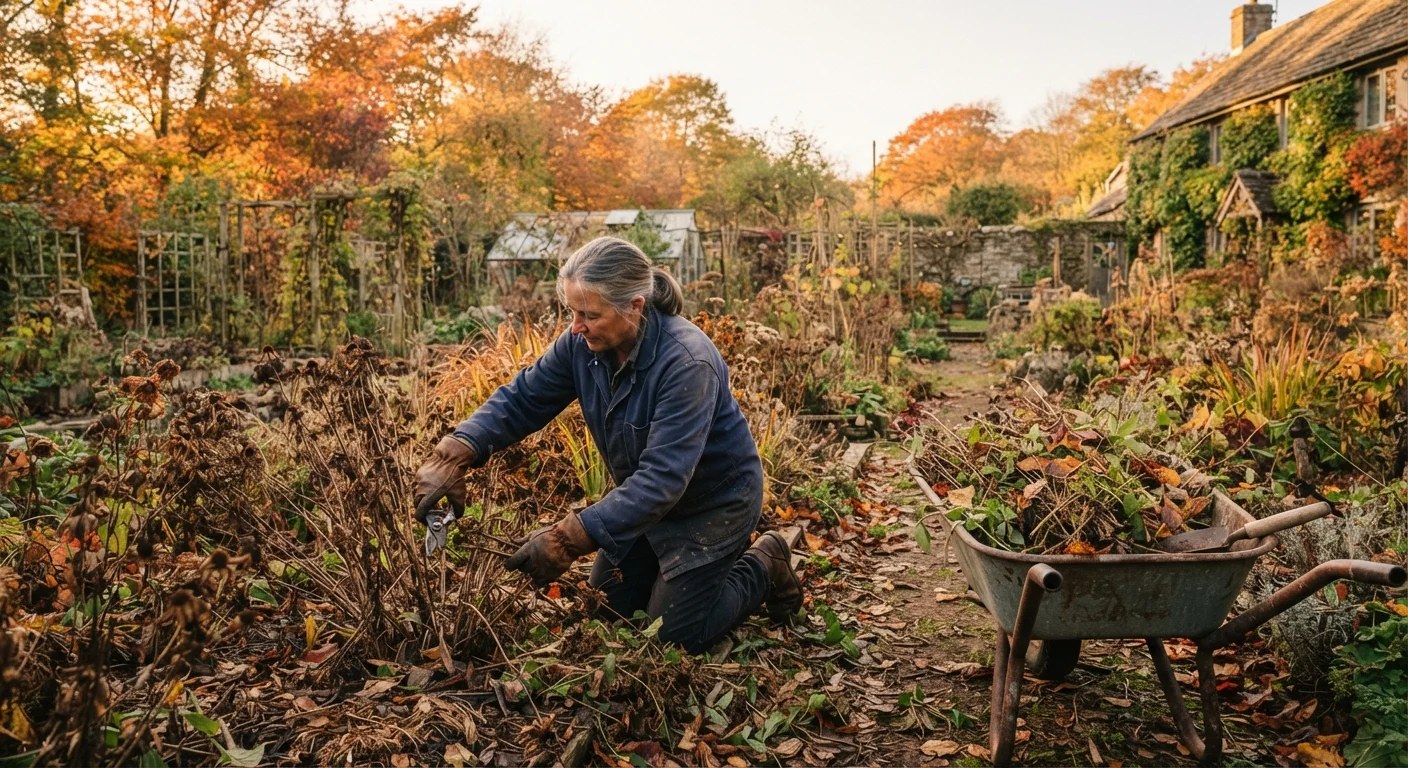
The goal is not to strip the garden bare. Research from extension programs across the US has reinforced that leaving some hollow stems and seed heads standing through winter provides habitat for native bees and food for overwintering birds. The practical rule: remove anything diseased or pest-harboring; leave structurally sound, disease-free debris until late winter or early spring. See our seasonal garden calendar to map these tasks against your specific zone.
Don't Compost Diseased Plant Material
Home compost piles rarely reach the sustained temperatures needed to kill fungal spores, bacterial pathogens, or pest eggs reliably. If plant material shows signs of powdery mildew, black spot, fire blight, or visible pest egg masses, bag it and place it in the trash rather than your compost bin. Putting diseased material back into the garden through compost is one of the most common reasons problems recur year after year.
Tools and Supplies You'll Need
Before you start working through the checklist, gather your equipment. Having everything staged near the garden saves multiple trips and keeps momentum up - especially important if you're working before rain or a frost arrives.
Pruning shears
Cutting back perennial stems, deadheading, and removing diseased material cleanly at the crown.
Garden fork or spade
Working compost and amendments into bed soil and dividing crowded perennial clumps.
Wheelbarrow or garden cart
Hauling debris, compost, mulch, and dug bulbs efficiently across the yard.
Leaf shredder or lawn mower with bag
Shredding fallen leaves into a finer mulch material that breaks down faster and layers more evenly.
Soil test kit or extension service mailer
Determining current soil pH and nutrient levels so amendments are targeted rather than guesswork.
Heavy-duty garden gloves
Protecting hands when handling rough stems, thorny shrubs, and bulbs with irritating sap.
Burlap fabric or frost cloth
Wrapping marginally hardy shrubs or covering semi-tender perennial crowns in colder zones.
The End-of-Season Cleanup Checklist
Work through these groups in order. Clearing debris before amending soil keeps amendments clean, and mulching last locks in your soil prep. If this is your first year establishing beds, our first-timer's garden walkthrough provides useful context on soil structure before you amend.
Debris Removal
Perennial and Shrub Care
Soil Preparation
Mulching
Bulb and Tender Plant Management
Tool and Infrastructure Cleanup
Shut Off Irrigation Before the First Hard Freeze
Water left in in-ground irrigation lines and outdoor spigots can expand as it freezes, cracking pipes, fittings, and backflow preventers - repairs that are often expensive and disruptive. Turn off the supply valve to outdoor systems, then open the end caps and blow lines clear with compressed air or call an irrigation professional for winterization. Do not skip this step if your area experiences temperatures below 32°F, even briefly.
Soil Amendment and Mulching: Getting the Details Right
Fall is the most efficient time to improve soil because amendments have months to integrate before roots need them. Compost - typically applied at 2-3 inches worked into the top 6 inches of soil - improves both drainage in clay soils and water retention in sandy ones. Avoid fresh manure directly on beds unless it will be fully composted by spring; partially composted manure can introduce pathogens and excess nitrogen.
Mulching is the final step and should happen after the ground begins to cool but before it freezes solid - usually after a few hard frosts. Applying mulch too early can insulate warm soil and delay the dormancy perennial roots need. Aim for a 2-4 inch layer of shredded leaves, wood chips, or straw over perennial crowns and around shrubs. Our mulching depth and material guide covers material-specific guidance in more detail. For pest context on what you may find when pulling up old plant matter, see our common garden pests guide.