

Key Takeaways
Start here
Choosing the Right Spot
Next
Understanding Your Soil
Then
Preparing the Ground
When you're ready
Selecting Your First Plants
Finally
What to Expect in Your First Season
Choosing the Right Spot
Site selection is the single decision that shapes everything else. Before you dig a single shovelful, walk your yard at different times of day and honestly assess how much direct sunlight each area receives. Most vegetables and flowering edibles require a minimum of six hours of unobstructed sun daily - eight is better. Shade from buildings, fences, or mature trees is a hard constraint, not an obstacle you can amend away.
Proximity to a water source matters more than most beginners expect. Carrying heavy watering cans to a distant corner of the yard becomes discouraging quickly. Locate your garden bed within reasonable reach of a spigot or plan for a hose extension before you start.
Also consider drainage. Low-lying areas that stay soggy after rain will drown roots and invite fungal disease. If your ideal sun spot is also a wet spot, a raised bed setup may serve you better than in-ground planting - see our comparison of raised beds and in-ground planting to weigh both options.
Observe Before You Dig
Spend at least a full day watching how sunlight moves across your yard before committing to a location. Patterns shift significantly between morning and late afternoon, and between seasons. A spot that looks sunny in early spring may be shaded by leafy trees by June - the peak of the growing season.
Understanding Your Soil
Bare ground does not automatically mean ready-to-plant ground. Before adding any amendments, get a basic soil test. Cooperative extension services - available in every US state through land-grant universities - offer affordable testing that tells you your soil's pH, nutrient levels, and organic matter content. This prevents guesswork and ensures you're adding only what's actually missing.
Most vegetables prefer a soil pH between 6.0 and 7.0. Outside this range, plants struggle to absorb nutrients even when those nutrients are present. Lime raises pH in acidic soils; sulfur lowers it in alkaline ones - but the amounts depend on your actual test results, not general estimates.
Beyond chemistry, soil texture matters. Sandy soils drain fast and warm quickly but hold little moisture or nutrition. Heavy clay retains water and nutrients but compacts easily and drains poorly. The ideal garden soil - often called loam - falls between these extremes. Adding organic matter such as compost improves both extremes over time.
Soil pH
A measure of how acidic or alkaline your soil is, on a scale from 0 to 14. A pH of 7 is neutral; most vegetables grow best between 6.0 and 7.0.
Organic matter
Decomposed plant or animal material - such as compost - that improves soil structure, water retention, and nutrient availability.
USDA Hardiness Zone
A geographic designation based on average annual minimum winter temperature that helps gardeners identify which plants are likely to survive their local climate.
Loam
A balanced soil type containing roughly equal parts sand, silt, and clay, generally considered ideal for most garden plants because it drains well while retaining adequate moisture and nutrients.
Frost date
The average calendar date of the last freeze in spring or first freeze in fall for a given location - used to time planting so tender plants aren't killed by cold.
Cooperative Extension Service
A nationwide network of offices affiliated with US land-grant universities that provides research-based gardening, agriculture, and home economics guidance to the public, often including affordable soil testing.
Preparing the Ground
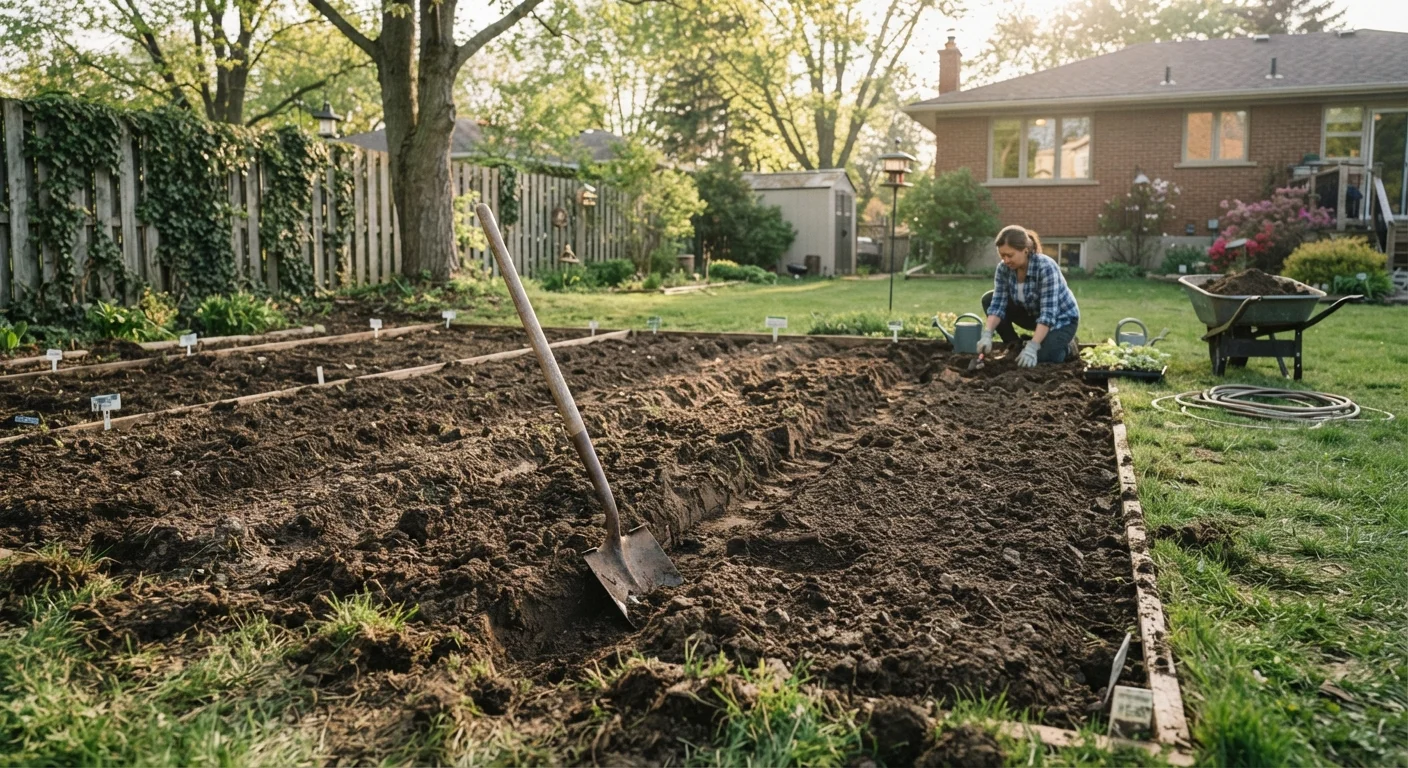
Once you've chosen your site and understood your soil, preparation begins with removing existing vegetation. Grass and weeds must be cleared before planting - leaving them in place means competing root systems and persistent regrowth. A flat spade used to cut turf into manageable sections and lift it away is effective for smaller areas. For larger plots, smothering the area with overlapping cardboard (edges overlapped by at least six inches) covered by several inches of compost can kill vegetation over several weeks without digging.
After clearing, loosen the soil to a depth of at least 10 to 12 inches using a garden fork or tiller. Avoid tilling when soil is wet - doing so damages soil structure and creates hardened clods when it dries. Work in two to four inches of finished compost and incorporate your soil test amendments at this stage.
Resist the urge to create a very large first garden. A 4×8-foot or 4×12-foot bed gives you enough space to grow a meaningful variety while keeping maintenance manageable as you learn.
Selecting Your First Plants
Plant selection should be guided by three factors: your USDA hardiness zone, the time of year you're planting, and realistic expectations about what you'll actually tend. The USDA Plant Hardiness Zone Map (available free from the USDA Agricultural Research Service) helps you identify which plants can survive your winters and when your frost dates fall.
For most US beginners, a mix of quick-maturing crops (radishes, lettuce, green beans) alongside a few rewarding longer-season plants (cherry tomatoes, zucchini) provides early wins while building patience. Herbs like basil, chives, and parsley are compact, useful, and generally tolerant of minor neglect.
Think about plant relationships as well - certain pairings have documented benefits. Our evidence-based companion planting guide explains which combinations actually hold up to scrutiny. If space is limited rather than open ground, consider reading about growing vegetables in small spaces as an alternative approach.
What to Expect in Your First Season
First-year gardens rarely go perfectly - and that's entirely normal. Weeds will appear faster than expected because disturbed soil brings dormant seeds to the surface. A two-inch layer of mulch applied after planting suppresses most of them. Pests are similarly predictable: aphids, slugs, and other common visitors will find your plants. Our guide to common US garden pests can help you identify problems early before they escalate.
Watering consistency is the skill most first-timers underestimate. Aim for roughly one inch of water per week, delivered deeply and less frequently rather than in daily light sprinklings. Shallow watering encourages shallow roots, which makes plants more vulnerable to heat stress.
Keep a simple garden journal - even just a phone note - recording what you planted, when, what problems appeared, and what worked. That record is genuinely valuable when planning next season. Progress in gardening is cumulative: each year builds on what the previous one taught you.
Don't Over-Amend Without a Soil Test
Adding large quantities of fertilizer or lime without knowing your baseline soil chemistry can create nutrient imbalances that harm rather than help plants. More is rarely better when it comes to soil amendments. A cooperative extension soil test costs very little and removes the guesswork entirely.