

Key Takeaways
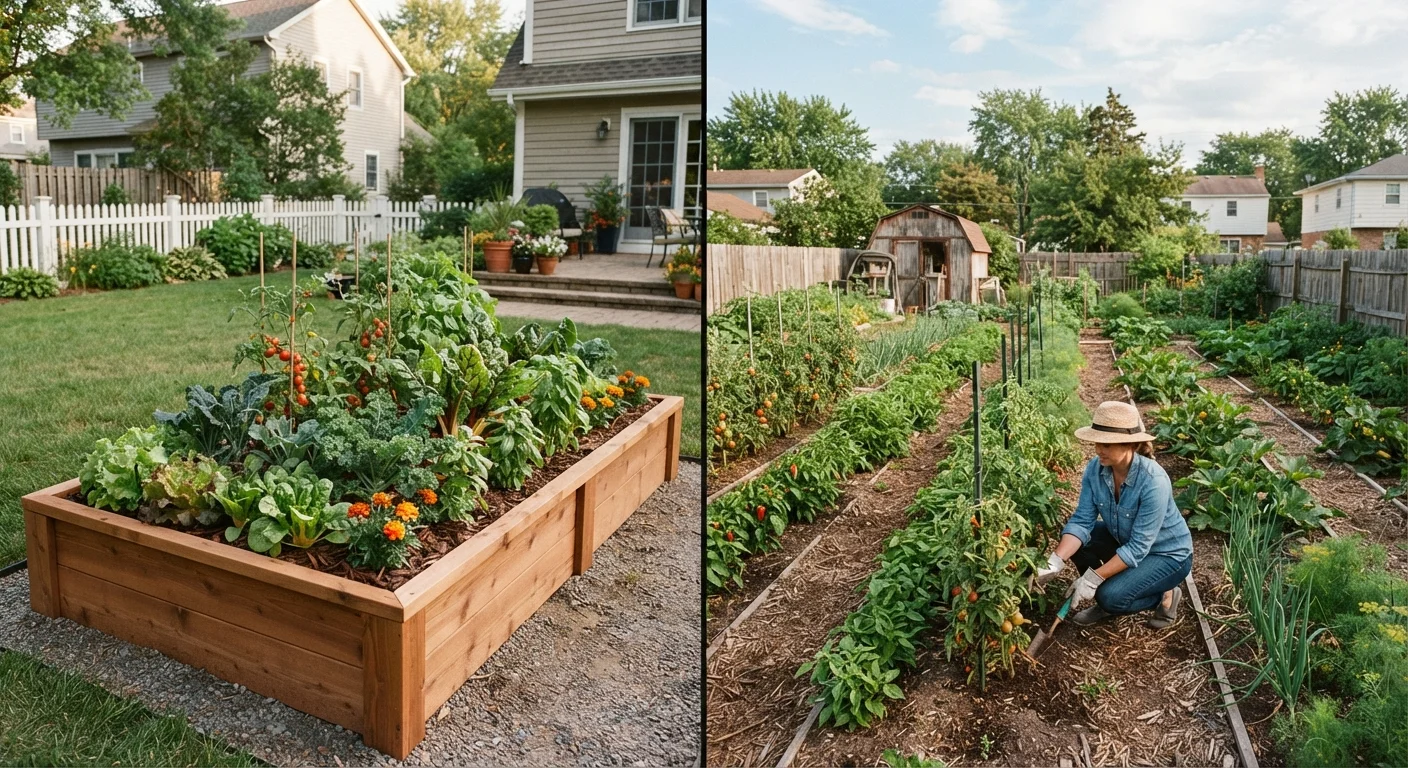
Option A
Raised Beds
The controlled, high-performance growing environment.
Best for: Gardeners dealing with poor native soil, drainage issues, physical limitations, or compact yards who want precise control over growing conditions.
Option B
In-Ground Planting
The traditional, scalable approach rooted in the land.
Best for: Gardeners with healthy native soil and adequate space who want to grow at volume with lower upfront investment.
If your native soil is compacted, contaminated, or heavy clay
Raised Beds
Raised beds let you bypass poor native soil entirely by filling with a custom mix, giving roots the drainage and aeration they need without years of amendment work.
If you want to grow large quantities of vegetables or have a big yard
In-Ground Planting
In-ground planting scales affordably across large areas - no lumber or imported fill soil required - making it the practical choice for high-volume vegetable production.
If you have mobility challenges or back or knee issues
Raised Beds
A raised bed built at 24-30 inches high significantly reduces bending and kneeling, making regular maintenance far more comfortable and sustainable.
If you're establishing a first garden on reasonably healthy soil
In-Ground Planting
When native soil is already workable, in-ground planting is the most straightforward entry point - lower cost, less infrastructure, and a faster path to your first plants in the ground.
If you garden in a cold northern US climate zone
Raised Beds
Raised beds drain faster and warm up several weeks earlier than in-ground soil in spring, meaningfully extending the growing season in zones 3 through 6.
What Each Setup Actually Involves
A raised bed is a contained growing structure - typically framed in wood, galvanized steel, or composite material - filled with imported growing media and positioned above the native ground. Depths commonly range from 8 to 24 inches. You control exactly what goes in: topsoil, compost, and amendments blended to suit your plants.
In-ground planting means working directly with your existing yard soil. You prepare a planting area by tilling or loosening the soil, amending as needed, and planting directly into it. The ground's existing structure, drainage, and microbiology become your baseline - for better or worse.
If you're starting completely from scratch, our first-timer's complete walkthrough covers site selection and soil preparation steps that apply to both methods.
| Criterion | Raised Beds | In-Ground Planting |
|---|---|---|
| Upfront cost | Moderate to high (materials + fill soil) | Low (labor and amendments only) |
| Soil control | Complete - you build the mix | Limited - amend native soil over time |
| Drainage | Excellent; designed in | Depends on native soil type |
| Spring warm-up speed | Faster - soil above ground level | Slower in cold climates |
| Weed pressure | Lower in clean imported mix | Higher from surrounding soil |
| Scalability | Limited by cost and space | Easily expanded across large areas |
| Accessibility | High if built at suitable height | Requires bending to ground level |
| Best plant types | Shallow to mid-depth crops, herbs | Deep-rooted, large, or perennial crops |
Soil Control and Drainage
Soil quality is where these two approaches diverge most sharply. Raised beds give you a clean slate: you import a mix designed for drainage and root penetration. The standard recommendation is a blend of topsoil, compost, and a coarse amendment like perlite or coarse sand - though exact ratios vary by plant type and climate. This matters enormously in regions with heavy clay or sandy, nutrient-poor soils common across the Midwest, Southeast, and arid West.
In-ground planting starts with whatever your yard holds. In many parts of the US, native soil needs years of organic matter addition before it supports a productive vegetable garden. However, in areas with naturally loamy or well-draining soil - parts of the Pacific Northwest or mid-Atlantic, for instance - in-ground beds can be excellent from the start.
Drainage also affects how you water. Raised beds typically drain more freely, reducing waterlogging risk. Our guide on deep watering versus frequent shallow watering explains how root depth and soil type shape effective watering - concepts that apply differently in each setup.
A Note on Soil Contamination
In older urban and suburban properties - particularly those built before the 1980s - native soil may contain lead, arsenic, or other contaminants from paint, pipes, or past land use. If your home's history is uncertain, consider having your soil tested through your local cooperative extension service before planting edibles in-ground. Raised beds filled with clean, imported growing media are a practical alternative when contamination is confirmed or suspected.
Cost, Effort, and Long-Term Maintenance
Raised beds carry higher upfront costs. Materials for a single 4×8-foot cedar bed - framing, hardware, and quality fill soil - can range from roughly $100 to $300 or more, depending on region and material choice. Multiple beds add up quickly. That said, the ongoing effort often decreases: defined beds reduce the area you're weeding, pathways stay separate from planting zones, and soil compaction from foot traffic is largely eliminated.
In-ground planting costs very little to start - primarily your time, a spade or fork, and amendments like compost. The ongoing labor, however, tends to be higher. Weeds spread freely from surrounding soil, irrigation is harder to target precisely, and soil compaction requires periodic intervention through aeration or mulching. Our guide on mulching your garden beds is especially relevant here: a consistent mulch layer over in-ground beds suppresses weeds, regulates soil temperature, and retains moisture more effectively than leaving soil bare.
6-8 weeks
Earlier start potential in raised beds
University extension research suggests raised beds in northern US zones can warm sufficiently for planting several weeks ahead of in-ground soil in spring.
50-75%
Reduction in weeding time reported
Home gardeners frequently report significantly less weeding in raised beds versus open in-ground plots, largely due to clean imported soil and defined bed edges.
2-3 inches
Recommended annual compost addition
The USDA Natural Resources Conservation Service recommends adding 2-3 inches of compost annually to maintain organic matter levels in cultivated garden soil.
Which Plants Thrive Where
Most vegetables, herbs, and annual flowers perform well in either setup - but some plants have strong preferences. Raised beds are particularly well-suited to shallow-rooted crops: lettuces, spinach, radishes, bush beans, strawberries, and most herbs. Root vegetables like carrots and beets also do well when bed depth is sufficient (at least 12 inches of loose, rock-free soil).
In-ground planting better accommodates large or deep-rooted plants. Sweet corn needs wind-pollination across a wide area and doesn't fit neatly into small raised beds. Asparagus, established as a perennial that returns for decades, benefits from the uninterrupted soil column of an in-ground bed. Vining crops like winter squash or melons spread far beyond any standard raised frame.
If space is limited regardless of method, vertical structures and dense planting techniques offer a third path worth considering. And when planning your plant mix, our guide on perennials versus annuals can help you think through which types belong in each garden zone.