

Key Takeaways
N-P-K Ratio
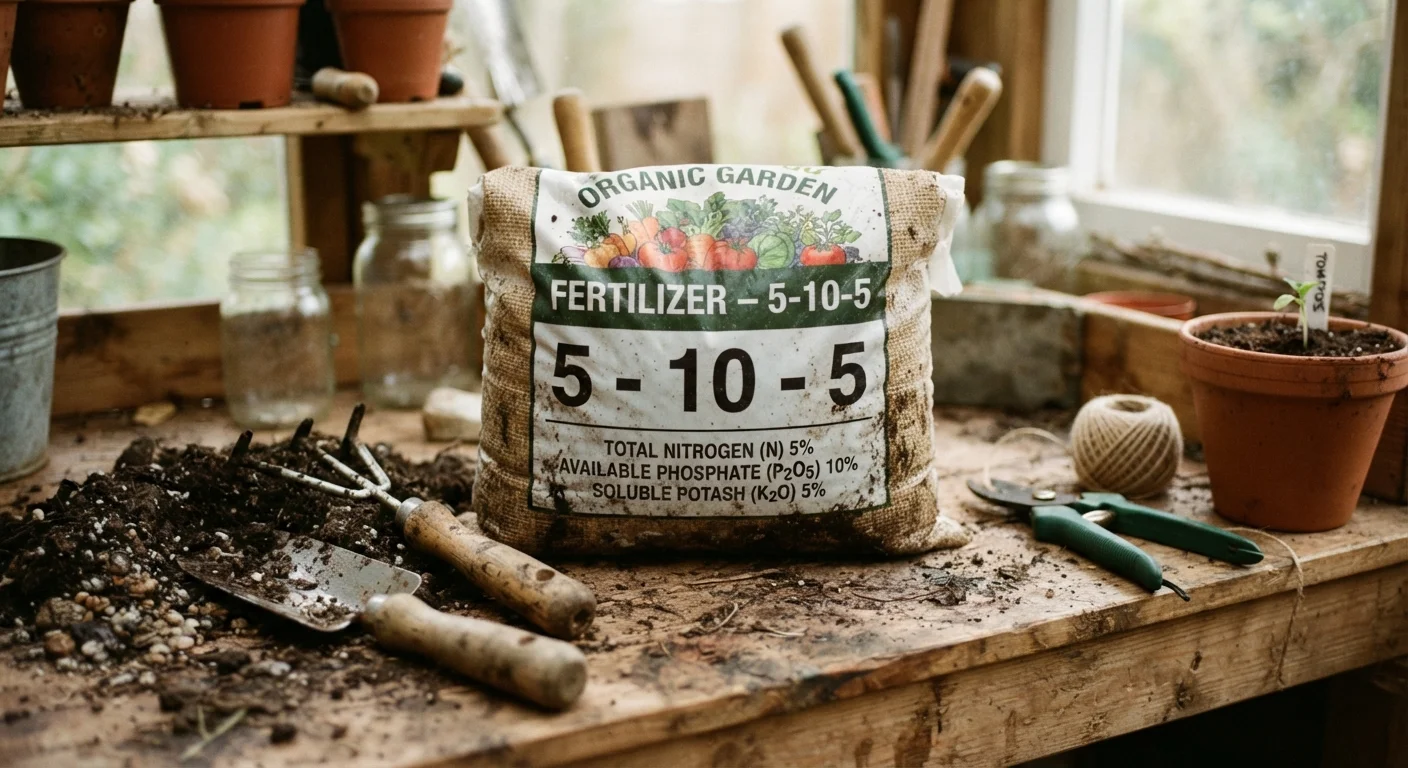
The N-P-K ratio is the set of three numbers printed on every fertilizer label - for example, 10-10-10 or 5-10-5. Each number represents the percentage by weight of nitrogen (N), phosphorus (P), and potassium (K) in that fertilizer. Together, these three nutrients are called macronutrients because plants need them in larger quantities than any other element.
The phosphorus and potassium values on US labels are expressed as oxide equivalents (P₂O₅ and K₂O), not as elemental weights - a regulatory convention that can make those percentages look lower than the actual element content.
Why the Label Puts Three Numbers Front and Center
Walk down any garden center aisle and every fertilizer bag announces itself with three bold numbers. These are not marketing figures - they are a standardized disclosure required by US law, similar in spirit to the nutrition label on a food package. Just as food labels tell you what's in your groceries, the N-P-K ratio tells you precisely what nutrients your plants are about to receive.
The numbers always run in the same order: nitrogen first, phosphorus second, potassium third. A bag showing 10-6-4 contains 10% nitrogen, 6% phosphorus (measured as P₂O₅), and 4% potassium (measured as K₂O). The remaining roughly 80% is carrier material that helps distribute the nutrients evenly and makes the product easy to handle.
3
Macronutrients declared on every US fertilizer label
US federal and state regulations require the guaranteed analysis of N, P, and K on all fertilizer products sold to consumers.
~80%
Typical non-nutrient filler content in a bagged fertilizer
Even a concentrated 10-10-10 fertilizer is roughly 70-80% carrier and filler by weight, which helps ensure even application across a lawn or garden bed.
What Each Nutrient Actually Does
Nitrogen (N) - The Growth Driver
Nitrogen is the engine behind green, leafy growth. It is a core building block of chlorophyll and amino acids, so plants running low on nitrogen typically turn pale yellow and stall out. Lawns, spinach, kale, and other foliage-focused plants respond most visibly to nitrogen boosts. Too much, however, pushes all energy into leaves at the expense of flowers and fruit.
Phosphorus (P) - The Root and Bloom Builder
Phosphorus supports root development, flowering, and seed formation. It is especially important during two critical windows: when seedlings are getting established and when flowering plants are setting buds. A fertilizer with a high middle number - such as 5-10-5 - is a common choice for transplanting and for bulb gardens.
Potassium (K) - The All-Round Fortifier
Potassium regulates water movement within plant cells, strengthens cell walls, and improves a plant's ability to resist drought, disease, and cold stress. It works behind the scenes rather than driving obvious top growth, but gardens low in potassium tend to be less resilient over time.
Match Your Fertilizer to the Growth Stage
Before purchasing fertilizer, note what your plants are currently doing - establishing roots, pushing new growth, or setting flowers and fruit. Each stage has different nutrient priorities. Buying a product based on growth stage rather than brand or name alone will almost always give you better results.
Matching the Ratio to Your Garden's Needs
Choosing a fertilizer starts with knowing what your plants are doing right now, not just what type they are. The same tomato plant needs different support in May (root establishment) than in July (fruit set).
- High first number (e.g., 30-0-4): Lawn fertilizers and leafy greens mid-season. Avoid on flowering or fruiting plants at bloom time.
- High middle number (e.g., 4-12-4): Transplant starters, bulb fertilizers, and bloom boosters for perennials and annuals.
- Equal numbers (e.g., 10-10-10): General maintenance across mixed beds when you want to support all three functions evenly.
- High third number (e.g., 0-0-60): Potassium correction only - used after a soil test identifies a deficiency.
Decoding a fertilizer ratio follows the same logic as reading a nutrition panel step by step - once you know what each segment means, the numbers stop feeling arbitrary and start giving you genuine guidance.
The One Step That Makes the Label More Useful
A fertilizer label tells you what is in the bag. A soil test tells you what your garden is missing. Without a test, you are essentially guessing, and routine over-application of any nutrient can lock out others through a process called nutrient antagonism - for example, excess phosphorus can reduce a plant's ability to absorb zinc and iron.
Cooperative extension services affiliated with US land-grant universities offer inexpensive soil testing through local county offices in most states. Results typically come with specific amendment recommendations for your region and your intended plants. Think of it as the glossary behind the label - it translates general information into actionable guidance specific to your situation.