

| Best all-purpose amendment | Finished compost |
| Best for drainage improvement | Perlite |
| Best for seed starting | Vermiculite or perlite blend |
| Best for acid-loving plants | Peat moss or coconut coir with sulfur |
| Adds nutrients to soil | Compost only (perlite, peat, vermiculite do not) |
| Soil test recommended before amending | Yes - available through county extension offices (USDA Cooperative Extension System) |
What Soil Amendments Actually Do
A soil amendment is any material worked into existing soil to change its physical structure, chemistry, or biology. Unlike fertilizers, which feed plants directly, amendments address the growing environment itself - how water moves through the soil, how much air reaches roots, and whether organic matter supports microbial life.
Before reaching for any bag, it helps to know what problem you're solving. Clay soil compacts and drains poorly. Sandy soil drains too fast and holds little nutrition. Overly acidic or alkaline pH locks nutrients out of reach. The right amendment targets a specific issue; the wrong one can make soil worse. If you're deciding between container setups and open ground, understanding soil structure is equally critical - see our guide to raised beds vs. in-ground planting for context on how each setup handles drainage differently.
| Best all-purpose amendment | Finished compost |
| Best for drainage improvement | Perlite |
| Best for seed starting | Vermiculite or perlite blend |
| Best for acid-loving plants | Peat moss or coconut coir with sulfur |
| Adds nutrients to soil | Compost only (perlite, peat, vermiculite do not) |
| Soil test recommended before amending | Yes - available through county extension offices (USDA Cooperative Extension System) |
Compost, Peat, Perlite, and Vermiculite: What Each One Does
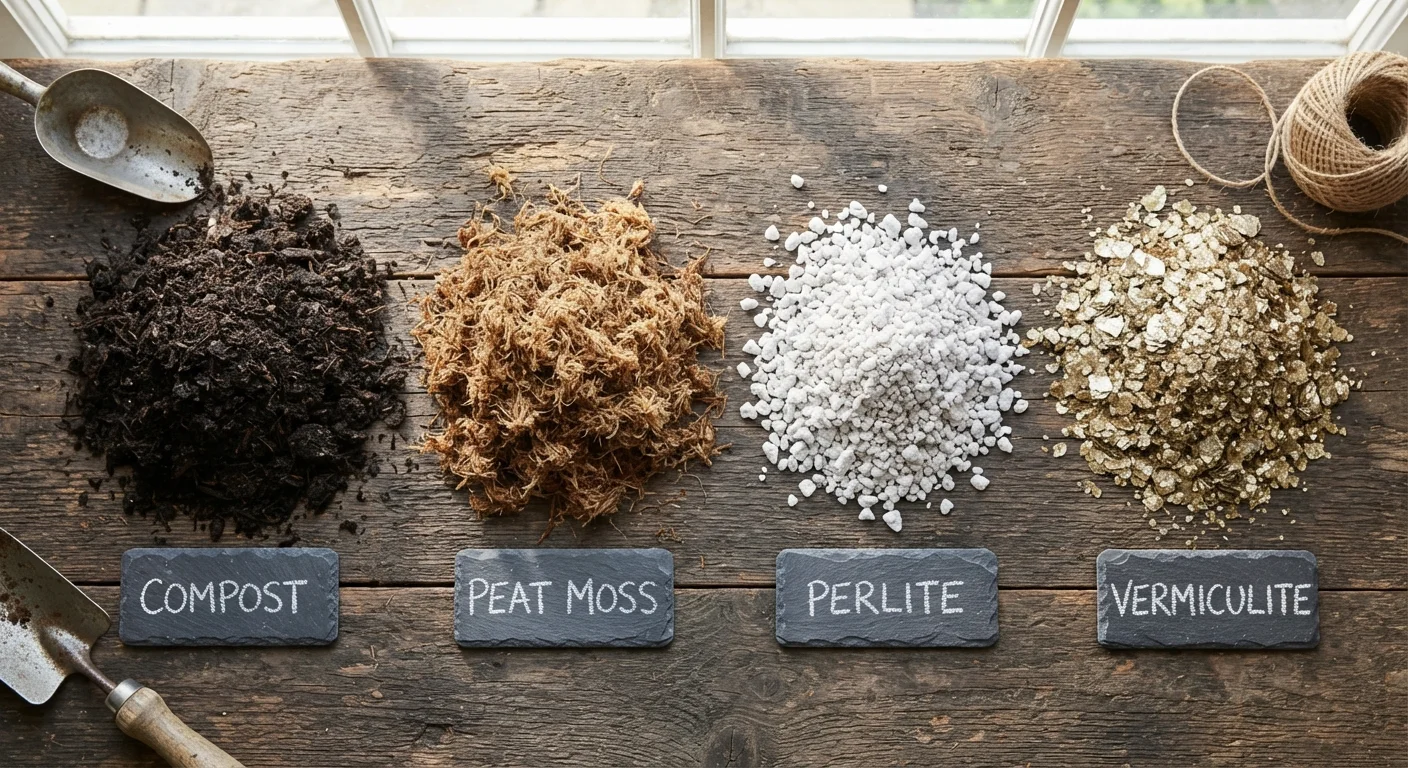
Compost is decomposed organic matter - the most broadly useful amendment available. It improves drainage in clay, increases water retention in sand, feeds soil microorganisms, and gradually releases nutrients. Finished compost is dark, crumbly, and earthy-smelling. Work 2-4 inches into the top 8-12 inches of soil before planting, or use it as a top dressing. Compost is appropriate for nearly every garden situation.
Peat moss (sphagnum peat) acidifies soil and dramatically improves moisture retention. It's most useful when establishing acid-loving plants such as blueberries, azaleas, and rhododendrons, or when amending very sandy soils that dry out rapidly. Because peat is harvested from slow-forming bogs, many gardeners now consider its environmental footprint and look to alternatives like coconut coir for neutral-pH moisture retention. Peat does not add nutrients.
Perlite is volcanic glass that has been heated until it expands into lightweight white particles. It improves drainage and aeration by creating air pockets that roots can access. Perlite is pH neutral, does not decompose, and adds no nutrients. It's most valuable in container mixes, seed-starting trays, and any heavy or waterlogged soil. Standard container mixes often include 10-30% perlite by volume.
Vermiculite is a heated mineral that expands like perlite but holds significantly more water and nutrients. It's better suited to seed starting and germination than to long-term drainage improvement. Its moisture-holding capacity makes it less appropriate for succulents or plants prone to root rot, but valuable for moisture-sensitive seedlings and root cuttings.
Soil amendment
Any material incorporated into soil to improve its physical structure, chemical balance, or biological activity. Amendments are distinguished from fertilizers, which primarily add nutrients rather than alter soil conditions.
Perlite
Expanded volcanic glass used to improve drainage and aeration in soil and container mixes. It is pH neutral, does not decompose, and adds no nutrients to soil.
Vermiculite
A heat-expanded mineral that improves moisture and nutrient retention in soil. It is often used in seed-starting mixes because it holds water without fully saturating the growing medium.
Peat moss
Partially decomposed sphagnum moss harvested from bogs. It acidifies soil and retains moisture, making it useful for acid-loving plants, though it raises sustainability concerns due to slow regeneration rates.
Compost
Decomposed organic matter that improves soil structure, feeds beneficial microorganisms, and slowly releases nutrients. It is one of the most versatile and broadly recommended amendments for garden and lawn soils.
Soil pH
A measure of how acidic or alkaline soil is, on a scale of 0-14 (7 is neutral). pH affects nutrient availability; most vegetables grow well between 6.0 and 7.0, while acid-loving plants prefer a lower range.
Matching Amendments to Your Specific Situation
No single amendment works for every garden. Use this framework to narrow your choice:
- Heavy clay soil: Compost, worked in repeatedly over several seasons, is the most effective long-term fix. Avoid adding large amounts of sand alone - it can worsen compaction without organic matter to bind it.
- Fast-draining sandy soil: Compost increases water and nutrient retention. Peat can help in acid-plant beds, but compost is the more sustainable default.
- Container and raised bed mixes: Combine compost for nutrition, perlite for drainage, and optionally vermiculite for moisture retention in seed starts. Potting mix, garden soil, and topsoil are not interchangeable - understanding how they differ helps you blend amendments appropriately.
- Acid-loving plants: Peat moss or sulfur-based amendments lower pH. Test your soil first - adding acidifying amendments to already-acidic ground is counterproductive.
- Seed starting: A 50/50 blend of vermiculite and peat (or coir) provides the moisture consistency and light texture young roots need.
Soil amendments work best when guided by a soil test. Many county cooperative extension offices offer low-cost testing that tells you current pH, nutrient levels, and organic matter content - far more reliable than guessing by appearance alone. Healthy soil structure also directly affects how water moves to your plants; how you water interacts closely with how your amended soil drains and holds moisture.