

Key Takeaways
Why Bird Nutrition Is Easily Misunderstood
Pet birds occupy a unique place in home care - they're visually engaging, often highly social, and can live for decades, yet their nutritional needs are frequently underestimated. Unlike dogs or cats, whose dietary requirements are well-publicized, bird feeding guidance varies considerably by species and remains less understood by the general public.
The result is that many well-intentioned owners repeat the same errors generation after generation - often because the bird appears healthy until a serious deficiency or illness has already developed. For context on how species-specific care demands differ even before feeding is considered, see our guide to matching bird species to your household.
Feeding an all-seed diet as the sole source of nutrition.
Why it happens: Seeds are widely marketed for pet birds and many birds eat them eagerly, which owners naturally interpret as a sign the food is appropriate and sufficient.
Offering toxic foods from the kitchen without realizing the danger.
Why it happens: Many owners assume that foods safe for humans or other pets are safe for birds. Common foods like avocado, onion, and chocolate are not perceived as dangerous until after a problem occurs.
Treating all pet bird species as nutritionally identical.
Why it happens: General pet care advice is often species-agnostic, and owners may not realize that dietary needs vary significantly between, say, a budgie and an African grey.
Leaving food in the cage all day without refreshing it.
Why it happens: Owners often top up bowls rather than fully replacing them, not realizing that fresh foods spoil quickly and stale food can harbor bacteria and mold.
Providing irregular or unpredictable feeding times.
Why it happens: Busy schedules make consistent timing difficult, and owners may not connect erratic feeding with behavioral problems like screaming or feather-destructive behavior.
Practical Steps Toward a Healthier Feeding Routine
Correcting bird feeding mistakes doesn't require an overnight overhaul. Gradual transitions, consistent schedules, and a clear understanding of species-appropriate foods are the foundation of better nutrition. If your bird is currently on an all-seed diet, expect resistance when introducing pellets - patience and incremental mixing are key strategies.
Some Human Foods Are Toxic to Birds
Avocado, chocolate, onion, garlic, caffeine, alcohol, and the artificial sweetener xylitol are all toxic to pet birds and should never be offered. Even small amounts of certain substances can be fatal, depending on the species and body size. If you suspect your bird has consumed something harmful, contact an avian veterinarian immediately - do not wait for symptoms to worsen.
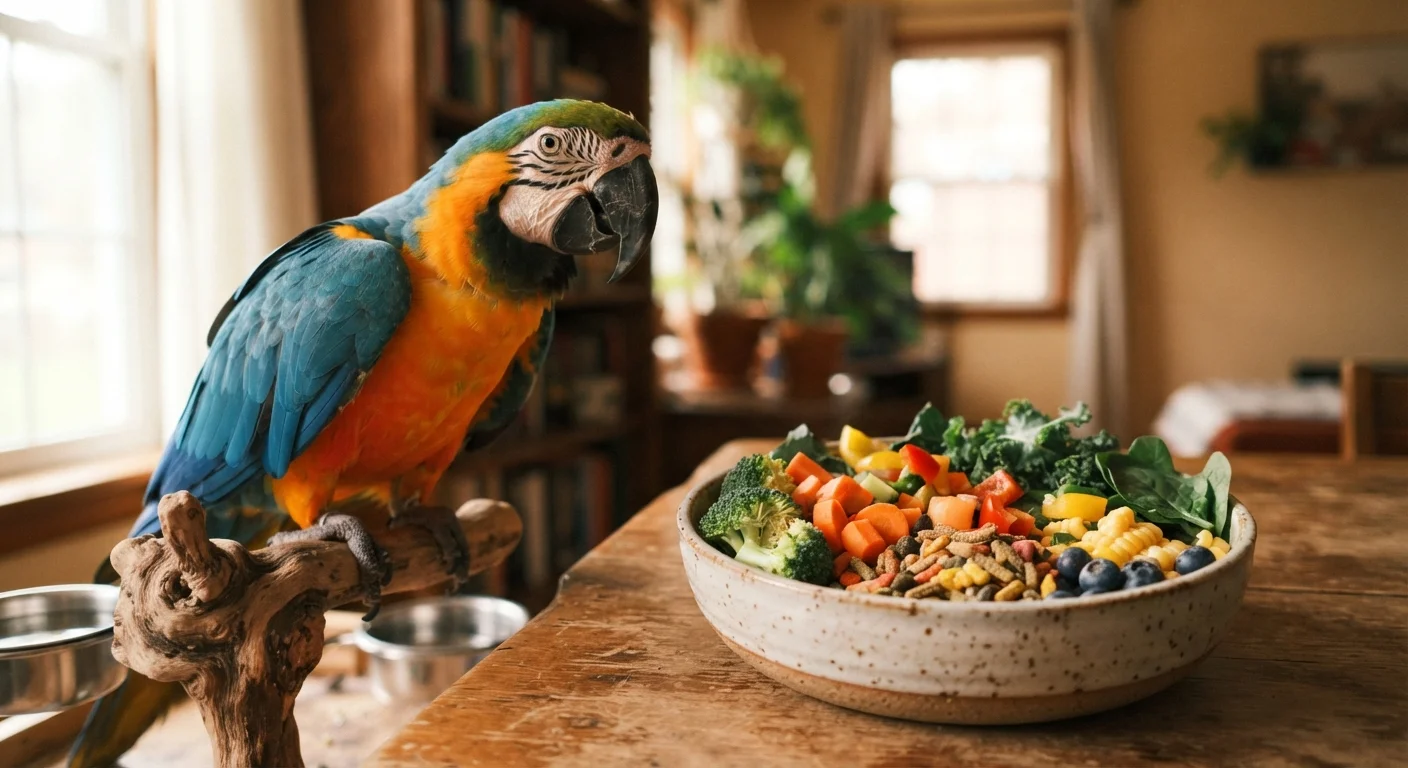
Fresh vegetables such as leafy greens, carrots, and bell peppers can complement a pellet-based diet for many species. Avoid presuming that variety alone equals balance. Nutritional completeness, not just diversity, is the goal. If you're uncertain whether your current feeding approach is adequate, an avian veterinarian is your most reliable resource - not online forums or generic pet store advice.
Vitamin Supplements Can Cause Harm
Adding vitamin supplements to water or food without veterinary guidance can lead to nutrient toxicity, particularly with fat-soluble vitamins such as A and D. If your bird is eating a nutritionally complete pellet diet, supplementation is usually unnecessary. Always consult an avian vet before introducing any supplement to your bird's routine.
Feeding a pet bird well is closely connected to the broader environment you provide. A bird that is stressed by an inappropriate enclosure may eat erratically regardless of what's offered. Our guide to setting up a safe bird enclosure covers the environmental side of bird care in detail.
This article provides general educational information about pet bird nutrition and is not a substitute for advice from a qualified avian veterinarian. Always consult a professional for guidance specific to your bird's species, age, and health status.